


The use of artificial intelligence (AI) in marketing sparks a heated debate. Should we use it or not? Is it ethical or not? Is it secure or not? Is it going to replace us or not? The debates are endless and sometimes pointless. However, regardless of one’s opinions or values, AI is here to stay, especially in marketing.
Through a survey and personal candid chats with young marketers in Saudi, 100 per cent of respondents confirmed that they use AI with no concerns about disclosing it to their peers. Yet, 50 per cent believe that their managers would perceive them unfavourably if they found out. They voiced concerns that their output would be ‘unfairly judged’, even though AI was permitted at their company. Therefore, it seems that the barrier for AI in Saudi businesses is not personal hesitation; it is in the psychological divide between teams and their managers.
Marketers using AI in stealth mode and bracing for negative reactions from their managers are not confident adopters or creative thinkers; they are cautious navigators who take calculated steps. They don’t explore and innovate. They don’t take risks that could lead to breakthroughs. With Saudi Arabia’s ambitious project, Transcendence, and $100bn earmarked for AI, this belief could become a competitive liability.
Young marketers’ concerns are not unfounded: a Duke University study in 2024 found that managers were less likely to hire or promote candidates who use AI. Attitudes at a higher level tell a different story: 84 per cent of CEOs in Saudi Arabia say they are ready to deploy AI responsibly. With Vision 2030 supporting AI mandates at a national scale, it is evident that making the most of AI is not an adoption or endorsement problem; it is a governance and culture problem.
The country and its organisations are fully committed, but the employees are still on the fence because they fear that the human in the corner office might not be. If seasoned young talent is hiding their AI usage, then who is experimenting, innovating and creating for tomorrow?
Progressive AI discussions are split across two extremes: the executives set the strategy and key performance indicators (KPIs), while the individuals use the tools. This oversight leaves middle management on the sidelines, making them default to instinct and muscle memory. This gut reaction, built by at least a decade of experience evaluating work based on efforts and timesheets, makes AI assistance feel like a shortcut and a cheat code. To break this barrier, it is vital to include middle management in the dialogue to help them understand the true value of AI and equip them with the necessary skillsets and evaluation frameworks to build AI-confident teams. Whether employees curate or co-create, the effort is still their own.
Seasoned leaders are wasting potential by leaving AI utilisation and innovation to junior teams, without leading
by example.
The debate needs to shift to new evaluation frameworks, which need to be developed. It also needs to shift to training required for middle management to help such leaders adapt to the world of AI and overcome biases. Managers need to go beyond automation and KPI reporting and start modelling how AI can spark new ideas and drive real transformation by being:
Creative sparring partners: to challenge thinking, kill bad ideas in minutes, refine creative logic and break through creative blocks.
Rapid testing agents: to relentlessly stress test the ‘v16Final_Final’ version at scale within minutes and offer optimisation recommendations.
Data synthesis specialists: to simplify complex technical information, and aggregate and label data, turning creatives into data scientists within a few prompts.
Personalisation architects: to tailor content across databases instantly without the need for manually editing names or calls to action (CTAs).
Research and compliance guardians: to protect the brand through deep-dive research and instantaneous regulatory checks.
Excellence in marketing needs more than KPIs and access; it demands a shift in managerial mindset. Leaders must foster an environment where talent feels safe to shift out of ‘stealth mode’ and test openly.
Building trust and encouraging unboxed creativity in marketing is not a nice to have; it is essential to unlock the full promise of AI, because permission without psychological safety is not permission at all.
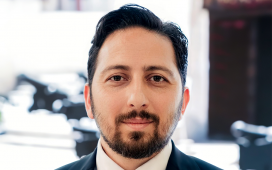
By Noor El Zeinni, Global Marketing Strategist