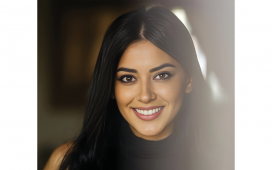
Publsh Co-founders Sagar Chotrani and Kushal Desai
Publsh’s Sagar Chotrani and Kushal Desai on the OOH innovations and strategies shaping brand investment in the future.
What new formats or innovations in out-of-home have caught the most advertiser interest recently?
Today, when brands invest in OOH, they’re no longer focused solely on the number of views – they’re prioritising the quality of those views: who’s seeing the message, in what context, and how deeply it resonates. Audiences have evolved beyond static billboards and now engage with formats that blend creativity, technology, and interactivity. Innovations such as programmatic DOOH that adapts in real time to weather or traffic conditions, immersive 3D anamorphic displays, AR-enabled installations, and experiential “phygital” activations – which merge physical and digital touchpoints – are gaining traction. These formats capture attention, evoke emotion, and drive measurable engagement.
How is OOH being integrated with other channels such as social and mobile to create more connected brand experiences?
DOOH is no longer a standalone medium – it’s a bridge between the physical and digital worlds. Brands are aligning their outdoor messaging with social media to build stronger recall, often supported by strategic PR amplification that turns OOH campaigns into shareable stories.
Many use curiosity driven teasers on screens, with reveals or extensions delivered via social platforms, creating a full-circle engagement loop. Technologies like geo-targeted mobile retargeting, QR codes, AR integrations, and real-time social feeds displayed on screens transform passive viewing into active participation.
The result is a connected ecosystem where OOH sparks attention on the street, social media sustains conversation, and mobile completes the interaction – making campaigns more immersive, measurable,
and memorable.
Do you feel media spending towards OOH is increasing, and what factors are causing this shift?
Yes, media spending on OOH – particularly DOOH – is steadily rising as brands seek to cut through the noise in an oversaturated market. With new businesses launching daily, standing out requires high-impact, creative outdoor campaigns that combine visibility with engagement. This shift is driven by several factors: advancements in programmatic buying and audience measurement, seamless integration with digital and mobile ecosystems, and the expansion of urban environments offering premium
screen inventory.
As traditional channels like print and linear TV decline, brands are reallocating budgets to OOH, where creativity, data, and location converge to deliver measurable, high-quality visibility and stronger brand recall.
Where do you see the biggest growth opportunities for OOH in the region?
The biggest growth opportunities for OOH in the region lie in premium, high-impact locations that speak directly to the right audience. As Dubai and the UAE increasingly become home to millionaires, billionaires, and global investors, brands are shifting focus toward placements in luxury corridors such as J1 Beach, Palm Jumeirah, Dubai Marina, DIFC, and high-end hospitality or retail zones.
These areas offer not just visibility but access to affluent, decision-making audiences with real spending power. In essence, growth will come from strategic locations that combine affluence, attention, and aspiration – where every view truly matters.
By Sagar Chotrani Group’s CEO and Co-Founder and Kushal Desai, Managing Director and Co-Founder, Publsh. Group.