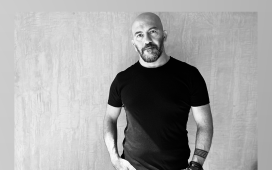
etisalat is rolling out “The Network of Speed”, a campaign fronted by Keyne, the younger brother of footballer Lamine Yamal, that aims to bring a more everyday meaning to network performance.
The campaign centres on etisalat’s 5.5G network and moves the conversation beyond loading times and download speeds towards the experiences and activities that such connectivity enables.
Keyne leads the campaign’s hero film, bringing a playful personality to a message about speed, reliability and technological capability.
Additional social content extends his role beyond the main film, while digital outdoor advertising and a large-format hoarding take the campaign into physical spaces.
Saatchi & Saatchi UAE, part of Publicis Groupe Middle East, handled the creative, with Deja Vu production house responsible for production and Omnicom Media MENA handling media.
View this post on Instagram
Objectives, insight and strategic thought behind the etisalat campaign
The campaign’s objective was to reinforce etisalat’s positioning around network superiority across speed, performance, coverage and innovation.
Rather than communicating those attributes only as technical capabilities, the strategy sought to connect them with what people want to accomplish.
The intended shift was from the time a task takes to the range of things a person can do. That approach drew on three consumer insights:
The first concerned the changing meaning of speed. The strategy identified a broader set of expectations that includes uninterrupted streaming, gaming and productivity supported by artificial intelligence, alongside fast downloads.
In that context, network performance becomes relevant through its contribution to work and leisure. The campaign aimed to make that relationship more apparent, presenting connectivity as something that helps people get more from their day.
The second insight addressed differentiation within the telecommunications category. Where providers communicate similar promises about speed and reliability, the campaign team identified a need to make the benefits more tangible.
The creative task was therefore to translate the network proposition into relatable experiences. Keyne’s playful presence provided a way to make the subject approachable, rather than relying solely on technical language.
The third insight concerned the growing role of AI in connected experiences. The campaign sought to associate etisalat’s 5.5G network with the requirements of emerging applications, positioning the brand around both current needs and future possibilities.
AI’s role in the strategy was about the uses the network could support. The supplied campaign details do not describe AI as a production technique.
Bringing Keyne into the network story
Keyne’s casting connected the campaign’s creative approach with its social distribution strategy.
His visibility online, alongside the wider conversation around the World Cup, gave the film a recognisable personality whom audiences were already discussing.
The intention was to work with that existing interest while giving the network message a lighter tone. His playful energy helped frame a proposition about technological performance in a way designed to feel entertaining and accessible.
His role continued through the additional social pieces. These gave the campaign more opportunities to develop its character-led storytelling in shorter formats, rather than asking one film to carry the entire message.
The casting and content approach were connected: Keyne provided the personality at the centre of the campaign, while the supporting material gave that personality a continuing presence across feeds.
Reaching digitally connected audiences across the UAE
The campaign primarily targeted digitally connected consumers in the UAE, particularly people who place a high value on network speed, dependability and performance.
Young professionals and white-collar consumers were one priority group. Their relevance lay in their use of connectivity across work, entertainment and productivity, including applications supported by AI.
Emirati consumers and high-value customers were another focus, with messaging intended to appeal to those seeking premium connectivity and access to newer technologies.
The third priority group comprised digital natives and technology enthusiasts. These included heavy users of streaming, gaming and content creation, for whom network performance is closely connected with the activities they undertake.
Although these groups shaped the targeting, the broader objective was to strengthen perceptions of etisalat’s network leadership among consumers throughout the UAE.
The campaign combined a technology-led proposition with a creative personality intended to make it accessible beyond a narrowly technical audience.
Rollout and channel strategy of the etisalat campaign
Social platforms formed the core of the media plan. The hero film ran across all major social media platforms, reflecting the campaign team’s focus on environments where its intended audiences watch, share and respond to content.
The film’s pace, playful tone and recognisable lead were central to that choice. Distribution across platforms was intended to reach audiences in their preferred viewing environments and encourage sharing alongside paid exposure.
The supporting social pieces served a different purpose. They extended the narrative in shorter formats, keeping Keyne present in the campaign and providing further material for audiences to encounter over time.
This reduced reliance on a single viewing moment. Rather than treating the hero film as the complete execution, the rollout used it as the starting point for a broader sequence of content.
Digital out-of-home screens added a physical dimension to the plan. Positioned in high-traffic locations, they carried the campaign’s movement and energy into the city.
The hoarding provided a complementary large-format presence. Its intended role was to reinforce recognition between encounters with the campaign on social platforms.
Together, the channels were assigned distinct tasks: social supported viewing, interaction and sharing, while outdoor placements supplied repeated exposure beyond personal screens.
CREDITS:
Client: etisalat
Campaign: The Network of Speed
Creative agency: Saatchi & Saatchi UAE, Publicis Groupe
Production house: Deja Vu Production House
Media agency: Omnicom Media MENA
Key campaign talent: Keyne