


 From top left, clockwise, Passant ElGhannam, Chief Marketing Officer – MEA, Kraft Heinz;
Anne Tulloch, Divisional Marketing Director – Wellness, Alshaya Group; Mansour Salameh, Head of Retail, Ecom, FinServe and Auto, The Trade Desk; Adeel Allahwala, Former Marketing Lead and Brand Director, Lipton Iced Tea at Pepsi Lipton International; and Mazen Mroueh, Head of Retail Media and Partnerships, Publicis Media Middle East, part of Publicis Groupe Middle East.
Retail media in MENA is no longer just a trade negotiation add-on. It is now being discussed as a channel with its own data, formats, budgets, measurement and creative requirements. As retailers build richer data ecosystems and brands demand greater accountability from media spend, the channel is beginning to move into the centre of media planning.
The shift is not complete, and the region is not yet where more mature markets are, but the direction of travel is clear.
Unlike markets where retail data is often fragmented across narrow category players, the Middle East’s major retail groups, including Alshaya Group, Majid Al Futtaim (MAF) and Landmark Group, operate across multiple categories. This gives the region a potential advantage: the ability to understand consumers not only as grocery shoppers, beauty buyers or fashion customers, but as multi-category households with recurring behaviours across physical and digital environments.
When supported by loyalty programmes, e-commerce platforms, apps and physical store networks, this creates a powerful foundation for a retail media ecosystem that can influence people much closer to the moment of purchase.
The timing also matters. As third-party signals weaken, customer acquisition costs rise and marketers face greater pressure to prove return on investment, retail media offers something few channels can: the ability to connect audience data, shopper intent and sales outcomes closer to the point of purchase.
Yet, retail media leaders also reveal a sector still wrestling with its own foundations. The market needs better education, clearer ownership of budgets, stronger measurement, common reporting standards and more collaboration between retailers, brands, agencies and technology partners.
Without that, retail media risks becoming another fragmented channel where every platform has its own language, every report tells a different story and advertisers struggle to compare value.
These themes shaped a CMO Round Table hosted by Alasdair Hall-Jones, GCC Director, The Marketing Society, in partnership with The Trade Desk and Campaign Middle East. The discussion brought together:
- Passant El-Ghannam, Chief Marketing Officer – MEA, Kraft Heinz,
- Anne Tulloch, Divisional Marketing Director – Wellness, Alshaya Group,
- Adeel Allahwala, Former Marketing Lead and Brand Director, Lipton Iced Tea at Pepsi Lipton International,
- Mazen Mroueh, Head of Retail Media and Partnerships, Publicis Media Middle East, part of Publicis Groupe Middle East, and
- Mansour Salameh, Head of Retail, Ecom, FinServe and Auto, The Trade Desk.
The most useful part of the discussion is its balance. Leaders agree on the opportunity to create better customer experiences and unlock new revenue streams. Brands call for better shopper data, stronger attribution and content designed specifically for the retail environment. Agencies point to the need for common infrastructure and more mature operating models. Technology partners push for data quality, privacy, programmatic activation and the need to prove outcomes rather than simply sell inventory.
What is retail media?
Retail media refers to advertising opportunities powered by a retailer’s first-party customer data and commerce environments. It can include sponsored products, on-site ads, off-site audience targeting, in-app placements, loyalty programme activation, in-store screens and digital out-of-home inventory. Its appeal lies in the ability to connect media exposure more closely with shopper behaviour and sales outcomes.
A young market, but no longer a theoretical one
The discussion begins with an honest assessment of MENA retail media: it is growing, but it is still early in its development. The market has moved beyond awareness, but it has not yet reached the point where retail media is treated consistently as a core media channel across brands and retailers.
From a technology and ecosystem perspective, Mansour Salameh, Head of Retail, Ecom, FinServe and Auto, The Trade Desk, describes a market that has made meaningful progress, particularly over the past two years, but still needs to mature in how it defines and proves value.
“Definitely, in the grander scheme of things, it’s still at an early stage,” Salameh says. “But I think during the last two years, a group of companies – whether it’s brands, associations, agencies or retailers – have massively ramped up their efforts, which has allowed us to bring a few case studies and examples into the market.”
Over the past few years, retailers have leaned into first-party data to improve the customer journey and enhance consumer relationships, and those assets are now becoming the basis for media propositions.
If used well, media within a retail ecosystem can help people discover new products, understand benefits and move between physical and digital touchpoints more easily.
Anne Tulloch, Divisional Marketing Director – Wellness, Alshaya Group, says, “Retail media enables advertisers to connect with over 21 million customers across Alshaya brands.
Through deterministic first-party, brands can optimize spend and drive ROI across social, programmatic, e-commerce, the Aura loyalty app, and in-store touchpoints, ensuring the right message reaches the right customer at the right time”.

Tulloch ads, “for endemic advertisers, Aura, our loyalty scheme, provides access to rich customer insights, audience targeting, and owned media channels including email, push notifications, WhatsApp, and in-store activations.
Yet despite its growth, retail media is often treated as a commercial add-on rather than a strategic media channel with a defined role in the marketing funnel”
Passant ElGhannam, Chief Marketing Officer – MEA, Kraft Heinz, says, “I think the region is evolving. I wouldn’t say we’re there yet. It has not developed as much as it has in different parts of the world or other media channels. So, I would say retail media is still nascent in the region.”
She explains that this immaturity sits on both sides of the table: retailers are still developing their measurement, understanding of incrementality and data propositions, while clients are still working out how to include retail media in planning, budgeting and asset development.
ElGhannam adds, “There is a huge gap. Retail media is still being bought as trade and sits in the trade budget, not as a media line and a media channel that is well thought through and designed for. And that’s exactly the gap that tells the whole story.”
If budget ownership is the first barrier, measurement is the second. Retail media’s promise depends on its ability to prove that exposure changed behaviour, not merely that an ad was served.

From trade spend to media investment
A key theme of the discussion is budget ownership. If retail media remains buried within trade or shopper marketing budgets, it may struggle to receive the strategic attention, creative development and measurement discipline required of a serious media channel.
The distinction is critical. Trade marketing buys presence. Retail media should buy audiences, context and outcomes. If the channel remains tied only to shelf negotiations, it will struggle to attract media budgets, creative attention or serious measurement discipline.
The difference becomes visible when comparing MENA with more mature retail media markets. In some markets, retail media is already part of the base plan, sitting alongside major digital platforms. In this region, several panellists suggest, the shift is still underway.
ElGhannam says, “In the US, this is part of the base. It is a channel – just like we look at Meta and other players; it’s part of the planning and is in that mix. Even in the MEA region, it’s part of my mix in South Africa, but it’s not part of my mix in the Gulf, for example.”
That distinction matters because buying retail media as an extension of shelf negotiations changes both the mindset and the output. It encourages brands to think in terms of presence and visibility rather than audience, timing, message and outcome.
ElGhannam adds, “In the region, retail media is the sweetener at the end of the negotiation: ‘Okay, I’ll just buy some retail media that will give me more shelf space.’ So it’s still bought as a shelf, not as media.”
Adeel Allahwala, Marketing Lead and Brand Director, Lipton Iced Tea and Beverages, PepsiCo, also sees the region in an emerging phase, but he is encouraged by the fact that conversations have begun to move beyond simple input metrics.
Allahwala says, “I feel the retail media scene is definitely in the emergent segment. That said, it is also definitely a step up versus what we’ve been used to, especially with the offline space, which was mainly supply-side or input-side.”
He adds, “I’m very happy that we’ve progressed to a point where we are at least talking about return on investment, advertising cost of sales and data-led performance. It is definitely a step up from where we used to be.”
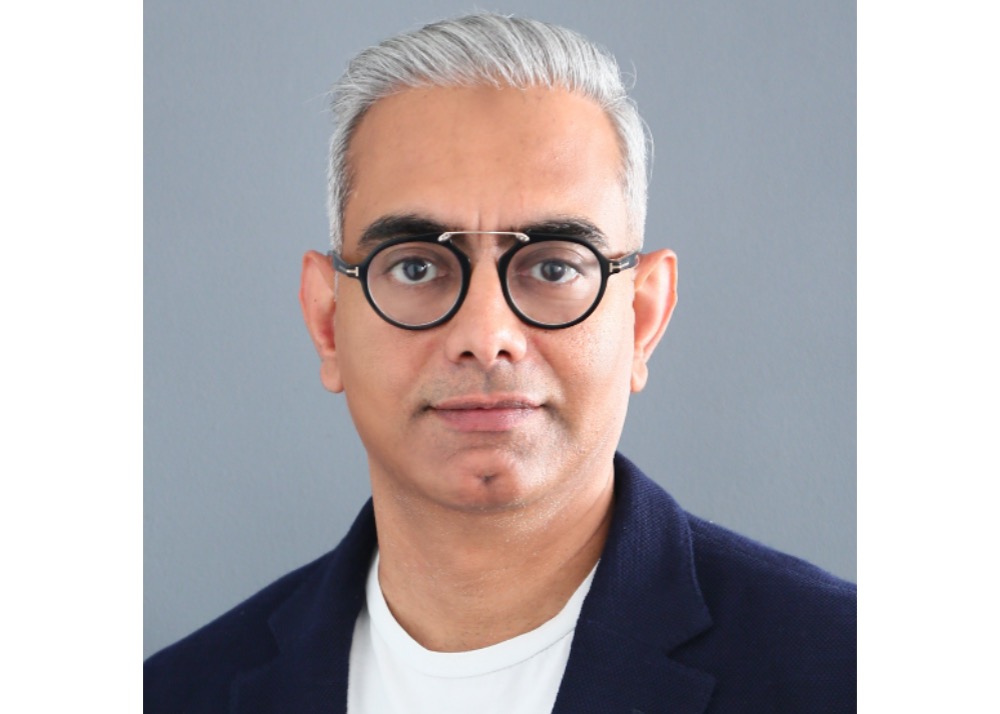
Agencies must connect shopper, media and technology expertise
Agencies are increasingly being asked to connect parts of the market that do not yet naturally speak the same language. They sit between advertisers, retailers and technology partners, which gives them a view of both the demand and the operational complexity.
Mazen Mroueh, Head of Retail Media and Partnerships, Publicis Media Middle East, part of Publicis Groupe Middle East, says that agencies have an important role to play because they can help retailers structure their offers while also helping advertisers understand where retail media fits.
“Agencies sit at a key intersection between technology providers, retailers and brands,” Mroueh says. “We also represent demand from advertisers.”
He adds that quick-commerce platforms have moved faster because their digital infrastructure makes media activation easier. Traditional retailers, by contrast, are moving at different speeds depending on their technology partnerships and commercial readiness.
However, agency capability itself is still developing. As brands start asking more sophisticated questions, the market will need people who can bring together shopper marketing, trade marketing, adtech, martech, data and creative.
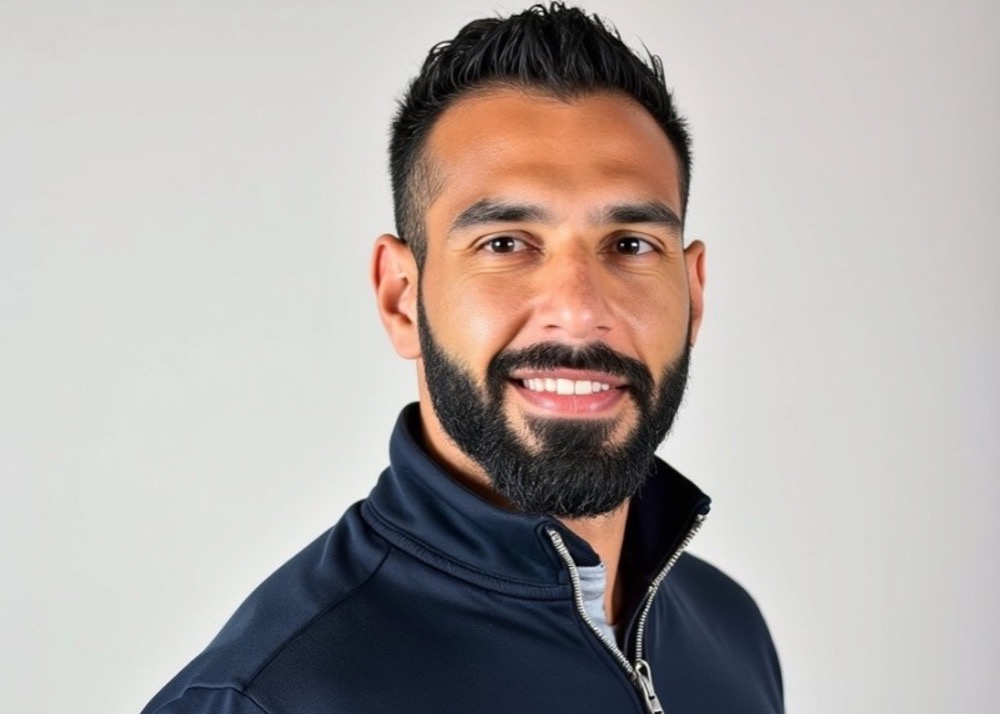
Allahwala says, “As the retail media scene moves from nascent to emerging, and eventually to thriving, you will find the demand for adtech and martech-specific people coming in who can make sense of customer marketing, trade marketing, adtech and martech together.”
ElGhannam also believes agencies can only fully support the channel once the broader ecosystem gives them better shopper insight.
The industry has spent years studying consumers, but it has not spent enough time understanding people when they are actively shopping.
ElGhannam says, “We haven’t got enough data and enough insights shared from the retailer to unlock the shopper mindset. Once you are in shopper mode, it’s different from the need, the consumption and the emotional benefits that we get trained on.”
The store remains retail media’s biggest untapped canvas
Despite the growth of online commerce, physical retail remains central to the region’s shopping behaviour. For consumer packaged goods in particular, the store is still where many decisions are made. That makes in-store media one of the most important, and perhaps most underdeveloped, parts of the retail media opportunity.
ElGhannam describes the store as the long-standing gap between media investment and purchase behaviour. Brands may spend heavily online, but the final decision often happens in front of the shelf.
“For us, the majority of purchases still happen in physical stores,” ElGhannam says. “Especially for consumer-packaged goods (CPGs), this has always been the biggest gap between whatever we’re spending online and the last three metres. This is where the purchase actually happens. This is where the choice happens.”
In MENA, she added, store visits often carry a wider cultural role. Shopping trips can be family occasions, seasonal rituals or social outings, which means brands need to think beyond price messaging and product shots.
The problem is that much of the content currently used in-store is not designed for the environment. Too often, brands repurpose television creative or focus almost entirely on promotions.
ElGhannam adds, “We haven’t yet evolved in terms of the content that we put there. We either put a price promo, or the picture of the product, or just slap our television commercial (TVC) there, which is completely irrelevant in terms of content creation.”
For Allahwala, the store contains an untapped opportunity to connect loyalty data with more useful messaging before purchase, not only after the transaction. His example was deliberately simple: using purchase patterns to remind shoppers when it may be time to replace a toothbrush.
Allahwala says, “Every 90 days, every three months, you are sitting on an amazing inventory of data. You know who is purchasing toothbrushes or toothpaste. Why don’t we work out something which is primarily a public service announcement but will help you grow the category?”
The point was not only about dental care. It was about the possibility of using retail data to create helpful, timely communication that benefits the shopper, the category and the retailer.
Allahwala adds, “That is the kind of thing where we need to have some of these things coming in from a post-purchase environment to a pre-purchase shopping mission environment.”
Why in-store media must balance relevance with trust
In-store media is also being reshaped by digital out-of-home infrastructure, programmatic screens and sensor-based technologies.
While these tools help make store messaging more responsive, they also raise questions about privacy, consent and how far personalisation should go.
Mroueh points to work with Majid Al Futtaim as an example of how store environments can become more measurable and dynamic.
Mroueh says, “They installed digital screens and integrated AI technologies such as computer vision to enable programmatic advertising in stores.”
The value, he says, sits across three groups: shoppers, retailers and brands. Shoppers can receive more useful guidance, retailers can develop new revenue streams and brands can measure the effect of exposure more directly.
Mroueh adds, “In one example we saw sales uplift of around 70 per cent for a targeted campaign. The opportunity is clear, but we need more retailers to adopt these capabilities.”

Salameh also sees progress in digital out-of-home and in-store media, especially where technology can detect broad audience signals and serve more relevant ads. However, he was careful to point out that stronger data layers introduce important questions.
Salameh says, “There is something very interesting happening. Companies use data and sensors in order to identify users within the store and show them ads that are relevant to them. To a certain degree, this is a significant step forward from where we were before – showing simply any ad to any user.”
He adds, “If a data layer is added to it, measurement would be much better. But again, that’s controversial because you have the privacy element, you have the data protection element, and I think this is why this is not happening. At The Trade Desk we see privacy-safe collaboration, such as consented first-party data and clean rooms, as a prerequisite, not an add-on.”
The tension is familiar: the technology exists, but the rules of responsible use must develop with it. Relevance cannot come at the cost of trust.
Online retail media and the region’s data advantage
“Online retail media provides many opportunities,” Tulloch says. “Brands can activate campaigns through our e-commerce platforms, apps and the Aura loyalty ecosystem, while extending the power of our first-party data off-site to reach relevant Alshaya audiences with personalized messaging wherever they engage”
She adds that the wider Alshaya ecosystem enables advertisers to reach audiences at scale, even when their own digital platforms or customer base are not yet sufficiently developed.
Salameh builds on this conversation, adding that the region has a particular advantage because its major retail groups bring together data across many types of behaviour.
“If you consider the likes of MAF, Landmark, Alshaya and others, I don’t think anywhere in the world you have one group that gathers a massive amount of audiences across different categories,” Salameh says.
He adds that the challenge is no longer only the existence of data, but how it is turned into a clear, differentiated and measurable proposition for brands.
Salameh says, “The value of this data is huge. But then how to activate it, package it, execute it and make sure that the value of it is clear to the client – that is the question. This is where an independent platform can help: extending a retailer’s data beyond its own properties, onto the open internet, CTV and audio, and connecting it back to sales.”
Is fragmentation slowing retail media’s scale?
As the opportunity expands, so does complexity. Brands and agencies are dealing with multiple retailers, quick-commerce players, pure-play platforms and omnichannel businesses, each with its own taxonomy, login, reporting framework and measurement approach.
That fragmentation increases cost and makes it harder for advertisers to plan, optimise and compare performance.
Several panellists emphasise the same point: without standardisation, retail media will remain harder to scale than it needs to be.
Mroueh says, “There are many retailers and technology providers entering the space. Each one has different systems and measurement frameworks. This creates complexity for brands and agencies. The more retailers adopt shared frameworks, the easier it becomes for brands to activate campaigns at scale.”
Allahwala makes the same point from the client side. For a CPG brand, the operational burden rises when every partner uses a different reporting structure and methodology.
He says, “The market that we operate in is quite fragmented. You have pure-play players, quick-commerce platforms, omnichannel retailers and QSR players, among others. Considering the scale, each one has their own taxonomy, reporting structure and way of working. As a client or as a CPG vendor, my cost to serve goes up.”
He adds, “There needs to be some semblance of standardisation from a taxonomy and reporting point of view, as well as clarity on the full-funnel data that advertisers can actually access.”
Measurement: the currency the market still needs
The strongest theme across the discussion is measurement.
Retail media’s appeal lies in its promise to connect exposure with outcomes, but the market still needs more consistent ways to prove incrementality, sales uplift, repeat purchase and basket-level impact.
Mroueh says that if the industry cannot agree on what it is measuring, it cannot expect advertisers to invest confidently.
“First, we need agreement on definitions,” Mroueh says. “Everyone should align on how we define audiences, KPIs and success metrics. We need more consolidation among technology providers. Too many different measurement approaches create confusion.”
ElGhannam frames the need more bluntly. Retail media should not be judged in the same way as channels that are further from the point of purchase. Its distinctiveness lies in its ability to influence the basket.
ElGhannam says, “The real measure is whether it got the consumer or the shopper to add your product to the basket or change their decision or not. Impressions are something that we have all across. Everyone gives impressions. This is really the one channel that has to convert.”
She also calls for richer audience understanding, including shopping cycles, basket size, loyalty behaviour and sales attribution within the same audience set.
ElGhannam adds, “We have to start off with that basic knowledge of who we are selling to, what do they buy, and what’s the outcome of our spend.”
Leaders also say that measurement must become faster and more useful during live campaigns. Post-campaign reporting is useful, but if insight arrives too late, brands cannot optimise creative, messaging or offers while the campaign is still active.
Allahwala says, “If we can manage 48 hours, I’m not even saying 24 hours, and we could work with the retailer, we could really get into this basket-level kind of data. Usually, if it’s there, it comes in after the campaign, so there’s very little room for optimisation.”
He adds, “If you have an API-based dashboard that advertisers can plug into, that would be extremely valuable. You could literally work on standard taxonomies and definitions across players.”
Beyond endemic advertising
One of the more intriguing areas of future growth is non-endemic advertising: allowing brands outside a retailer’s immediate product categories to use retail audience data.
This could open new commercial opportunities for retailers and new precision targeting options for advertisers.
Allahwala gives the example of a shopper whose grocery purchases may also indicate an affinity for beauty, travel or luxury categories. In that scenario, retail data can become valuable beyond the category in which it was collected.
Allahwala says, “This whole retail media now offers non-endemic advertising, which is such a big thing. I may be a mayonnaise lover buying Kraft Heinz peri-peri mayonnaise, but I may also be a big spender on beauty products or travel.”
He adds, “Because you can actually see the demographics and link these purchase behaviours, imagine the kind of opening it is making for the retailer just by having that network of retail media available.”
This is where the region’s multi-category retail groups may have a particular edge.
If they can manage privacy, governance and consent responsibly, their breadth of data could allow retail media to move far beyond simple product promotion.
For retail media to scale, consent, anonymisation, data clean rooms and transparent governance will need to become part of the operating model, not afterthoughts.
What would a thriving retail media landscape look like?
When asked what would need to be true in 18 months to say retail media is thriving in the region, the leaders pointed to a clear set of markers: education, recurring investment, shared measurement, standardised taxonomies, dedicated budgets and content built specifically for the channel.
Salameh says success would begin with a more informed ecosystem and more confidence from all sides.
“In 18 months, if you want to say that retail media is improving, I think we will have better education, better knowledge across the industry on the topic,” Salameh says. “The outcome of it is more recurring retail media activations within the clients’ media plans.”
Tulloch expects the channel to become more mature, more personalised and more structured internally.
She says, “I see the industry maturing significantly. We’ll likely see consolidation among technology providers, clearer budget ownership within organisations and stronger measurement frameworks. Retail media will also become more personalised, delivering more relevant communication for customers.”
Mroueh sees growth across the whole ecosystem, with more retailers launching networks, more brands investing and agencies becoming more deeply involved.
He adds, “I expect growth across the ecosystem. More retailers will launch retail media networks, more brands will invest and agencies will become more deeply involved. Ultimately the goal is to deliver better experiences for consumers while generating measurable value for brands and retailers.”
Allahwala is more specific about the mechanics required to move from emerging to thriving.
“For me to move from emerging to thriving, it’s going to boil down to two or three things,” Allahwala says. “Incrementality-based attribution, basket-level and repeat purchase rate, standardised taxonomies and definitions across pure-play, quick-commerce and omnichannel players.”
ElGhannam closes with a concise summary of what the market needs to change.
“I would say three things,” ElGhannam concludes. “One is shared measurement currency that the whole market accepts. Retailers selling audiences, baskets and outcomes – not shelves and screens. And brands having dedicated retail media budgets and content built specifically for retail media.”
The opportunity is not simply to create more ad inventory. It is to build a commerce media layer that improves the shopping experience, helps brands understand conversion more clearly and gives retailers a new growth engine beyond margin and footfall.
Retail media in the MENA region is, in many ways, like a store being redesigned while customers are still walking through the aisles. The lights are coming on, the shelves are being reorganised, new screens are being installed and everyone can see the commercial promise. But for the experience to work, the signage has to be clear, the floor plan has to make sense and the shopper cannot be forgotten somewhere on the construction site.
The message from marketers and industry leaders is that the region is at a decisive stage. The data exists. The retailers have scale. The brands are interested. The agencies and technology partners are building capability. What comes next is the harder work: agreeing to common standards, designing for the shopper rather than merely the screen, proving outcomes with confidence and turning retail media from a negotiated extra into a planned, measured and trusted part of the marketing mix.







