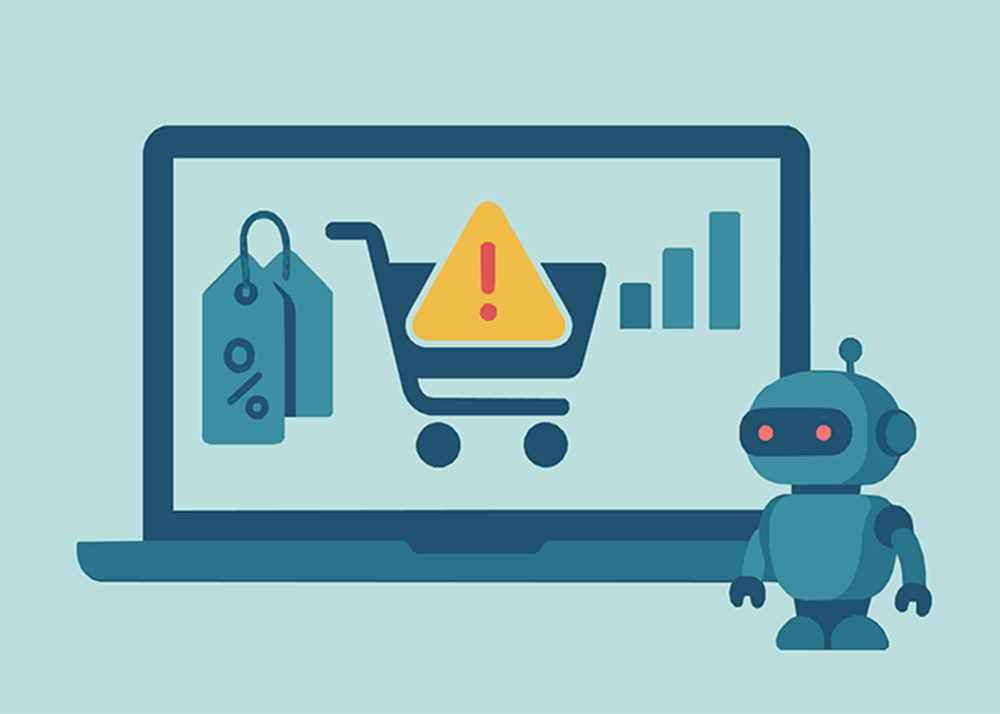
Retailers have moved online to grow faster and reach new customers. But along the way, many have unknowingly opened the door to competitor bots.
These bots look like customers. They visit sites, click ads and browse products. But their real goal? Scrape pricing, waste ad spend, and give rivals an unfair edge.

Dimitris Bakas, Senior Performance Marketing, Public Group, said, “Fraud traffic does not just waste ad spend. It distorts the data businesses rely on to make decisions. From customer acquisition to campaign optimisation, every strategy built on false signals risks failure. Protecting data integrity is no longer optional. It is a core driver of sustainable growth.”
According to Akamai report findings, 42 per cent of all digital traffic comes from bots, and 65 per cent of those are classified as malicious.
That means nearly a third of site visitors could be fake, and many are working directly against businesses.
How bots target e-commerce sites
Competitor bots scan e-commerce sites for pricing, availability, reviews and product data. They target websites, APIs and even mobile apps.
The goal is simple: extract pricing so competitors can undercut, a tactic known as price scraping.
These bots are often deployed by:
- Competitors running automated pricing strategies.
- Price comparison engines gathering data at scale.
- Third-party bot services (BaaS) offering scraping as a product.
Once scraped, pricing data gets used to adjust competitor listings.
This pulls customers away and chips away at margins.
Ad fraud: The hidden cost
A significant share of bot traffic interacts with paid ads, driving up costs without delivering results.
Bots are active across paid search and social platforms, silently draining budgets and corrupting performance data. They click on ads with no intent to buy, inflating spend and driving up cost-per-click.
Campaign metrics start to look healthy on the surface, lots of impressions, video views, or engagement, but there’s no real customer activity behind it. This kind of false signal throws off analytics, making it harder to optimise and easier to waste budget on campaigns that aren’t actually performing.
Over time, the damage compounds. Organisations are not just losing money, they’re making decisions based on data that doesn’t reflect reality.
Platforms misread this activity as real engagement. Campaigns appear to be working, so they get more budget. Meanwhile, cost-per-click rises and customer acquisition cost (CAC) spikes with no return.

Ad fraud is expected to cost $114bn in 2025 alone, according to Statista. A major share of that is driven by bots disguised as shoppers, silently draining budgets across ecommerce campaigns.
“The fundamental issue is attribution. Ad platforms optimise for engagement signals, but they can’t distinguish between a bot click and a genuine customer interaction. This creates a feedback loop where campaigns get rewarded for attracting fake traffic,” said Stephen Lamb, VP, Ecommerce & Growth Marketing, DIFF Eyewear.
Fake users ruin campaign data
Retailers using pay-per-click (PPC) campaigns rely on clean data to optimise spend. But bot traffic poisons the process.
Campaigns flooded with non-human traffic give a false signal: traffic looks high, but conversions don’t follow. Teams might ramp up spend based on fake performance, and fall further behind.

A study by Imperva suggests that 27 per cent organic and direct traffic includes bots and fake users. That means most marketing teams are paying to acquire fake users.
“The most dangerous clicks are the ones that look real. Fake users distort performance metrics, making bad campaigns look good and good campaigns look bad,” said Mohammed Kheder, Senior Performance Marketing Manager, MDLBEAST.
Inventory risks from resale bots
Some bots go all the way. They buy and they break the data.
Resale bots are built to grab high-demand inventory before real users get the chance. Think concert tickets, sneakers, consoles. These bots can complete purchases in milliseconds.
Retailers lose in several ways:
- Chargebacks from stolen credit card purchases
- Inventory loss from fraudulent transactions
- Legal exposure if fraud goes undetected
It might look like fast sales, but the hidden risks are real, and expensive.
How to spot the problem
Often, people won’t always see these bots coming, they’re good at pretending to be real users. They scroll, click, and even mimic mouse movements just like a human would. But if we know what to look for, the signs are there.
Start with traffic. If we seeing a surge in visits but conversions aren’t following, that’s a red flag. Bots can inflate traffic numbers without ever becoming customers.
Next, check for patterns. Are we noticing repeated clicks from the same IP address or from regions we don’t normally target? That kind of clustered activity often points to non-human behaviour.
Watch bounce rate, too. A wave of users landing on a page and leaving almost immediately, without any meaningful interaction, usually means something’s off. Real prospects don’t behave that way.
And finally, look at ad campaigns. If engagement looks strong on paper, lots of impressions, clicks, or video views, but return on investment is flat or falling, bots could be the ones doing the clicking.
They’re invisible at a glance, but once we know where to look, the patterns start to show.
How to fight back
The good news? We don’t have to just sit back and let bots drain the ad budget. There are practical steps we can take to protect the business. Start by monitoring traffic patterns closely. If there’s a consistent mismatch between high visit numbers and low conversions, that’s worth investigating. It often signals something’s not right under the hood.
Next, put fraud detection software the best tools can spot non-human behaviour in real time, blocking fake clicks, filtering out suspicious sessions, and preventing the same bots from hitting ads repeatedly.

Finally, make sure campaign data stays clean. By excluding bot traffic from analytics, we get a clearer picture of how ads are performing with actual customers. That means better decisions, better optimisation, and ultimately, better returns.
Sure, stopping bots saves money. But more importantly, it helps make smart, data-backed decisions that actually grow the business.
“Protecting your funnel starts with protecting your data. If you’re not filtering bots at the source, every decision, budget, targeting, bidding, is built on corrupted inputs. No tool can optimise around fake signals,” Nasser Oudjidane, CEO and Co-Founder, Tapper.
Bottom line
Competitor bots are targeting prices, draining budgets, and distorting data. They’re not going away. But with the right tools and awareness, organisations can stop them from eroding performance.
Retailers who take action early protect their margins, their customers, and their growth.