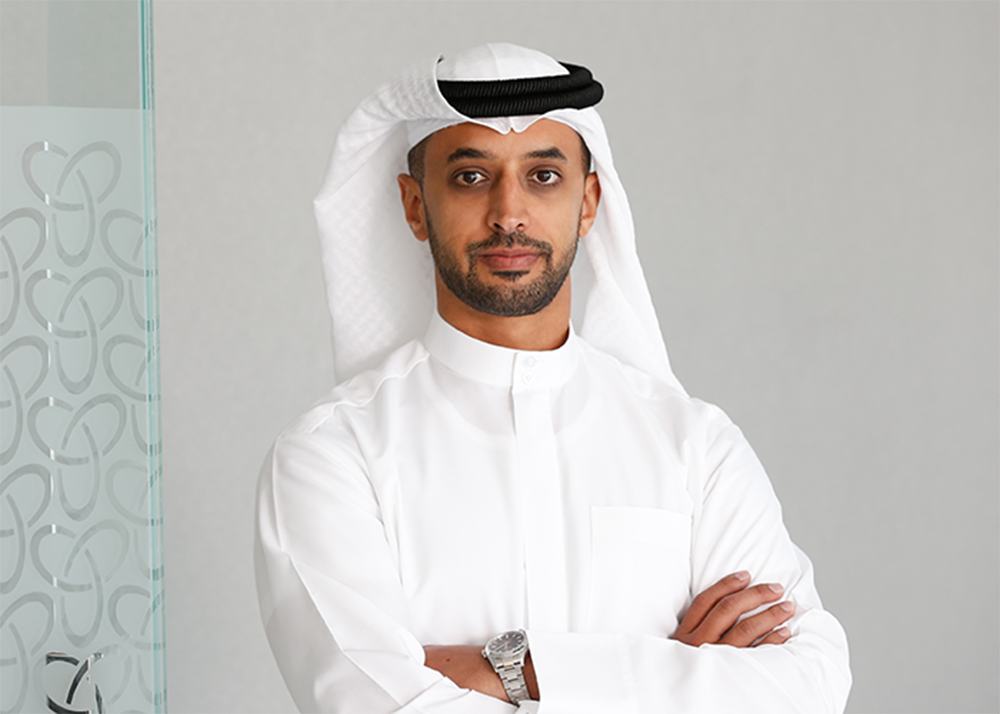
 Ahmed Bin Sulayem, Executive Chairman and CEO, DMCC
The economics of modern game development and play have fundamentally shifted. As the cost and complexity of producing triple-A titles have risen, studios have moved away from single-purchase releases toward persistent live-service ecosystems.
The industry is no longer a collection of games competing for attention, but a network of digital worlds competing for time, identity and economic activity.
At the same time, gaming is colliding with the global AI compute boom. As hyperscalers secure GPUs, memory, and storage for artificial intelligence infrastructure, supply chain pressure is spilling into gaming hardware.
The result is volatility in pricing, availability, and launch timing across devices, leading to trust emerging as one of the industry’s most valuable currencies.
Cyberpunk 2077 provides a defining case study. After a widely criticised launch, sustained updates and expansion content helped restore credibility.
By 2025, total sales had surpassed 35 million units, illustrating that in a software-driven market, the release date is no longer judgement day, but the starting line for a race built around trust and transparency before marketing velocity.
Yet the efficiency gains driving the sector come with tension. Generative AI is accelerating production pipelines and enabling smaller teams to build at scale.
At the same time, it raises concerns around intellectual property, labour displacement, and regulation. As a result, governance is becoming more operational than theoretical, as evident in the ratification of new AI protections within performer contracts.
The most disruptive frontier to play, however, may not be visual fidelity or budget size, but immersion and algorithmic competition.
In Abu Dhabi, the Abu Dhabi Autonomous Racing League has turned AI systems into competitive athletes. Driverless vehicles compete wheel-to-wheel at racing speed, demonstrating that code itself can become the protagonist.
In one Human vs AI showcase at Yas Marina Circuit, former Formula 1 driver Daniil Kvyat recorded a best lap of 57.57 seconds, while a fully autonomous car from the Technical University of Munich completed the circuit in 59.15 seconds. Beyond spectacle, it signals a broader shift toward algorithm-driven competition, where strategy is expressed through software rather than solely through human reflex.
At the same time, platforms such as Roblox demonstrate how infrastructure has become the real moat, with virtual and augmented reality extending this trajectory even further.
Play is moving beyond the screen into immersive, shared environments with AI supporting this transition in three parallel ways. Firstly, through scalable production where smaller teams can build bigger worlds faster.
Secondly, through personalisation, ensuring content adapts to the player through behavioural modelling, and thirdly, through the increased competitiveness of AI-driven systems to create new contest formats where strategy is expressed through algorithms, as illustrated by A2RL.
As games turn into economies, the hardest work becomes the invisible business of uptime, trust, payments, identity, moderation, and the rule-sets that keep digital markets functional. It is also the main reason why the industry’s most-watched releases now behave like macro-events, case in point Rockstar’s Grand Theft Auto VI release set for 19 November 2026.
Dubai’s opportunity is not to outproduce the world’s largest studios, but to host the infrastructure layer that enables global creators to build, scale and monetise credibly and compliantly.
This ambition is reflected in the Dubai Program for Gaming 2033, which aims to position Dubai among the world’s top ten gaming hubs and create 30,000 jobs.
As the boundary between gaming and the broader creator economy dissolves, the next generation of play is emerging as a fully-fledged digital economy built on identity, distribution, infrastructure and trust.
In a world where digital nations are forming faster than physical ones, the jurisdictions that can govern them effectively, and provide resilient platforms for creators, will shape the next era of growth. Dubai intends to be one of them.
By Ahmed Bin Sulayem, Executive Chairman and CEO, DMCC