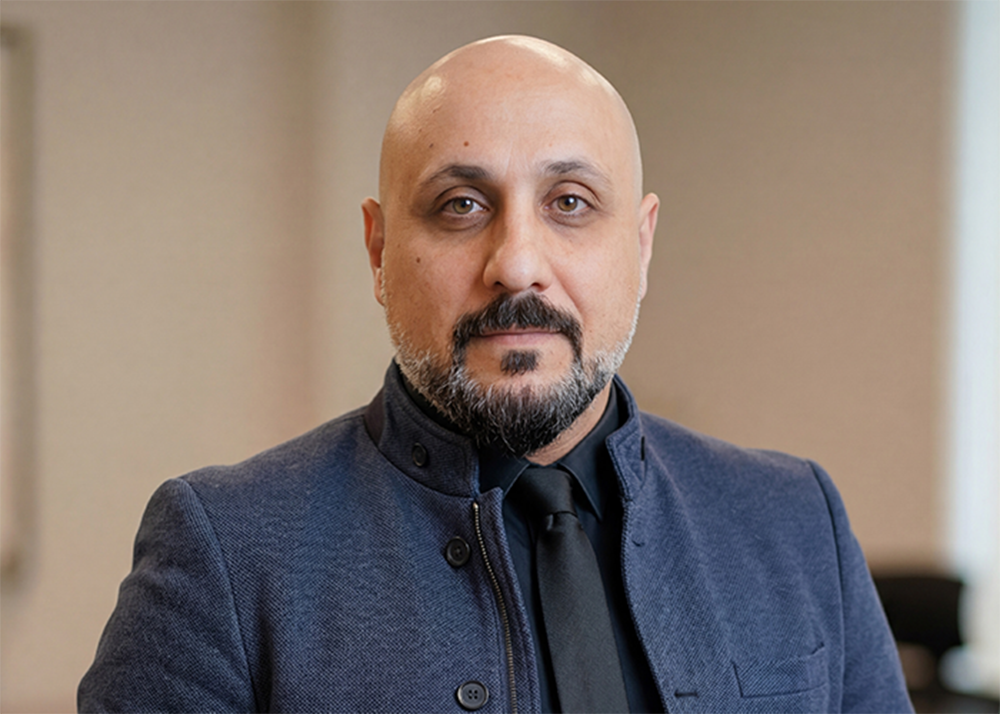
 Firas Alkhuffash, Creative Director and AI Storyteller
For years, whenever something big changed in the creative field, people would say the same thing: “This will replace creatives.” It happened with digital design. It happened with 3D animation. And today, it is happening again with artificial intelligence (AI).
History has a way of proving that new tools don’t take the place of creative people, but instead, they open up more possibilities for them. This means that creatives can do even more and achieve greater things with the help of these new tools.
The current narrative around AI in animation is often driven by fear rather than a clear understanding of the craft. The idea that AI will replace designers and animators assumes that animation is purely technical. In reality, animation has always been about intention, timing, and storytelling.
AI can generate movement. But it cannot define meaning.
From production bottlenecks to creative flow
For a long time, traditional animation has been held back by how long it takes to get things done.
Rendering, keyframing, compositing, and revisions are not just technical steps — they are production bottlenecks that limit how far an idea can evolve before deadlines intervene.
AI is fundamentally reducing these constraints. What once required hours — sometimes days — can now be explored in minutes. This shift allows creatives to redirect their energy toward higher-value thinking:
- concept development
- narrative structure
- visual direction
This is not replacement. This is acceleration.
Case study: AI in global creative workflows
There is growing, well-documented evidence of AI being integrated into creative workflows at both brand and agency levels.
For instance, Coca-Cola launched a project called “Create Real Magic” in 2023, where they asked creative people to work together with artificial intelligence tools, like OpenAI’s DALL·E, to make visual content for their brand.
This project showed that AI can be a helpful tool for coming up with new ideas, rather than replacing the people who work on creating content. It’s a way for humans and machines to work together to create something new and exciting.
Levi’s recently tried using a type of artificial intelligence called generative AI to make a wide range of model pictures for their online store. This move got a lot of people in the industry talking about how AI is changing the way we create and show images, and what that means for how we represent different people and things.
In both cases, AI was not positioned as a substitute for creatives, but as a tool to:
- accelerate content generation
- explore variations
- support creative decision-making
The main point is simple: artificial intelligence is being used to improve the way creative work is done, not to replace it.
Case study: the rise of AI-driven motion tools
On the production side, AI-powered tools are already transforming how motion content is created.
Advanced tools such as Seedance 2 and Kling 3 are enabling creators to generate and iterate motion-based visuals with significantly reduced production time.
Rather than replacing animators, these tools are:
- reducing repetitive technical processes
- accelerating iteration cycles
- enabling faster transitions from concept to execution
What previously required full-scale production pipelines can now be explored by smaller teams — or even individual creatives — with a strong vision.
The barrier to entry is lowering, but the expectation for creative quality is rising.
Hands-on perspective: from concept to execution
In real life, the effect of AI is not just an idea – it’s actually happening.
In my own work across cinematic storytelling and AI-driven content creation, projects that once required extensive setup, long rendering cycles, and multiple revision stages can now move from concept to visual output in a fraction of the time.
This does not eliminate the need for creative direction — it amplifies it. The shift is simple: Less time spent on execution. More time invested in thinking.
AI enables:
- rapid exploration of visual ideas
- real-time iteration
- more refined storytelling decisions
It’s not just about having better tools that makes things better. but by giving creatives more time to think and refine.
Speed as a creative advantage
Speed is often framed as efficiency. In reality, it is a strategic creative advantage. Faster workflows allow creatives to:
- test more ideas
- explore multiple directions
- refine outputs more effectively
Where traditional production often forced early commitment, AI allows for exploration before final decisions. This expands creative potential rather than limiting it.
The evolution of the animator
As AI takes over repetitive layers of production, the role of the animator is evolving.No longer limited to execution, the modern animator is becoming:
- a creative director
- a visual strategist
- a storyteller
The value is shifting from how something is made to why it is made. AI handles execution layers. Humans define vision.
Debunking the replacement myth
The belief that AI will replace animators assumes that animation is purely technical.
It is not. Animation is built on:
- storytelling
- timing
- emotion
- cultural awareness
You just can’t make these things happen automatically in a way that makes sense or is consistent. What AI replaces is repetition. What it enhances is potential.
The industry is asking the wrong question. It is not: “Will AI replace animators?”
It is: “How will creatives redefine their value in an AI-driven world?”
Those who resist will feel threatened. Those who adapt will redefine the industry. AI does not mark the end of animation. It marks the beginning of a more fluid, exploratory, and idea-driven creative era.
An era where:
- execution is faster
- iteration is deeper
- and creativity is less constrained by production limits
The animator is not being replaced. They are being elevated.
By Firas Alkhuffash, Creative Director and AI Storyteller