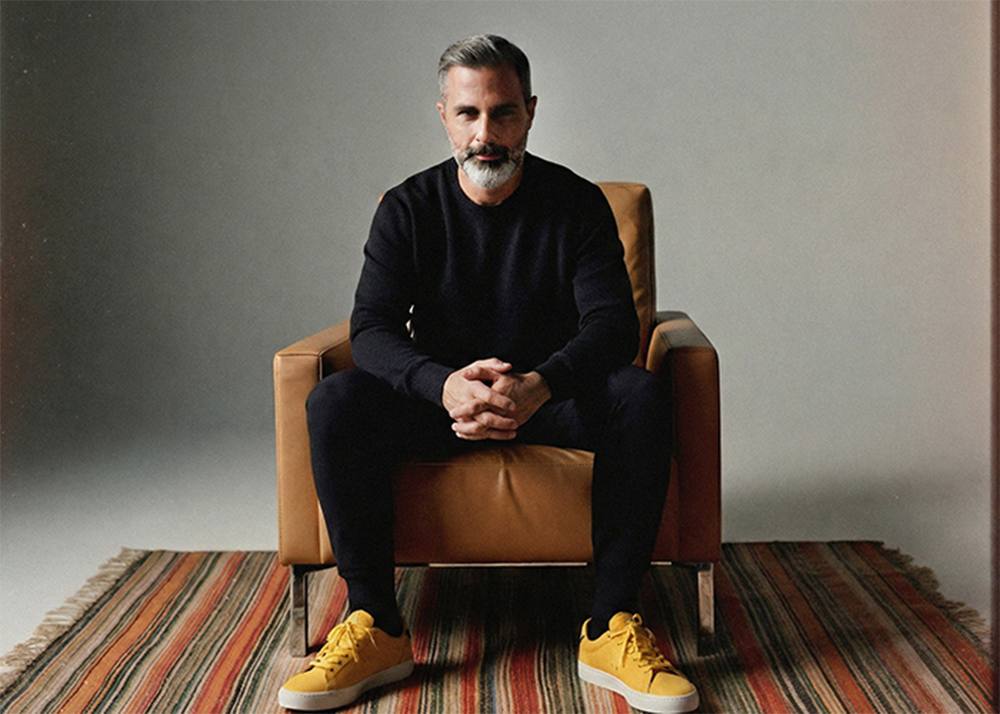
 Mo Alghossein, Founder and Chief AI and Creative Technologist, 1N7ERES71NG 71MES
We are living in interesting times. Not the postcard kind; the Chinese curse kind. The ground is shifting. The algorithms are writing rules we never agreed to. And here’s what everyone misses while optimising their dashboards: inflection points don’t reward operators. They never have.
The ones who mastered the old system, the old workflows, the old pipelines – they’re beautifully trained for a world that’s quietly dissolving. Moments like this, the ones that arrive twice a century, if you’re lucky, reward something else entirely: vision. The reckless belief that you can see what is not there yet.
The last time tools changed this fast, we got the internet. Before that, cinema. Before that, the printing press. And every time, the winners weren’t the ones who used new technology to do old things faster. They were the ones who realised you could do entirely different things. Things that didn’t have names yet.
Now the industry is breathless about AI. Understandably. But almost everyone is asking the wrong question: How do we use generative AI to make more stuff faster?
Videos rendered in minutes. Campaigns summoned from prompts. An endless flood of synthetic assets. The trades gasp, applaud, pivot to scale. This is the shallowest possible reading of the moment. We’re holding foundation models that could reshape how humans think and create, and we’re pointing them at the assembly line.
We’ve been handed a revolution. We’re using it to optimise the status quo. We’re so busy marveling at hyper realistic AI video demos that we can’t see what happens when intelligence becomes infrastructure instead of performance.
Intelligence as infrastructure doesn’t mean ‘AI writes your copy’. It means something more fundamental: the brief arrives and the system has already pressure-tested its assumptions. Research isn’t a phase – it’s ambient, continuous and already synthesised by the time you sit down. Your institutional memory, every deck and debrief and post-mortem from the last decade, searchable not by filename but by meaning.
The meeting isn’t about catching up. It’s about deciding what matters. This isn’t science fiction. The components exist is our current times. Retrieval systems that surface what you forgot you knew. Agents that orchestrate workflows while you sleep.
Embeddings that find the connection between this brief and something your team wrote three years ago. The gap isn’t technical. It’s imagination. Here’s the uncomfortable truth: much of what we called work was never work at all.
The coordination. The reformatting. The rescheduling. The tools that promised efficiency and delivered quicksand. All of it automated now – not to replace us, but to reveal what we’re capable of when the friction disappears.
The creative industry scoured the earth for people who could see around corners. People who could hold an idea that didn’t exist yet and make others believe in it. And then, with great ceremony, we gave them status meetings. We found storytellers and made them fill timesheets. We built systems for those who could survive the grind and politely filtered out those who could imagine the leap.
We hired these people for their judgement. The instinct that surfaces when research is inconclusive and someone must decide. For taste no training data can teach. Then we drowned them in process and called it professionalism.
No model replaces that judgement. AI clears the path to it. Every brief pre-tested against its weak assumptions, inference running in the background while you focus on the work that matters.
The human conversation becomes about what only humans can do: the gut call, the creative risk, the conviction that this is the idea worth fighting for. This is the real automation – not the automation of creativity – the cognitive automation of everything preventing creativity from happening.
The bureaucracy is evaporating. Automated into irrelevance. And what remains belongs to the ones who were supposed to lead but kept getting pulled into meetings. The ones who maintained creative instincts despite years of administrative suffocation.
The strategists who believe the right question outweighs a thousand optimised outputs. The ones who challenge things because they can’t help it. The ones arrogant enough to believe they can change how people see the world. The industry needs them now more than ever.
I look at what’s possible in our current times and I cannot sit still. Do you remember how it felt when you started? When everything was new, everything was discovery, and the work itself was the reason you showed up? Before the meetings, the process, the learned habit of lowering expectations so disappointment wouldn’t sting?
That feeling is available again. Not as nostalgia. As possibility. The bottleneck was never talent. Never ideas. Never compute. It was the courage to change. These interesting times demand nothing less.
Fortune favours the brave. It always has.
By Mo Alghossein, Founder and Chief AI and Creative Technologist, 1N7ERES71NG 71MES