

Most people in media spend a career on one side of the transaction.
They become very good at it. They develop instincts, relationships, and a worldview that makes complete sense — from where they’re standing.
The problem is that the person on the other side of the table has a completely different worldview. And as long as both sides only ever see their own half of the picture, the industry keeps leaving value on the floor.
I spent 13 years at Initiative, one of MENA’s leading media agencies, planning and buying across some of the region’s most demanding accounts. I managed over $50M in annual media investment. I sat across the table from every major OOH supplier in the UAE and broader MENA market and made decisions about where client budgets went — and why.
Then I crossed the floor.
Moving into OOH ownership and operations gave me something I didn’t expect: not just a new perspective, but the sudden ability to see everything I hadn’t been able to see before.
Here’s what the view looks like from both sides.
What agencies don’t see
When you’re buying media on behalf of a client, your primary lens is performance. You’re optimising for reach, frequency, cost per thousand, campaign objectives. You’re working from a plan that was built weeks or months ago, with a budget that was approved in a boardroom, against targets that were set by someone who may never have seen a billboard in person.
What you often miss is what’s happening on the supplier side in real time.
Premium inventory — the sites that actually move brand metrics — doesn’t sit in a rate card waiting for you. It gets allocated through relationships, forward planning, and commercial trust that takes years to build. The agency that walks in with the biggest budget doesn’t always get the best sites. The agency with the deepest relationship does.
I didn’t fully understand that until I was the one deciding who got the inventory.
What media owners don’t see
The other side of the table has its own blind spots.
OOH suppliers often underestimate how a campaign brief actually gets written. By the time a media owner receives an RFP, the strategic decisions have already been made — channel splits, budget allocations, measurement frameworks. OOH has frequently been briefed as an afterthought, allocated whatever budget survived the digital conversation. The supplier who responds with a rate card is playing a losing game.
What changes the conversation is when a media owner understands what the client is actually trying to achieve — not just what they asked for in the brief. That requires the kind of strategic fluency that most media owners haven’t prioritised, because it looks like an agency skill, not a supplier skill.
It’s both. And the media owners who recognise that are the ones building genuine partnerships instead of transactional relationships.
What MENA’s OOH market is getting right — and where the gap still is
The numbers are compelling. OOH in MENA is growing at 17.5 per cent, fuelled by major investments in programmatic digital formats, with DOOH forecast to account for 38.6 per cent of all OOH revenue in 2025. The MENA DOOH market is expected to reach $390M in 2025 and grow at a CAGR of 16.41 per cent to reach $835M by 2030.
The infrastructure is being built at pace. Smart cities, 5G integration, NEOM, Saudi Vision 2030 — the physical canvas for outdoor media in this region is becoming one of the most sophisticated in the world.
But here’s the gap that the numbers don’t show:
The technology is outpacing the strategy.
Programmatic represents approximately 2 per cent of GCC DOOH spending — a small but growing segment of what remains a predominantly direct-buy market. Brands are being sold programmatic capability that exists in theory before it exists at scale in practice. Creative teams are producing static assets for dynamic screens. Measurement conversations are happening without agreed-upon frameworks.
The medium is evolving faster than the industry’s collective ability to use it well.
The OOH opportunity that nobody is talking about
The most valuable position in MENA’s OOH market right now isn’t on the agency side or the media owner side.
It’s in the space between them.
The brands, agencies, and media owners that will win the next decade of outdoor advertising in this region are the ones that close the gap between what agencies know about brand strategy and what media owners know about inventory, infrastructure, and audience behaviour in the physical world.
That requires people who’ve sat on both sides. It requires conversations that go beyond rate cards and briefs. It requires an industry that stops treating media owners as vendors and agencies as adversaries — and starts building the kind of commercial partnerships where the goal is shared.
Fifteen years in this industry has convinced me of one thing above everything else:
The medium isn’t the constraint. The relationship between the people who plan it and the people who own it is.
Fix that, and OOH in MENA doesn’t just grow at 17 per cent.
It transforms.
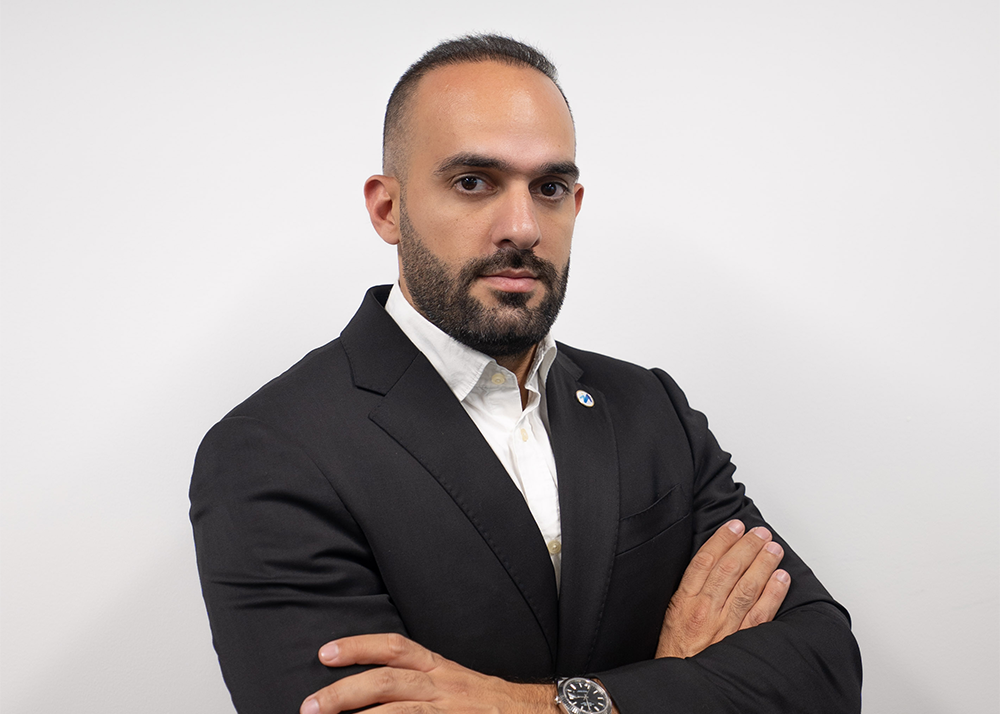
By Safwat Abdulkhalek, General Manager, Info Media Group – Middle East.