For several years, luxury brands have viewed the Middle East as a high-margin, standardised sales market. Ideas were developed from global insights rather than regional ones. Campaigns were launched elsewhere and then travelled in. People in the region were expected to receive and react to a translated version of someone else’s aspiration. That old model now feels like a borrowed suit – crafted with expensive fibres, but not quite a custom-fit for the person wearing it.
The simple truth is: success in luxury marketing can no longer be imported or appropriated. Customers in the region have become highly informed, discerning and far more critical in their choices of luxury brands and products. Beyond global trends, status, prestige and reputation, factors such as cultural identity, emotional authenticity, brand character, and positive offline and online experiences have begun to shape purchase intent across all luxury sectors.
As a result, the definition of luxury is expanding beyond a demonstration of opulence to encompass exceptional craftsmanship, exclusivity and scarcity, heritage and personalisation, specialised services and seamless experiences, pricing power and long-term value, as well as the knowledge and timing to mark memorable milestones.

Campaign Middle East speaks to marketers and agency leaders – all of whom agree that the Middle East can no longer be treated as a late-stage execution market. They explain that Saudi Arabia, the UAE and the wider Middle East and North Africa (MENA) region are not borrowing luxury but are shaping how luxury is understood, signalled and experienced.
This shift brings both opportunity and discomfort. It requires brands to become more accountable and less performative. It requires agencies to move beyond production muscle and bring sharper thinking to the table. Luxury can no longer rely on expensive noise; it has to earn attention, deepen trust and deliver meaningfully at every touchpoint.
Contributing to this conversation are:
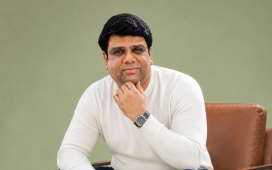
- Gaurav Midha, Head of Marketing and Omnichannel, Damas,
- Ahmed El-Gamal, Executive Director at a luxury hospitality brand,
- Alix Petit, CEO, The Refreshment Club,
- Raksha Khimji, Managing Director, Team Red Dot,
- Rana Zeidan, Regional Business Director – MENA, Wavemaker, a WPP Media Brand,
- Claire Peach, Media Director, iProspect MENA,
- Manal Naboulsi, Business Lead, Spark Foundry,
- Wesam Ayyash, Client Managing Director, EssenceMediacom, and
- Rusty Beukes, Creative Director, HAVAS Red Middle East.
No longer a translated luxury story
The region now demands original thinking, not imported work with a regional finish. This is not about abandoning global brand identity; it is about finding where that identity meets local meaning with elegance, relevance and discipline.

“The Middle East is no longer a market you adapt for; it’s one you design for,” says Gaurav Midha, Head of Marketing and Omnichannel, Damas. “We firmly believe that regional authenticity isn’t a compromise of global brand codes; it’s an elevation of them. Luxury here is deeply rooted in heritage and in life’s most meaningful moments. The brands winning today are those building regional narratives with genuine cultural intelligence, not those simply translating campaigns.”

Manal Naboulsi, Business Lead, Spark Foundry, adds, “True localisation is not about translating campaigns; it’s about building relevance into the experience itself – whether that’s across retail, clienteling, partnerships and platform strategy or across environments such as premium out-of-home (OOH), connected TV and TikTok. The brands winning here are those designing from the market up, while protecting their global codes with discipline.”

However, according to Claire Peach, Media Director, iProspect MENA, designing for the Middle East market requires far more than minor campaign adjustments.
Peach says, “Markets such as Saudi Arabia and the UAE have evolved into highly influential luxury economies with distinct cultural nuances, consumer behaviours and expectations of brand experience. True market specific luxury marketing means building strategies from within the region’s cultural context while protecting the integrity of the global brand.”
Don’t paint MENA with a broad brush
Marketers also remind the industry to resist the lazy habit of treating the MENA region as home to a homogenous audience. The UAE and Saudi Arabia may sit close together on the map, but their luxury cultures are not all adorned in similar hues.

“For too long, the Middle East has been treated as a distribution market with a local costume: brands localising the surface without ever interrogating how status works here,” says Ahmed El-Gamal, Executive Director at a luxury hospitality brand. “The UAE may read luxury through a cosmopolitan lens, while Saudi may find luxury and national identity being discovered simultaneously.”
Alix Petit, CEO, The Refreshment Club, also warns that the biggest error luxury marketers can make is to flatten the region into a single persona.
“Dubai, Abu Dhabi, Riyadh, Jeddah and Doha do not have the same rhythm, the same codes, the same social dynamics or the same relationship to public display,” Petit says. “A strong luxury brand should not become more local by becoming less itself. Instead, it should become more relevant by understanding the local emotional architecture,” Petit says.
The best examples, leaders suggest, are those that do not paste on cultural signals but understand the social codes behind them.
So, what works?
The good news is that the core codes of luxury – heritage, craftsmanship and exclusivity – resonate beautifully. What doesn’t work is the assumption that the same story told in Paris will land the same way in Riyadh.

“The Middle East has not just outgrown the adaptation model, it is abandoning the model,” says Wesam Ayyash, Client Managing Director, EssenceMediacom. “Consumers in Saudi Arabia and the UAE are no longer waiting for global luxury brands to acknowledge them; they are setting the terms of engagement: a young Saudi woman who discovers a Cartier piece through a creator she trusts or an Emirati who expects a brand experience that reflects his world rather than a translated version of someone else’s. This represents something that the old adaptation playbook simply wasn’t built for. The brands getting this right are the ones that have stopped treating cultural intelligence as a production line item and started treating it as a strategic one.”
In the MENA region, privacy, invitation, hospitality and storytelling are not decorative themes; they are part of how luxury is experienced. A brand that understands these distinctions can fuse the logic of global quality and scarcity with the emotions hidden within status and exclusive experiences.

Raksha Khimji, Managing Director, Team Red Dot, points to Dior as a brand that has understood the region’s desire for discretion and delight.
“The Dior D’Or – the Gold Capsule – campaigns have been specifically timed around cultural moments such as Ramadan and Eid, when the brand releases highly exclusive, gold-themed luxury clothing, shoes and handbag capsules in the Middle East,” Khimji says. “Some of its marketing efforts in recent years include highly curated, invitation-only majlis style pop-ups in major Middle East hubs where it relies on closed community engagement – such as secret messaging groups and the DIOR AE platform – to offer bespoke experiences to top-tier clients. They understand the nuance of privacy and exclusivity in this region.”

Rana Zeidan, Regional Business Director – MENA, Wavemaker, a WPP Media Brand, reinforces this point, noting how the luxury sector is increasingly building brands around moments that carry genuine weight in specific markets.
“In Saudi Arabia, luxury is becoming more culturally rooted, especially around moments such as Ramadan, Founding Day and National Day, with a stronger emphasis on local creators and community relevance,” Zeidan says. “In the UAE, luxury remains more globally connected and lifestyle-driven, where audiences expect innovation, exclusivity and elevated experiences.”
Here lies the creative challenge: not to over-explain the region back to itself. Luxury consumers in the MENA region do not need another campaign leaning into familiar postcard imagery. They need brands to understand the layers beneath public taste: family, gifting, status, national pride, privacy, global fluency and the desire to be recognised without being exposed.

Calling for luxury marketers to view each community in the MENA region as a source market rather than a satellite market, Rusty Beukes, Creative Director, HAVAS Red Middle East, says, “The brands that stand out in the region aren’t adapting to it; they’re building from it. The real complexity, especially in the UAE, is that you’re not speaking to one culture but to dozens, with nationals as the gravitational centre. There’s a new generation of spenders who have developed genuine taste literacy and can immediately tell when a brand is talking at them rather than to them.”
Clearly, Beukes is right. Big luxury brands are now beginning to build from the region. Bottega’s Square originated in Dubai before going global. The Prada Mode Abu Dhabi event built its cultural programme around Arab women and the traditional, handwoven Al-Sadu craft. Dior redesigned its entire Saudi exhibition around AlUla rather than importing ideas from its haute couture ateliers at Avenue Montaigne in Paris.
Why relevance and revenue need the same architecture
Leaders point to another gap that must be bridged within the luxury marketing landscape: the separation of cultural work from commercial work.
Both relevance and revenue must fuel the same journey. A luxury brand must be seen in culture. It must be desired from a distance. It must be experienced with depth. It must be remembered with care and create aspiration while being commercially viable at niche price points.
El-Gamal explains that such aspiration is not achieved through access, but built on foundations of restraint.
“Desirability is not built through exposure; it is built through distance. Aspiration is the mechanism that makes that distance feel like it can be closed,” he says. “The moment a luxury brand anchors its cultural presence around its most accessible audience, it does not democratise aspiration, it extinguishes it.”
He adds, “You cannot aspire to something already within reach. The iconic hotel property that hosts a young creative dinner series understands this instinctively; it generates visibility while remaining aspirationally out of reach. This simultaneously seeds desirability within an emerging community and cultivates the next generation of guests – who will spend years working toward the moment they can finally afford to be there.”
Petit believes the job is to build a system in which distinct audiences experience different degrees of closeness to the brand.
“Marketers need to stop separating brand and business as if they are two different conversations,” Petit says. “Cultural relevance should create aspiration. Aspiration should create desire. Desire should eventually create business contribution, even if not always immediately. The role of strategy is to connect these layers instead of treating them as isolated campaigns.”
Petit claims that the future belongs to brands capable of building what she calls “a layered communication system”.
She explains it as: “One narrative with multiple levels of intimacy: public culture for visibility, private experiences for value, customer relationship management (CRM) for continuity, retail for conversion, and content for emotional depth. That is how you build a future audience without abandoning the current one.”
“The mistake is when brands over-invest in what is visible because it is easier to present internally.”
The Gen Z debate: Visibility or value? Loudness or loyalty?
Seems like no one can discuss the future without bringing up what matters to younger generations. Leaders agree that luxury marketing cannot afford to dismiss Gen Z audiences because they are shaping culture, language, formats and the future of aspiration.
Yet, the people creating some of the most engaging conversations are not always the people offering the most commercial value – today. But, then again, luxury was never built for today alone.
“Gen Z is one of the fastest-growing audiences and by 2030 will represent 60 per cent of the global workforce, but they are not driving the lion’s share of luxury spend today,” El-Gamal says. “The industry has been seduced by a visibility trap that social and digital algorithms actively reward, especially thanks to all the self-made influencers. However, visibility does not drive value; in fact, sometimes it destroys it entirely as it becomes too mass and accessible.”
Bottega Veneta under Daniel Lee is the cleanest proof point, leaders say. The brand went almost entirely dark on Instagram at its peak and re-emerged with dramatically elevated desirability. This is because consumers felt they discovered a luxury brand rather than being targeted by one.
Explaining the beauty of restraint, El-Gamal adds, “Absence is not a void; it is a signal. Desire, not unlike attraction, is built through deliberate restraint rather than constant availability. Think of it like dating or playing hard-to-get.”
Petit adds that luxury marketing has, at times, become too enamoured with what looks exciting on a PowerPoint presentation. She agrees that while visibility matters, the luxury sector has sometimes confused visibility with value.
“A campaign with creators may look exciting in a report, but if it does not build desirability, client relationships, store traffic, conversion, retention or brand equity, then it is not really doing the job. Gen Z matters, of course, because they shape culture, language, digital behaviour and future aspiration. Ignoring them would be a mistake. But building an entire luxury strategy around visibility, creators and youth culture can become very superficial if it is disconnected from actual business contribution, loyalty and long-term client value,” Petit says.
Here are the facts as the leaders see them: In the Middle East, value often sits in quieter places, including among established family offices, high-net-worth (HNW) women, entrepreneurs, collectors, private clients, brides, loyal repeat customers and affluent gift purchasers. These audiences may not generate daily social chatter, but they can shape revenue, reputation and intergenerational loyalty.
Naboulsi is direct about this imbalance: “Many have over-indexed on Gen Z, creators and visibility. At times, it’s come at the expense of real value. In the Middle East, the core of luxury growth is still driven by ultra-high-net worth (UHNW) clients, particularly in high-ticket categories. These are consumers with deep brand relationships and long-term loyalty, not just transactional intent. Gen Z matters, but more as future equity than immediate revenue. The risk today is confusing noise with growth. Visibility alone doesn’t build value.”
Ayyash adds, “The focus on Gen Z and creator culture has produced some genuinely exciting work, but it has also created a risky blind spot. One where we confuse visibility with value and reach with revenue. The reality on the ground in the Middle East is more nuanced. The consumers driving the greatest spend and the deepest brand loyalty today are not necessarily the ones generating the most content or appearing in the most campaign briefs. They are the established UHNW individuals, the multigenerational family decision-makers, and the quietly affluent 35-50-year-old demographic who have been loyal to certain maisons for decades, and whose relationship with luxury is rooted in meaning.”
However, leaders also point to a segment among Gen Z consumers who are affluent and independent – often successful entrepreneurs and investors. They are not only buying into trends, but also into identity, access and belonging. They are culturally aware, globally connected and extremely demanding. They do not subscribe to luxury brands only to look cool or feel validated; they want brands that describe them. Yet, to resonate with this audience, luxury brands must adapt to new models of communication.
“Luxury strategies are becoming more experiential, culturally relevant, and creator-led to reach the Gen Z audience, but the reality is that much of the spending power and long-term brand value still sits with millennials and older affluent consumers. What Gen Z really changed is not necessarily who buys luxury the most, but what luxury needs to represent,” says Zeidan.
She adds, “For the Gen Z audience, luxury is not about ownership alone, but more about identity, personalisation, cultural relevance and emotional connection. They are more intentional in their purchases and more open to supporting local brands. They expect brands to feel meaningful rather than just aspirational.”
Leaders also point to Gen Z as a sub-section of the luxury audience that needs to be understood differently – as more cautious current customers and potentially loyal future customers. Brands must build familiarity and desire with them now, while continuing to serve the clients who are already sustaining the business.
Beukes says, “Building future desirability and protecting present value are not competing priorities. Treating them as one strategy is the only way they become one.”
Petit adds, “The challenge for luxury brands is to stop treating audiences as either ‘future’ or ‘current’. The real opportunity is to build ecosystems where different levels of value coexist: the high-spending client, the loyal client, the culturally influential client, the emerging young client, the private client and the aspirational audience that isn’t part of the clientele yet. The mistake is when brands over-invest in what is visible because it is easier to measure and easier to present internally.”

The role of AI in luxury
While leaders agree that luxury marketing cannot be reduced to polished perfection or an emotionless optimised machine, they broadly welcome technology that removes inconvenience, improves memory and helps brands serve clients with more grace.
This is why the conversation around artificial intelligence (AI) in luxury marketing is often framed as a race towards sharper targeting, better customer service and measurable journeys.
“AI will fundamentally elevate luxury ecosystems, particularly across CRM, predictive intelligence and clienteling,” Peach says. “We are entering a phase where brands can anticipate needs, personalise experiences at scale and create far more seamless consumer journeys.”
Midha agrees: “AI is a powerful enabler in the world of luxury, whether it is for personalisation, anticipating client needs or seamless service.”
Leaders agree that a luxury client should never have to provide or repeat information that the brand should already know.
The parts that should become more personalised with AI are the invisible parts of the experience such as service history, clienteling, product recommendations, appointment preparation, after-sales, private invitations, individual preferences, purchase history, delivery expectations, cultural moments and relationship continuity.
Petit says, “AI and CRM can become incredibly powerful because they can remove friction and make the client feel understood without making them feel tracked.”
However, these leaders also warn against an over-rotation towards efficiencies or optimisation just because the latest tools and technologies offer the option to do so.
Midha says, “Luxury must never be fully optimised. The warmth of human gestures, the unhurried consultation, the piece that feels discovered rather than algorithmically served – these define exclusivity and the bespoke experience. We should use data to serve our clients better, never to replace the intuition of our people. Discretion is a luxury. The moment a brand feels too calculated, the mystique disappears. Some things must remain beautifully, worthily human.”
Peach adds, “Luxury loses its value the moment it becomes overly efficient, overly visible or overly accessible. Not every interaction should be optimised for conversion. Some aspects of luxury must remain intentionally elusive, emotional and human. The role of technology should be to quietly enhance intimacy and service in the background, not replace the craftsmanship, discretion and emotional intuition that defines true luxury.”
The incorrect use of AI also raises another set of concerns. Leaders discuss the danger of using AI to flatten desire within a sales funnel. When a client feels followed rather than understood, the mood changes. Luxury should feel remembered, not monitored.
Petit says, “The line is crossed when personalisation becomes too obvious, too predictive, too aggressive or too transactional. Luxury should not feel like performance marketing with better packaging. The moment a client feels chased, segmented or mechanically retargeted, the magic disappears. There are parts of luxury that must remain deliberately less optimised: scarcity, surprise, human intuition, discretion, invitation, access and the emotional distance that allows desire to exist.”
Agreeing with this notion, El-Gamal adds, “The desire loop – the thing that makes someone want the object before they can articulate why – is built through deliberate inefficiency, through scarcity, discretion and the sense that the brand is not entirely knowable. UHNW clients want a person who can empathise, not a chatbot with good typography. When everything is automated, nothing feels luxurious anymore. At this rate, personalised pigeon mail might genuinely become the next luxury differentiator.”
“The region is too important to be treated as a distribution territory with a luxury media plan attached to it.”
Back to the basics before accelerating with AI
Petit brings the conversation about AI back to the fundamentals, stating that advanced technologies only work when marketers have completed their strategic homework.
According to her, luxury marketers are still making a very basic mistake: failing to understand the difference between a simple campaign goal and a long-term strategy.
She explains, “Brands often confuse an objective, a campaign idea or a commercial ambition with a real strategic framework. Saying things such as ‘we want to recruit a younger audience’, ‘we want to increase desirability’, or ‘we want to own a cultural moment’ is not a strategy; it is a goal. A strategy is the architecture that explains how we are going to get there, what we stand for, what tension we are answering, what role we want to play in culture, what message we are building consistently and how each touchpoint contributes to that direction.”
Petit adds, “Sure, AI can do extraordinary things once that foundation exists. It can help brands understand clients better, personalise journeys, optimise media, improve CRM, accelerate content production and make the invisible layer of the experience much more precise. But without a strong concept, a clear strategic framework and disruptive ideas, optimisation becomes meaningless. You simply become more efficient at saying something weak.”
Operational grace: the next luxury battleground
Luxury has always been good at theatre: the beautiful film, the spectacular store, the candlelit dinner and the perfectly staged launch.
But a client’s core memory of a luxury brand is not only formed at the centre of a grand moment; it is also formed when a website fails, a booking journey feels cold, a sales associate forgets a preference or after-sales service turns a precious purchase into a logistical nightmare.
“HNW clients feel friction more acutely because their expectations are shaped by the very best the world offers,” Midha says. “A beautiful campaign is visible; a flawless after-sales journey is invisible – until it isn’t.”
El-Gamal believes the gap persists because the teams responsible for brand promise and customer delivery often operate too far apart.
“The storytelling function and the delivery infrastructure sit under entirely different leadership, with entirely different mandates, and rarely speak to each other with any real strategic alignment,” he says. “The promise being made in every campaign is quietly being broken in every interaction that follows.”
In the MENA region, where service expectations are particularly high, these breaks in the journey are not small operational issues. They are make-or-break brand moments. Clients do not distinguish between a maison’s poetic campaign and its slow follow-up. To them, it is one experience.
Petit puts it plainly: “Luxury brands have historically invested much more in the visible layer of the brand than in the invisible infrastructure behind it. In luxury, friction is not a technical issue; it is a brand issue.”
She adds, “A brand story is not only what you say in a campaign; it is what the client experiences when they try to book an appointment, when they receive a delivery, when they ask for an alteration, when they are invited to a private event, when they are remembered by a sales associate, when they need after-sales support and when they move between online and offline. Luxury brands often speak about experience, but experience is not only an exceptionally curated moment; it is also the consistency of the entire journey.”
According to Khimji, luxury brands that win in the near future will be those that are able to deliver a seamless service consistently while hiding the complexity that it requires.
She says, “UHNW consumers consider time one of their most luxurious assets. Brands that will win are those that operate digital, retail, hospitality, concierge and after-sales functions as one seamless ecosystem. Brands that will win are those that understand why client preferences should travel globally across touchpoints – physical and digital. Luxury leadership will belong to brands capable of making that complexity invisible.”
This is where better systems become part of desirability.
Not systems that make the brand feel mechanical, but systems that allow the human experience to feel effortless. The best technology in luxury may be the kind the client barely notices.
Midha says, “The next chapter of luxury growth will not be written in campaigns, but in the quiet excellence of how a brand is genuinely and memorably remembered due to the ease and convenience of every customer interaction.”
The hard truth: luxury brands must earn their place
Before the discussion concludes, luxury marketers share parting messages: being present is no longer enough; luxury brands must demonstrate conviction – and do so consistently across all touchpoints.
Midha explains that in a market saturated with luxury signals, the brands that will lead the next decade are those that will cultivate the discipline to say less, stand for something specific and invest in relationships rather than reach.
He says, “Middle East consumers are sophisticated, discerning and increasingly loyal to brands that respect their intelligence and cater to their evolving tastes. Premium brand building here demands cultural conviction, not just cultural reference. Show up with meaning, not just media weight.”
El-Gamal is equally direct in his final salvo, saying: “Earn your place!”
He adds, “Presence alone is not strategy. The Middle East is not a market you show up to; it is a market you have to show you deserve. The brands that will win the next decade here are the ones that treat the Middle East as a place where brand strategy is written rather than simply executed. That will require senior brand leadership with real authority, genuine market intelligence that goes beyond surface localisation and agencies briefed to think rather than just produce content.”
Agency leaders also chime in with similar sentiments, calling for luxury marketing to move beyond performative localisation during global product launches, Ramadan, Eid, National Day events or Women’s Day celebrations. They call for maturity that separates aspiration from attention, emotional relevance from exciting regalia, brand equity from brilliant execution, being exclusive from being everywhere, and necessary customer service from noisy campaigns. Getting this right will be the difference between luxury brands that dominate a trend and luxury brands that stand the test of time.
Naboulsi says, “The hard truth is that brand equity is being diluted in the pursuit of visibility. Too many brands are reacting, jumping on trends, platforms and formats without a clear role in their overall strategy. In a market such as the Middle East, where luxury is highly visible and competitive, being present matters. But how you show up matters more. One placement or one burst of exposure is not enough. Equally, being everywhere doesn’t build impact. The opportunity is in intentional presence: showing up consistently among competitors, but with clear differentiation. Luxury is not built on short-term spikes; it’s built on sustained desirability.”
Peach adds, “The industry must stop confusing attention with influence. Luxury in the Middle East has become one of the most culturally dynamic and commercially powerful markets globally, yet many brands still prioritise visibility over depth. Viral moments, celebrity partnerships and social reach can create noise, but they do not necessarily build long-term equity with high-value audiences. The next era of luxury growth in this region will belong to brands that invest in cultural understanding, elevated service ecosystems and enduring emotional relevance.”
Beukes says, “The region doesn’t need more luxury noise; it needs more conviction. For too long, the industry has mistaken activity for cultural impact. This has resulted in more launches, more dinners and more content. All these moments are engineered for visibility, yet visibility is no longer enough. The region has matured, and consumers here are highly culturally aware. Visibility was always a means; too many brands made it the end. Now more than ever, distinction matters. Spectacle alone no longer creates desirability. The next phase of luxury will be owned by brands willing to build from the region, not just sell here.”
Leaders also call for luxury brands to step into the realm of premium brand building, which calls for campaigns and communications to be hyperlocal and targeted to people of all nationalities who reside in the Middle East.
Khimji asks, “Have you seen a significant Diwali pop-up by a French or Italian fashion house in malls such as Dubai Mall or Mall of the Emirates in the recent past? Yet, how much of their client database comprises of UHNW individuals of Indian origin, often second- or third-generation families residing in the UAE? Surely, they deserve more than just a nod by luxury brands catering to them with a handful of ‘Diwali’ edition pieces in store?”
She adds, “The luxury brands that win in the MENA region over the next decade will be those that stop treating localisation as a seasonal marketing tactic during Eid and Ramadan and start treating it as a long-term cultural intelligence strategy. Because in a market where wealth is profoundly international, luxury can no longer afford to speak to ‘the Middle East consumer’ as though the entire audience can be understood within a single persona.”
Petit adds to this argument, calling for sharper thinking, deeper cultural intelligence, better systems, and more courageous brand building and taste.
She says, “The region is too important to be treated as a distribution territory with a luxury media plan attached to it. It is a strategic market with its own cultural gravity, its own contradictions, its own levels of sophistication and its own ability to shape the future of luxury globally. For brands, this means moving beyond seasonal activation and into long-term relevance. For agencies, it means doing more than producing content or adapting global assets.”
The Middle East is neither a secondary market nor a sequel to the global saga. It is charting the course for the future of luxury marketing. Brands that enter or launch in the region with a translated tale, a seasonal sales push or an appropriated cultural cue will fail to survive this journey into the future.
From this moment onwards, premium brand building will belong to brands that understand the difference between being seen and being chosen. Luxury brands will no longer win with loud launches, busy calendars or the longest list of influencers and content creators. They will win through meaningful and unseen gestures, deeper customer memory and better service systems.
Because, after all, luxury does not lie in the sparkle of an object. It is birthed in silent attraction, unspoken aspiration, incomprehensible mystery, careful craftsmanship, desire from scarcity, emotions evoked by experiencing exclusivity, and the feeling that a brand understands and shows up – seamlessly and consistently – without announcing that it has.