 Rasha Abdo, Head of Enterprise Verticals, Infobip GCC & Levant.
Across the Middle East and North Africa, messaging is undergoing a fundamental transformation. What began as a simple channel for alerts and notifications has evolved into one of the most powerful drivers of customer engagement.
Today, it sits at the intersection of marketing, customer experience, and commerce.
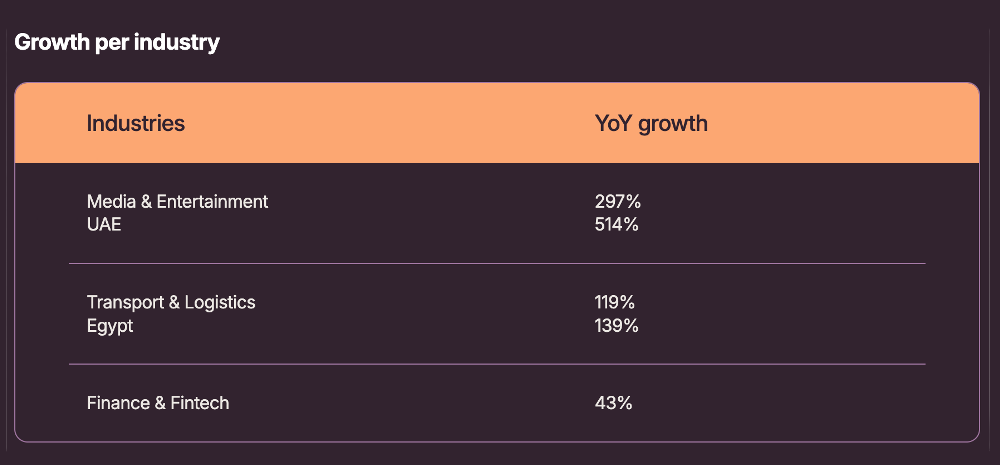
Recent insights from Infobip’s latest messaging trends report show that interactions across the MENA region reached approximately 30 billion in 2025, representing a 50 per cent increase year-on-year. At the same time, platform data indicates that overall messaging volumes grew 49 per cent across the region, reinforcing how rapidly businesses are shifting toward conversational engagement.

This growth is being driven by three major forces reshaping the region’s digital landscape: the expansion of messaging infrastructure, regulatory changes affecting communication channels, and growing investments in artificial intelligence.
For marketers, these shifts are redefining how brands connect with consumers.
Messaging is becoming the new front door for brands
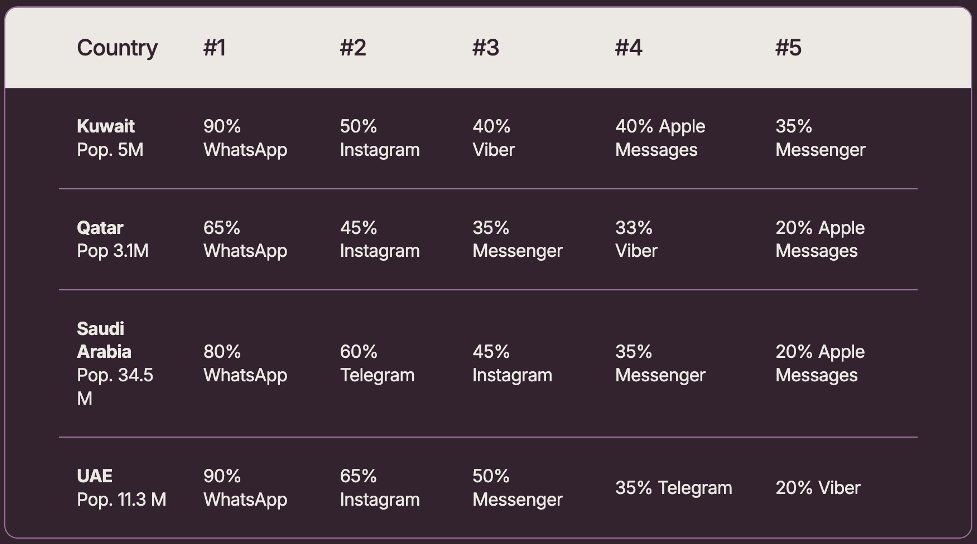
One of the most striking trends across the region is the dominance of conversational messaging platforms. WhatsApp continues to lead as the primary communication channel for consumers across the GCC, with penetration rates reaching 90 per cent in markets such as the UAE and Kuwait and around 80 per cent in Saudi Arabia.
This widespread adoption is reflected in rapid growth in business messaging interactions with consumers. Across the UAE, Saudi Arabia, and Qatar, WhatsApp usage for business communication grew between 43 per cent and 82 per cent year-on-year, highlighting how deeply messaging has become embedded in the customer journey.
Consumers increasingly expect brands to be accessible within the digital environments they already use daily. Whether it’s asking questions, receiving order updates, or completing purchases, messaging platforms are becoming the most natural way for customers to interact with businesses. For marketers, this signals the rise of conversational commerce, a model where customer engagement, service, and transactions increasingly happen within messaging apps.
Rather than directing consumers through multiple platforms, brands can now meet them directly where conversations are already taking place.
Messaging growth varies across markets
While messaging adoption is expanding across the region, different markets are evolving at different speeds.
The UAE represents one of the most mature messaging ecosystems in the region.
The country recorded 52 per cent growth in messaging interactions, reflecting strong adoption across multiple communication channels. Unlike other regions where SMS is declining, the UAE continues to see growth across all three major messaging channels: WhatsApp, email, and SMS. In contrast, Saudi Arabia is entering a phase of rapid expansion.
Messaging interactions in the Kingdom grew 107 per cent year-on-year, signaling a market undergoing accelerated digital transformation.
Meanwhile, Qatar continues to emerge as a fast-growing messaging market, recording 67 per cent growth in messaging activity as businesses increasingly invest in digital engagement infrastructure. These variations highlight an important lesson for marketers: messaging strategies cannot be applied uniformly across the region. Each market has its own maturity level, adoption patterns, and opportunities.
The surprising rise of email infrastructure
Perhaps the most unexpected insight emerging from the data is the rapid expansion of email messaging infrastructure across parts of the GCC. In Saudi Arabia, email messaging volumes increased by 45x while Qatar recorded an extraordinary 790x surge.
At first glance, these figures may appear dramatic. However, they reflect something deeper than traditional marketing growth. What we are seeing is the rapid buildout of digital communication infrastructure as businesses adopt new engagement platforms and customer relationship systems.
For marketers, this represents a significant opportunity. When new communication channels emerge or scale rapidly, early adopters often gain a competitive advantage by establishing strong customer databases and engagement frameworks before the market becomes saturated.
In this case, businesses that invest early in scalable messaging ecosystems will likely be better positioned to capture long-term customer relationships as digital engagement continues to grow.
Regulation is reshaping messaging strategies
Alongside technological growth, regulatory changes are also reshaping how businesses communicate with customers.
In the UAE, the Central Bank has mandated the phasing out of OTP authentication via SMS and email due to concerns around phishing and SIM-swap fraud. The deadline for discontinuation is set for March 2026, prompting businesses to transition toward more secure authentication methods such as biometrics, passkeys, and app-based verification.
Saudi Arabia has also introduced regulatory changes affecting messaging channels. The Saudi Central Bank has restricted banks from using private messaging applications like WhatsApp to communicate with customers due to rising fraud risks. Financial institutions are instead being encouraged to integrate secure communication channels directly within their digital platforms. For marketers, these developments highlight the importance of designing communication strategies that are both flexible and compliant.
As messaging becomes more central to customer engagement, businesses must ensure their communication ecosystems are secure, trusted, and aligned with evolving regulatory frameworks.
AI is accelerating the next phase of messaging
The third major force shaping messaging in the region is artificial intelligence.
Across the Middle East, the rise of Arabic AI models signals a deliberate shift toward technological self-sufficiency, local innovation, and economic diversification. This is not just about adopting AI, it’s about building it. The scale of investment reflects that ambition. Saudi Arabia’s $100 billion Project Transcendence and Abu Dhabi’s MGX Fund Management, also targeting $100 billion in AI investments, underscore how aggressively the region is accelerating AI infrastructure and model development.
The economic upside is equally significant. AI is projected to contribute up to $320 billion to regional GDP by 2030, with the UAE and Saudi Arabia leading the charge.
For messaging, this changes everything. AI is already transforming how brands engage, powering automation, enabling real-time conversations, and scaling personalisation across millions of interactions. The next phase goes further: predictive engagement, context-aware recommendations, and seamless, end-to-end customer journeys.
What this means for marketers
Collectively, these trends signal a profound shift in the marketing landscape. Messaging is no longer just a tool for sending notifications. It is becoming the foundation of modern customer engagement.
Brands that succeed in the next phase of digital growth will be those that:
- Embrace conversational engagement as a core marketing capability
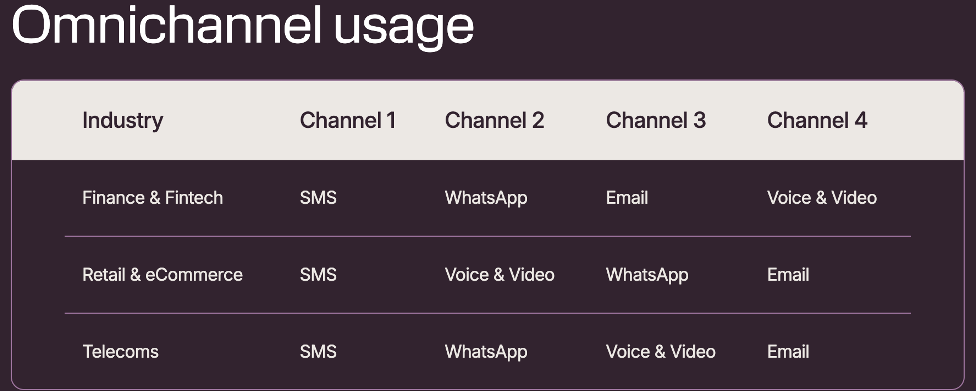
- Build integrated omnichannel communication strategies across messaging, email, and SMS
- Adapt quickly to regulatory developments
- Invest in AI-powered technologies that enable more personalised customer experiences
The Middle East is one of the fastest-growing digital markets in the world. As messaging continues to evolve, marketers have an opportunity to move beyond traditional campaign models and build deeper, more meaningful relationships with their audiences.
The future of marketing in the region will not be defined by how loudly brands speak. It will be defined by how well they listen and how effectively they engage in conversation.
By Rasha Abdo, Head of Enterprise Verticals, Infobip GCC & Levant.