Nobody hands you a playbook for running an independent communications or creative agency during a regional conflict. There’s no course material in an MBA, no industry whitepaper, no mentor with a neat answer. You just wake up one morning and the world your clients built their brands inside has tilted, and your job is to figure out what that means before they have to ask. You also have to face a harsh reminder that you are exposed to the elements.
Over the past month, as the US-Israel and Iran conflict has escalated, that tilt has become a full shift. The operating environment for hospitality, lifestyle, and leisure brands across the region has changed in ways that are still unfolding in real time. Travel patterns disrupted. Consumer and investor confidence rattled. And the briefs that do keep coming our way sound different, less about amplification, more about survival. Less “tell our story louder,” and more “tell us what we should be doing at all.” And that’s okay. That’s the job when the going gets tough. We pivot and support.
Here’s what nobody in our industry talks about openly enough: the economics. Agencies operate in one of the worst business models for cash. Ideas and service delivered up front, with drawn-out payment terms, and we are often the first expense considered a “luxury,” cut and pushed down the payment queue because we’re not “tangible.” When clients stop spending, and more importantly stop paying, the whole ecosystem strains. When they stop paying – and some do in times like this – the chain breaks. I know this isn’t always out of bad faith, but out of genuine cash pressure. To compound things, banks are overrun with demands, making solutions like invoice factoring a nightmare to access. A massive vacuum is created when the proverbial hits the fan. We have a flawed system when it comes to agency-client economics, and nobody really talks about it.
We talk a lot in this industry about brand purpose and creative integrity. But underneath all of it is a simple, unglamorous truth: we all have bills. Rent, salaries, software subscriptions, freelancers, the perks for the team. A thriving creative economy depends on everyone in the chain honouring their obligations, especially when conditions make it uncomfortable. That’s not a lecture. It’s a reminder I give myself as much as anyone. But too often, because of our industry’s good nature, we get exposed, and it’s exhausting. We always find a way to keep going. Maybe that’s why nothing changes.
I came up in hospitality originally, running restaurants and bars where culture and commerce had to coexist as part of the industry’s DNA. The best operators don’t freeze when the room changes. They read it. When I founded Umami Comms in 2016, that instinct became the agency’s operating system. When I launched Good Juju last year for lifestyle and design-led brands, it was the same logic applied to a new space. Right now, that instinct is being tested in ways that a spreadsheet simply cannot prepare you for.
Forecasting revenue in this environment is, frankly, close to impossible. A retainer you counted on for Q3 is on pause, and for good reason. A new business conversation that looked certain two weeks ago is now “let’s revisit when things stabilise.” Nobody can tell you when that is. So you put your creative energy into innovation, new directions, new processes, new verticals. It’s the best thing you can do while the chips are down.
And all of this is happening while the content doesn’t stop. It never stops. Every morning brings another wave of media updates on the conflict, incoming alerts, client WhatsApps, staff needing reassurance, family wondering if you’re okay, advisors with opinions. The volume of information, noise, and genuine human concern that lands on you as a leader in moments like this is relentless. The skill isn’t processing all of it. The skill is deciding quickly what matters, what can wait, and what needs to be acted on before the day gets away from you. Being slow and thorough is a luxury that conflict doesn’t extend. Decisions might be flawed, but they need to be made, as well as you can. Nobody has the right answer really, but you have to be decisive.
What I’d say to other agency leaders navigating this: I am in your corner. It’s tough. For those of us who have seen off COVID and come through stronger, this is another chance to show strength, for your team and for the clients that stay in the ring. For those experiencing their first major crisis: stay as calm as you can, and hold the line for your people. The worst decisions are the ones not made. You will make mistakes and there will be flaws in some of your choices, but we’re all human. Play the cards you’re dealt with as much honour as you can and do your best for your team.
The region’s creative and communications industry is more resilient than the headlines give it credit for. The talent is here. The ambition is here. I hope they both stay. Purpose-led agencies, ones with actual convictions and the relationships to back them up, are built for exactly this kind of pressure.
I started my career believing that the most powerful stories are the ones you’d happily share over a drink and that everyone remembers after the hangover. That belief hasn’t shifted. If anything, the past month has sharpened it. Stories and teams built on honesty, on real regional understanding, on relationships those are the ones that hold when everything else is kinetic.
Purpose isn’t a line in your credentials deck. It’s what you do when conditions get hard. We’ll fight on. I hope you do too.
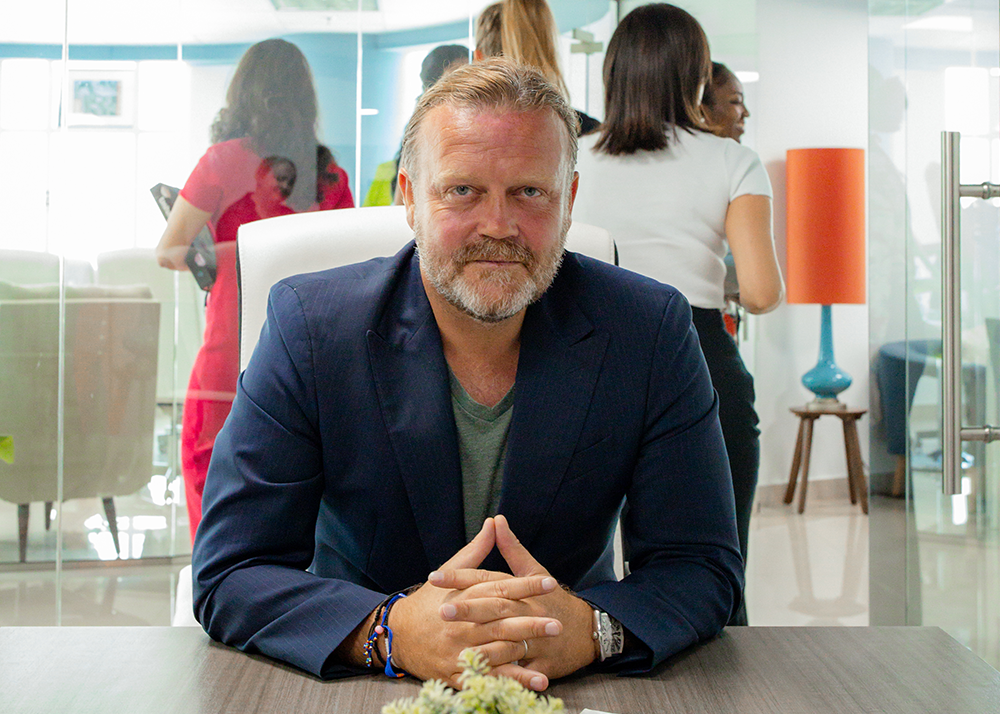
By Colin Hutton, Founder, Umami Comms & Good Juju.