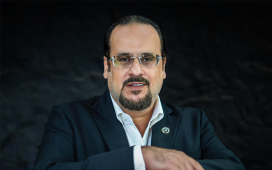
Priya Cima, Talent and Organisational Development Specialist, TBWA\RAAD
The biggest shift in every industry has been the inoculation of artificial intelligence (AI) and tech-enabled tools into almost all areas and functions. Specifically, within our industry it’s exciting to see how creativity can be enhanced and innovation elevated with the use of AI across the board. The result of the constant introduction of new technologies and the accelerating growth of AI, is that the focus will now be on scaffolding and upskilling our talent to answer the call for increasing requests on AI-based creative designs.
The traditional form of needs-based learning is not fast enough to keep up, and the way forward is to embed a mindset of continuous experiential learning that is responsive in real time. Building awareness is what’s happened until now. For tomorrow, we look forward to a more fully integrated practice and inclusion of AI into our everyday operations, which means being proactive, learning on the go, using tools that are recent, and building capability to create unique, award-winning deliverables for clients.
The first step is to have in place a robust learning strategy that can encapsulate the above, be delivered across levels and functions, driven by quick, short, practice-oriented modules, that are part of our daily work. With the use of tech encroaching on administrative functions, we will see the need for upskilling in AI is not limited to creative teams and will include the entire talent cohort, on platforms that are easily accessible, up to date and cater to learning styles that meet diverse talent needs.
The dynamic shifts in the ways of working – remote versus hybrid versus in-person – is one of the bigger changes we’ve seen in the last few years and requires our talent to be agile, committed, with a working environment built on trust. The debate on the most effective and efficient way of working has been in the spotlight for some time now – and discussion on the controversial topic will continue into 2026 as, yet another generation enters the workforce.
My peers in organisational development are still waiting to see what the data tells us, but it is trending towards allowing talent to choose their preferred ways of working and working environment within a set of expectations and boundaries. This seems to be till date the most effective approach to building committed and present teams. I believe with the newer generation entering the workforce the push will organically move strongly towards a form of structured freedom, where talent will be able to choose how, when and where they work within a set of lines. And with that the anticipation is we will see people coming into the office more often than expected, as the human need for being part of a community and having connections hit.
‘‘We must pay attention to one another, form connections and actively practice openness to differences.’’
Particularly in our industry, where creative brainstorming and discussion is a big part of work, and working together can be fun. But it’s giving that choice that is the key to maintaining commitment and motivation. With the previous years of seasoning, leadership and talent teams can now expand on putting in place the right and most effective pillars to support talent communities, including a working environment that feels like ‘home’, with more evidence-based measures to view outcomes for performance.
Today we’ve got a first ever – a multi-generational workforce that spans almost five generations. In the working environment in the Middle East, we’re used to seeing a mixing pot of cultures come together – with varying communication and leadership styles and behaviors. Now we are adding some spices to the pot with the different generational norms, giving a new meaning to diversity and inclusion.
For tomorrow, we look towards building more human-centric work cultures – simply put, this means we must pay attention to one another, form connections and actively practice openness to differences, making sure there’s a sense of belonging and community. In other words, building on resiliency to manage the changing sets of expectations, dynamics and scenarios.
Specifically in our industry, where fostering creativity is vital, we will be placing more importance on building a behavior-based culture, where policies, processes are a part of the way we work, and not something that needs looking up, imposed upon and explained. The newer generation seeks lesser controls, while the more experienced look to follow ingrained rules. A balance for all is finding that sweet spot between too many and too few, where the choice is made to prioritise policies based on the people represented within the community and the ethos of the agency. A simpler, leaner way of working to establish clarity, healthier communication, psychological safety and lesser friction particularly with the newer cohort of talent.
Establishing responsive learning systems, building agility and resilience is what the focus will be on in 2026, as we look forward to the growing use of technological innovation. AI is a strong tool that gifts us evidence, data and predictive capability and can be used to build in our future workplaces, allowing for scalability – whether with clients, for internal efficiencies, across geographies, markets and/or agencies.
2026 is all about making sure our talent community can expand experiences, thrive through change and create with the freedom that comes from feeling safe.
By Priya Cima, Talent and Organisational Development Specialist, TBWA\RAAD