 Sheldon Williams, General Manager for Pizza Hut and TGI Fridays — MENA, Americana Restaurants
What makes restaurants more welcoming? Is it the design, training or everyday processes – and how can this be communicated beyond a marketing story, but as lived reality for guests, patrons, teams and communities?
In Americana Restaurants’ footprint across the Middle East and North Africa (MENA) region, inclusion is not a ‘nice side dish’, it is the main course. The brand’s purpose, which is ‘to build communities around the joy of food’ and anchored in partnership with local NGOs, has been driven by a deliberate approach to inclusive employment and operations.
Several initiatives — including its recent one to launch exclusive Pizza Hut outlets designed for the hearing-impaired — sits at the heart of a broader strategy to reflect local needs while maintaining the high service standards that define Americana Restaurants’ brands, including Pizza Hut and TGI Fridays.
“Inclusion works best when it is built into daily routines, not treated as a separate process.”
– Sheldon Williams
Campaign Middle East sat down with Sheldon Williams, General Manager for Pizza Hut and TGI Fridays — MENA, Americana Restaurants, to unpack what these new outlets look like in practice, how they were conceived, and what the early responses reveal about adoption, impact and the road ahead.
Williams said, “At Americana Restaurants, our purpose is to build communities around the joy of food. Inclusion has always been part of how we operate. Across our footprint of more than 2,600 restaurants in 12 markets, we engage deeply with local communities and reflect their needs in how we run our business. Through the Opportunity4All programme and in collaboration with Yum! Brands, we took a deliberate step to formalise and strengthen our approach to inclusive employment by developing a structured, scalable model that can be applied consistently across our brand.”
He added, “This initiative brings together our operational expertise, strong partnerships with Yum! Brands, and collaboration with local NGOs to ensure the right training, design standards, and support systems are in place. The result is a sustainable model that creates meaningful opportunities while maintaining the high service and operational standards our restaurants are known for.”
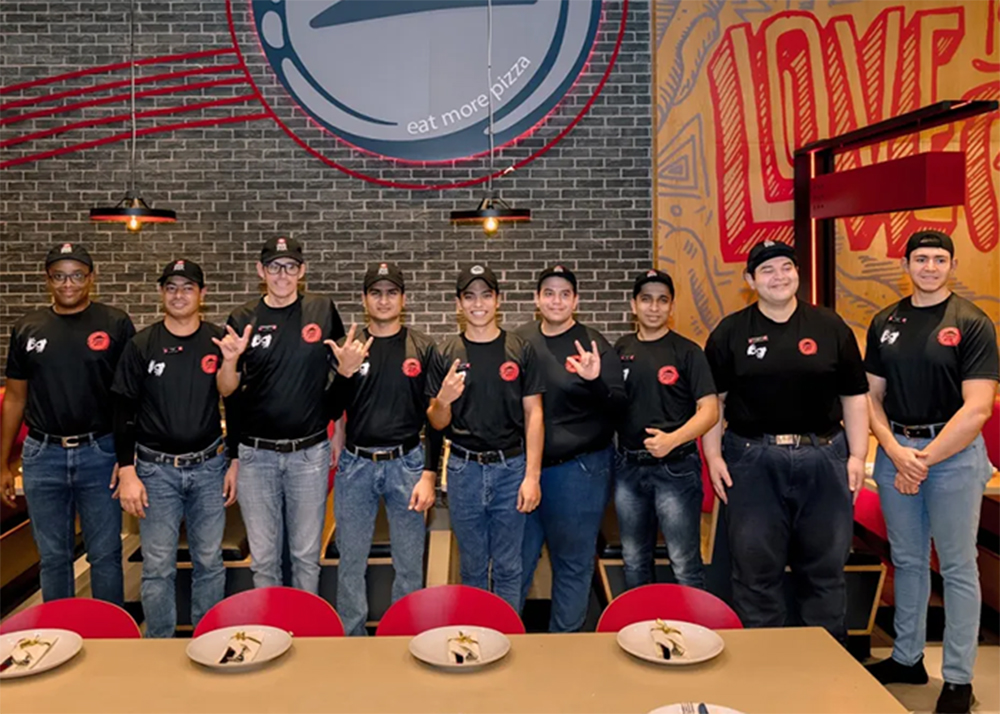
Design, layout, and training: how the outlets work for hearing-impaired colleagues
To support safe, efficient day-to-day operations, Americana Restaurants reimagined the kitchen and front-of-house to rely on visible cues rather than acoustic alerts.
Sound-based alerts and sensors were replaced with light-based systems and cameras to ensure clear, instantaneous communication across stations.
Visual cues were strengthened through signage, and guest touchpoints were simplified to reduce friction.
“On capability building, we trained restaurant management in basic sign language through local NGO partners, and we adapted training materials, so team members receive the same learning standards as any restaurant team,” Williams explained.
The brand also introduced the Sign and Smile Card, an interactive tool available in the customer area that helps guests engage with the team and place orders using simple sign language.
“The most effective way to communicate initiatives such as this is by allowing people to experience them firsthand rather than relying on traditional campaigns.”
– Sheldon Williams
Communicating the idea: a grounded, organic narrative
Instead of approaching this as a marketing campaign, Americana Restaurants chose to celebrate the communities it serves.
Williams explained, “The most effective way to communicate initiatives such as this is by allowing people to experience them firsthand rather than relying on traditional campaigns. When inclusion is embedded into everyday operations, guests, teams, and communities naturally share the story. Our role is to ensure the foundations are strong, whether through inclusive employment, long-standing education initiatives such as the Education For All – Food For All programme, or community programmes delivered during Ramadan.”
Selective PR and earned media supported visibility, but credibility was built through consistency and delivery over time.
Williams said, “When launching these restaurants, we focus on celebrating the team members joining the workforce alongside their families, NGO partners, and local stakeholders. Any public visibility has been largely organic, driven by local PR moments and genuine interest from media and social platforms.”
He added, “The story resonated because it reflects real experiences in our restaurants rather than a constructed narrative, which is something we intentionally wanted to preserve.”
It’s no surprise that guest feedback has been very positive, mainly around the warmth of the experience and how naturally the restaurants operate. Many customers took to social media to share how they came in curious, then left impressed by the level of service and the confidence of the teams.
Williams said, “From our frontline teams, the biggest learning is that inclusion works best when it is built into daily routines, not treated as a separate process. Simple operational changes such as visual alerts and clearer station-to-station communication, reduce friction for everyone. A memorable takeaway for me has been seeing team members grow quickly in customer-facing roles once the right support system is in place.”
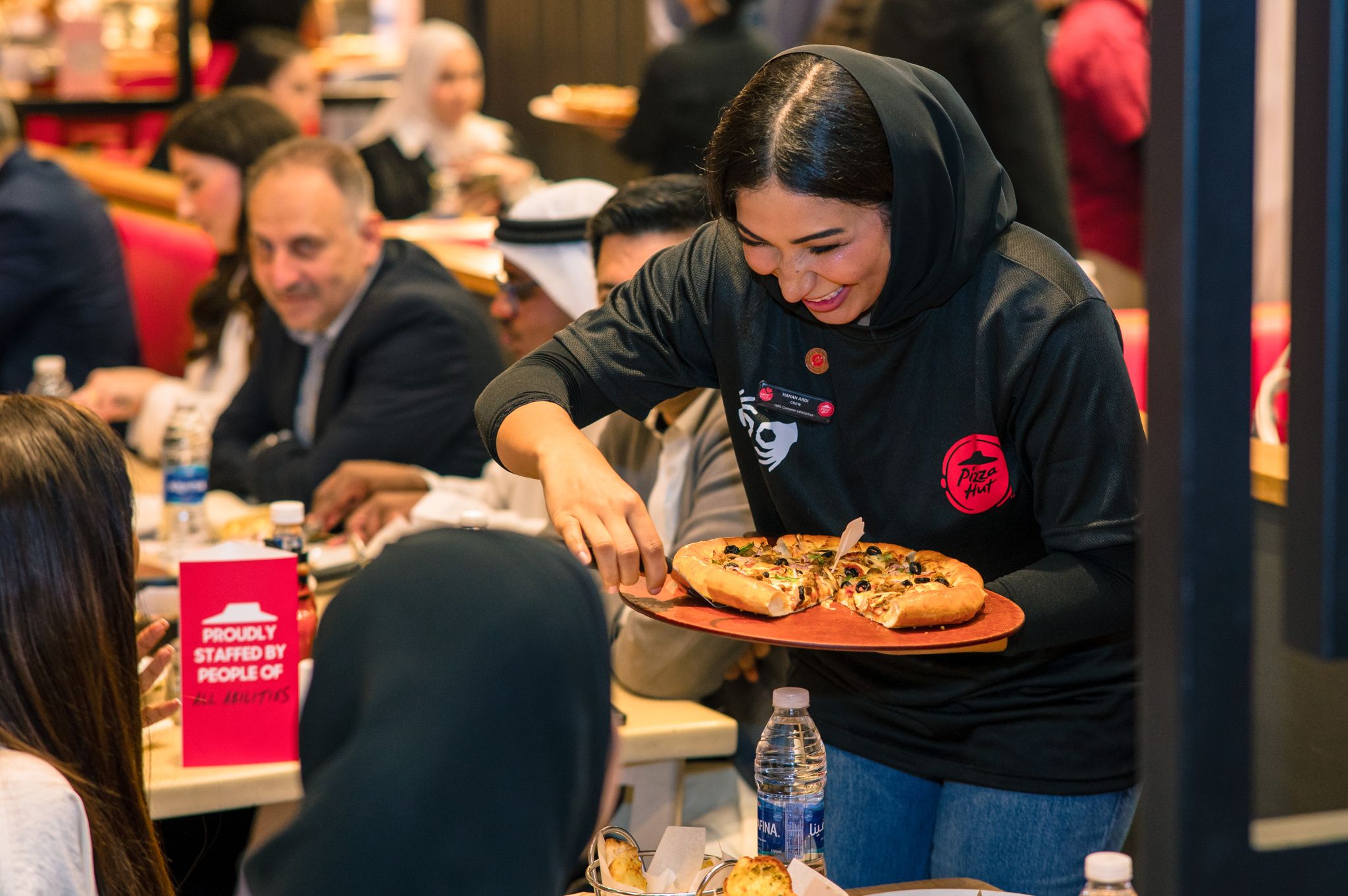
Measuring impact beyond the numbers
While core operational metrics such as guest satisfaction, retention and brand perception are being tracked, the success of this initiative has not been defined by sales alone.
“What matters more is consistency in experience, team stability, and long-term engagement. The model has shown strong retention among team members in these restaurants, alongside guest satisfaction scores that remain in line with network averages. That consistency signals that the model works operationally while delivering meaningful impact for people and communities,” Williams explained.
He added, “Meaningful impact is best reflected in sentiment, trust and long-term engagement rather than short-term reach.”
The inclusive restaurant model operates under the Opportunity4All framework, developed in collaboration with YUM! Brands, provides structure, governance, and consistency across markets.
The first restaurant launched in Saudi Arabia in 2024 was supported by a comprehensive design and operations playbook developed in collaboration with Yum! Brands. Following that launch, the playbook was refined based on practical learnings and applied those updates across subsequent markets.
Williams added, “A key enabler has been working closely with strong local NGOs in each country, who support training, onboarding, and cultural integration. This combination of central standards and local partnerships allows us to scale responsibly while staying relevant to each community.”
Near-term expansion: what success looks like in a diverse region
Since the first restaurant opening in KSA in Q3 2024, the brand has successfully expanded to Bahrain, Egypt, and the UAE, bringing the total number of restaurants fully adapted to welcome people of determination to 15.
Williams revealed, “Wherever a need and an opportunity exist, we will continue to extend this initiative across the region. We remain committed to transforming our restaurants to be fully equipped and inclusive, enabling people of determination to build meaningful careers at Americana Restaurants in 2026 and beyond.”
A humane future for Americana Restaurants’ hospitality
Americana Restaurants’ journey toward inclusivity reflects a gardener carefully tending a garden where all voices have a place to sprout. It is not merely about adjusting the walls of a restaurant but about synchronising the rhythms of training, design and daily practice so that every guest feels seen and every team member can shine.
Anchoring the initiative in a central framework while simultaneously weaving in local community partnerships, Americana Restaurants aims to scale with care — ensuring consistency of experience and the dignity of opportunity across markets.
The result is a hospitality culture that is as much about connection as it is about service, turning each adapted Pizza Hut into a beacon of belonging and a blueprint for how large brands can grow with more humanity at their core. In short, the rooms become brighter when everyone is invited to contribute.
The real story isn’t about the headlines, but about the people — frontline teams learning, guests experiencing genuine hospitality, and communities gaining a durable pathway to meaningful work. It is, in essence, a recipe for resilience: mix a clear purpose, partnerships, and persistent practice — and a future where everyone has a seat at the table.