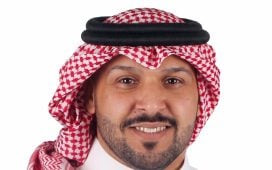
Bassel Kakish, CEO, Publicis Groupe Middle East & Turkey, received the Head of Network award from Khaled AlShehhi, Executive Director of Marketing and Communication, UAE Government Media Office.
Bassel Kakish, the CEO of Publicis Groupe Middle East & Turkey was named The Head of Network at the 2025 Campaign Agency of the Year Middle East awards.
Jurors awarded Kakish’s leadership based on his ability to “combine data, AI, and creative strategy to deliver measurable client, brand and business impact across the MENA region.” They also said that “his submission showed a strong focus on partnerships, culture, talent development and future-ready capabilities.”
Bassel Kakish reflects on his win in conversation with Campaign Middle East.
How does this award reflect the way your leadership has developed over the past year?
I see this award as recognition of the leadership model we have built rather than a reflection of me personally. Over the past year, our focus has been on trust, consistency, and being a talent-first organisation that creates the right environment for leaders to move with confidence and clarity. When people are empowered to make decisions and collaborate without friction, performance follows. The award is a signal that the foundations we have put in place are working.
What is your proudest moment from 2025 and what’s your key takeaway from it?
In 2025, what stood out for me was reinforcing our ambition to operate as a Category of One. We continued to strengthen our artificial intelligence (AI) capabilities while bringing creativity, media, and technology closer together around client needs. As a result, we have outperformed market growth across the region year to date. That progress only happens when talent is trusted, enabled, and encouraged to work across disciplines and capabilities.
How do you navigate the tension between short-term performance and long-term ambition?
For me, there is no real tension if the organisation is designed properly. Short-term performance should reflect long-term thinking, not work against it. We invest early in talent, integration, and platforms so that what we deliver today also builds future capability. At the same time, you need to stay agile and willing to adjust when conditions change. That balance allows ambition and execution to move in the same direction.
What responsibilities do leaders carry as the industry adapts to new tools, structures and expectations?
Leaders have a responsibility to be intentional. New tools, particularly AI, should enable people rather than replace them. I always use this analogy: AI is the suit, but without Tony Stark, there is no Iron Man. Our talents are the real superheroes. Technology on its own does not create impact. People do. Our role is to make deliberate choices about what we adopt, how we deploy it, and how we protect creativity, judgment and trust. Change will happen regardless. Leadership is about shaping that change with clarity and accountability.
What skills or mindsets will define effective leadership for 2026?
Technology and AI will increasingly become prequalifiers. They will be expected, not exceptional. What will continue to differentiate organisations are talents and how effectively they are enabled. Effective leadership will be about making deliberate choices around AI, investing in learning, and creating environments where people are empowered to apply technology with creativity, judgment and confidence.