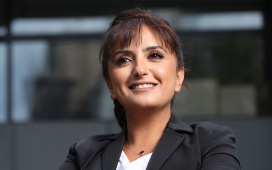


 Nabil Sleiman, Head of Marketing Communications, Almarai
I was never a gamer. As a kid, I’d play Mortal Kombat occasionally at my neighbour’s place. I owned Tetris and Atari video games, but my controller kept breaking.
As an adult, I’ve completely drifted away from gaming. I don’t own a console, and I don’t have a single game on my phone. My gaming life pretty much stops at Google Chrome’s jumping dinosaur when my laptop is connecting to a Wi-Fi network.
So, it might sound like a safe bet to say that I have no opinions to share about gaming.
But that would be the wrong bet – because what I am is a marketer – and as a marketer in Saudi Arabia, I have every reason to talk about gaming.
The numbers tell a story that can’t be ignored
There are 23.5 million gamers in Saudi Arabia, according to the Saudi Esports Federation. That’s more than two-thirds of the total population of the country.
On average, gamers in Saudi spend 96 minutes a day gaming – the second-highest average in the world, surpassed only by Egypt at 115 minutes. Half of these gamers spend about five hours per week gaming, and nearly a million gamers play up to seven hours a day. Every single day. That’s almost a full-time job.
This mirrors global trends. Consumer spending on gaming has already outpaced spending on cinema and streaming combined and is projected to overtake paid TV by 2026, according to The Economist.
Esports viewership has grown by approximately 47 per cent in the past five years, making it one of the most-watched ‘sports’ globally. Riyadh now sits at the centre of all of this, with the 2025 Esports World Cup drawing 750 million viewers.
So even if I’m not a gamer, my interest in the industry as a marketer is genuine.
Understanding gamers became my mission
Just as I had to learn how to communicate with a Saudi mother aged 25 to 45 with two kids – someone I have nothing in common with – I had to learn to communicate with gamers.
That goes back to the fundamentals of marketing. First, understand the audience, then, unlock their objective: Why they game and what they want, in this case. Only once I did this could I truly understand how to communicate with them.
Who gamers are was the biggest surprise
The stereotype was a teenage boy sitting in a dark room. Turns out, 48 per cent of gamers are female, and 31 per cent of hardcore gamers are aged 35 to 44 years old.
The biggest revelation? Parents are gamers too. Some do it to connect with their children; others simply play because they enjoy it. And 45 per cent of those gaming parents are the mothers.
As for why they game, more than half (51 per cent) game to disconnect; 21 per cent play to destress, and 13 per cent to socialise. That last one surprised me, too.
Globally, socialising is a major aspect of gaming – that’s why it’s often referred to as ‘the new social’. When we dug deep, we found that more than half of gamers in Saudi consider themselves sociable and outgoing, and 70 per cent prioritise family time. Both points stand in stark contrast to the stereotype.
The final piece of the puzzle: Unlocking what gamers want from brands
According to the Global Web Index, more than half of gamers want brands that are reliable, authentic and smart: 59 per cent, 56 per cent, and 52 per cent, respectively.
Gamers also made what they don’t want very clear. They don’t want brands that treat gaming as just another media channel. It’s not about slapping your logo on a screen. It’s about building a meaningful relationship with the gaming community. And yes, gamers are a community; one where – as a brand – you either belong or you don’t.
Armed with that understanding, the roadmap became clear. To connect with gamers, consistency is key. It’s not about running a four-week campaign and then going silent for six months. It’s not about showing up for Ramadan and back-to-school, then ghosting the community for the rest of the year. If brands want to show up, we have to keep showing up.
We also need to create meaningful and interesting activations. And above all, be authentic. Make sure the brand values are aligned with the values of the gamers. This is how brands build cultural relevance: By integrating into the daily lives of its audiences, driving immersive storytelling, and creating experiences beyond advertising. And above all, it’s about being present where consumers spend hours every week, and turning that presence into ‘part of the game’.
But I believe that the biggest step in this roadmap is taking the first one. And here, context matters. The industry has faced similar challenges before: Thirty years ago, no one was digital-media savvy, and budgets for digital were nonexistent. Twenty years ago, we faced the same skepticism with social media. Today, 73 per cent of total media budgets globally are invested in digital and social.
Advertising spend on gaming is projected to grow twelvefold over the next decade, at a compound annual growth rate (CAGR) of 33.4 per cent to $8.5bn by 2034.
So, here’s the question I’ll leave you with: “Where does gaming sit on your roadmap today, and how early do you want to get on that train?”
By Nabil Sleiman, Head of Marketing Communications, Almarai