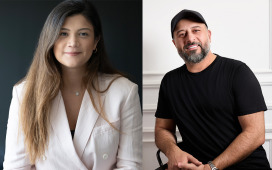
 Engy Noureldin, Lead Strategist, Kijamii
People don’t live as data points in strategy. They live as contradictions. They celebrate heritage during Ramadan, then order iftar through apps. They call for digital detox, then scroll TikTok until 2am. They cheer local brands, then queue for global launches. These aren’t paradoxes. They’re the tensions that define how people actually live.
Yet for years, the industry has mistaken scale for success. Impressions, clicks, and views became the scoreboard. But people don’t live in dashboards. They live in culture. And culture doesn’t move in neat lines, it moves in contradictions. That’s why getting seen isn’t the win. The real win is resonance. In 2025 and beyond, resonance is the KPI every brand, agency, and creative team should be chasing.
Cultural resonance isn’t a garnish on strategy. It’s the standard. It decides whether the work belongs in people’s world, or fades into the background. And in MENA, this is even more pronounced. Ramadan rituals, football rivalries, TikTok humour, family codes, even the shorthand of memes; these aren’t distractions. They’re the cultural operating system. Ignore them, and you’re irrelevant.
AI has changed the game. It can predict what people will search, scroll, or buy before they do. It offers speed, precision, and efficiency. But what it can’t do is decode why. Why the same young adult embraces self expression online but bows to family expectations offline. Why they spend on luxury to signal success, while privately searching for budget hacks to sustain it.
And that’s the strategist’s edge.
Data gives you precision. Culture gives you permission. The danger is when we mistake one for the other. The risk heading into 2026 isn’t that we’re clinging to outdated personas, it’s that AI is flattening people into predictive categories, reducing humans into clusters of signals. Efficient? Absolutely. Meaningful? Not necessarily.
Because when every brand uses the same raw data, the same models, and the same prompts, the output looks the same. And people notice.
What cuts through isn’t scale or speed. It’s resonance; born from human truths that no dashboard can decode.
Consider how different lenses give different answers.
A persona might say: “He is 30, lives in Dubai, works in finance.”
AI might calculate: “He’s 85% likely to book a luxury holiday in July.”
But the human truth is: “He feels pressure to signal success online, while quietly searching for budget hacks to sustain his lifestyle.”
One is a profile. The other is a probability. Only the last gives you a pulse. And only the pulse makes the work resonate.
Take Ramadan again. It isn’t just a seasonal spike in engagement. It’s a month where generosity, fatigue, joy, and duty collide, and brands must understand how people navigate those tensions. Or look at Gen Z. They aren’t just digital natives on a persona slide, but young adults negotiating the freedom of self-expression with the weight of social judgement. These aren’t data points. They’re cultural realities. And in MENA, they dictate who people trust, what they buy, and which brands they let in.
That’s the real work of strategy in 2026: not chasing signals, but decoding the contradictions behind them. Asking what desire fuels a search trend, what fear hides inside a behaviour, what cultural code shapes a decision. Seeing tensions not as noise but as the truth of how people live.
Because the future of strategy won’t be about clearer dashboards. It will be about truer audiences. Algorithms will keep getting smarter. But meaning; the kind that makes people stop, feel, and care, will always come from human intuition.
If every brand has the same data, the only differentiator left is who understands people better. That’s the strategist’s job. Not decoding data, but decoding people. The hardest, most human, and most valuable work there is. And ultimately, the only way to create work that works.
By Engy Noureldin, Lead Strategist, Kijamii