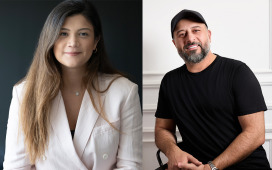
Shantesh S Row, Executive Creative Director, Liwa Content.Driven
Somewhere between a pitch deck and a prompt, between a brand manual and a mood-board, something was lost. It wasn’t originality. Or grammar. Or even craft. It was melody. Copy once had it – the lilt of a thought, the rhythm of restraint, the tune of something half-remembered. It could make you feel before it made you understand.
But somewhere along the way, clarity became king, and cadence became casualty. Words stopped breathing. They began to behave.
And maybe that’s why, when you play the opening bars of the Beatles song All you need is love…,you remember what language once did. It didn’t inform; it transformed. It didn’t sell; it seduced. It didn’t fill space; it created it.
Today’s copy rarely sings. It scrolls.
In the age of AI writing, language has become a form of automation. We’ve built machines that can finish our sentences – but not start them. The copy comes back clean, correct, clickable – but soulless. The rhythm is missing. The pauses, the breath, the ache between two lines that only a human can hear.
Songs, though – they still have it. Because songs are the last true human copywriting.
Every lyric that’s ever lasted was written not for consumption, but confession. Take Simon & Garfunkel’s Hello darkness, my old friend. That’s not a tagline. That’s a therapy session that rhymes. Or take David Bowie’s We can be heroes, just for one day. That line could sell sneakers, insurance, or space tourism – but it was never meant to. It was born from longing, not a brief.
That’s the secret. The best advertising lines have always borrowed their soul from music. They just called it tone of voice.
Apple knew it. When they used U2’s Vertigo for the iPod in 2004, it wasn’t because they needed a soundtrack. It was because both the product and the song were built on the same impulse – freedom in motion.
Levi’s knew it much before anyone else. Their legendary 1985 Laundrette ad with Nick Kamen, set in a laundromat, featured Marvin Gaye’s I heard it through the grapevine. It made denim sensual again. It didn’t talk about fit or fabric. It talked about feeling.
Even Guinness knew it. Their 1999 Surfer ad featured Leftfield’s Phat Planet, pairing pounding waves with pounding beats. The ad didn’t explain the product; it exalted anticipation and courage – a masterclass in the poetry of motion.
And even now, when you watch a John Lewis Christmas commercial – with covers of Ellie Goulding’s Your Song, Gabrielle Aplin’s The Power of Love, or Lily Allen’s Somewhere Only We Know – it isn’t the plot that moves you. It’s the lyric that finds you somewhere undefended. A line sung softly enough to sneak under the armour of reason.
That’s what songs do. They don’t describe emotion; they are emotion.
In a world obsessed with algorithms, this is the one thing still beyond code. Because music is born of mistake. Of messy, unmeasurable feeling. You can replicate rhyme, you can even generate melody – but you cannot automate ache.
A good song is a collision between discipline and desire. So is a great headline.
Think of Because you’re worth it. It could’ve been a line from a Joni Mitchell song.
Or Think Different. It’s as spare and enigmatic as a Leonard Cohen verse.
Even Just Do It feels like Dylan in his minimalist mood – short, stubborn, subversive.
Those lines worked not because they sounded like songs, but because they behaved like them. They had rhythm. Repetition. Silence. They hinted rather than hollered. They made space for the audience to complete the meaning.
That’s something AI perhaps still can’t do – leave space. Because suggestion is a human art. And music, at its core, is the art of suggestion made audible.
Of course, there’s a temptation now, in the age of playlists and sync rights, to treat songs as shortcuts – to slap a famous lyric on a campaign and call it emotion. But that’s not how it works. Born to Run doesn’t sell your car unless your car also has a dream in its tank. The song can only amplify what already exists.
When Nike used the Beatles’ Revolution (briefly, controversially) – it wasn’t to borrow rebellion. It was to elevate it. The song works when the brand already hums the same note.
We often forget this when we talk about brand voice. Voice isn’t just tone. It’s tuning. It’s the way a line lands on the ear – not the way it reads on the screen. A tagline, at its best, is a chorus waiting for music. A line that doesn’t just mean something, but sounds like it does.
Take Impossible is nothing. It has the cadence of a verse – an iambic defiance that could sit between Eminem and Mandela. Or The best a man can get. There’s a harmony in it, an echo of Sinatra swagger. These lines didn’t survive because they were clever. They survived because they were singable.
That’s what we’ve lost. The instinct to write with our ears. We write for platforms, not people. For character counts, not crescendos. The modern brief rewards precision, not poetry. And so we end up with lines that function, but never feel. Optimized, but not alive.
Maybe that’s why music feels like the last human medium. Because even as machines learn to write, they can replicate melody, but not motive. They can sample heartbreak, but not have it.
Every song that ever mattered was an act of imperfection – Dylan’s raspy, scratchy voice, Amy Winehouse’s tremor, Adele’s pause before the chorus. The cracks are the message. The same should be true for copy. The hesitation, the restraint, the breath – that’s where emotion hides.
If AI is the future of writing, then music is our reminder of what writing once was – the translation of heartbeat into syllable.
So, perhaps the next great campaign won’t come from an insight deck, but from a playlist. From a line that’s been waiting forty years to mean something else. From Springsteen, from Stevie Nicks, from the Smiths, from someone humming under their breath in traffic. From the vast smorgasbord of Arabic, Western, Indian, Asian, Latin, African, and more musical and lyrical influences that live within the multi-cultural diaspora of the UAE.
Because if there’s one thing music has taught us, it’s that the heart remembers rhythm long after reason forgets words. Because lyrics are not just words. They are emotional technologies. The kind we used before algorithms were invented.
Maybe it’s time copy learned from them again.
Because what is a line if not a note?
What is persuasion if not performance?
And what is advertising, if not the business of bottled feelings?
Indeed, when copy remembers how to sing, the world might finally start listening again.
By Shantesh S Row, Executive Creative Director, Liwa Content.Driven