Diversity, equity and inclusion (DEI) – once seen as moral imperatives or buzzwords for company culture slides, have now emerged as critical growth strategies in today’s business environment. Especially in the MENAT region, where demographics, digitalisation and economic reform are reshaping consumer and workplace expectations, DEI isn’t just the right thing to do, it’s the smart thing to do.
At a time when DEI is being challenged globally, from budget cuts to political backlash, we need to shift the conversation. It’s no longer about meeting quotas or ticking boxes; it’s about unlocking innovation, attracting talent and building businesses that reflect the markets they serve.
DEI isn’t charity. It’s strategy. It’s a growth engine. It’s survival.
Reframing DEI as an economic strategy
It’s time we change how we talk about DEI in the boardroom. For too long, inclusion has been seen as a ‘people topic’, good for morale, positive for reputation, but somehow separate from business strategy.
That’s where we’ve missed the mark. Because the reality is: inclusion drives performance. It’s a growth strategy hiding in plain sight.
According to a McKinsey study, narrowing the gender gap could add $12 trillion to global GDP by 2025, underlining the high cost of economic exclusion. Companies with diverse teams are not only more innovative, but they are also significantly more profitable.
In fact, organisations in the top quartile for diversity are 36 per cent more likely to outperform their industry
peers financially.
When you build teams that reflect the world outside your walls, in gender, background, thinking and lived experience, you’re not just doing the right thing, you’re making a smarter business decision. You design sharper products, create more relevant campaigns and access wider, often underserved markets. You unlock innovation and mitigate risk. It’s not theory. It’s operational logic.
Of course, inclusion goes beyond gender. It’s about background, religion, age and ability. It’s about ensuring that no voice is left unheard and no idea left unexplored because of who said it. In some industries such as construction, banking and heavy industry, gender inclusion still faces cultural or structural barriers. But that’s not due to lack of competence. It’s often about legacy norms and pipeline issues. Change takes time, but it’s happening. One of the most powerful signals of this shift is the increase in female ministerial representation in the MENA region, a reflection of how public policy can lead by example.
The Middle East, especially the GCC, is leveraging diversity and inclusion to fuel economic diversification and robust growth. For example, foreign nationals now represent 90 per cent of the UAE, supporting skills transfer, innovation, and labour force expansion.
But let’s not forget the flipside. Exclusion comes at a cost, whether it’s the unpaid labour of women, inaccessible workplaces, or a lack of representation in leadership. Research shows that inclusive teams are 35 per cent more likely to outperform, because they bring multiple lenses to the same challenge.
When companies exclude, they limit the scope of ideas, ignore vast consumer segments and fall behind in fast-moving markets.
What inclusion looks like on the ground
For too long, outdated narratives have shaped our understanding of leadership, value and success, especially when it comes to women. But today, we’re not just rewriting those stories; we’re actively dismantling them.
From boardrooms to government halls, every breakthrough challenges the embedded myths society has told us about who gets to lead, and why.
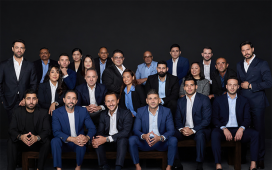
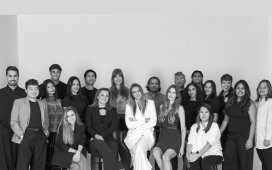
At MCN, inclusion is part of our operating DNA. With more than 66 per cent of our workforce representing diverse nationalities and 45 per cent of leadership roles held by women, we’ve seen first-hand how diverse teams drive better thinking, deeper cultural insight and stronger outcomes for clients.
This mindset has shaped campaigns across markets that are more relevant, resilient and rooted in real human stories. It helped us support clients with strategies that are locally grounded, globally resonant and built to deliver business growth.
Globally, DEI has now become a principle, a mindset and a business lever. And, like any strategy, its application varies across cultures and industries. Closer to home, Egypt has witnessed an organic but powerful shift. A decade ago, the idea of a woman leading a media agency or serving as a creative director was still met with raised eyebrows. I remember, early in my career, being quietly criticised for having a leadership team made up predominantly of women – the assumption being that such a structure was risky or imbalanced.
Today, I’m proud of having 70 per cent female representation across five business units, not because of optics, but because of performance and results. And the truth is, inclusive teams outperform because they bring different lenses to the table. That’s the point. Inclusion, when grounded in merit, doesn’t require explanation. Inclusive teams understand audiences better. They solve complex problems faster. They unlock business value that homogenous teams often miss.
Clients are demanding it
The most progressive clients in our region no longer see inclusion as a ‘nice-to-have’; they’re demanding it. Not just for optics, but for outcomes.
They understand that audiences today are diverse, and if your team isn’t, you won’t connect, won’t convert and won’t lead. An inclusive agency isn’t just ethically aligned, it’s strategically equipped.
The reality is your team must reflect the people you serve. Clients expect agencies to be strategic partners helping connect creativity with performance while embedding diversity and inclusion authentically in their storytelling. Otherwise, your insights will fall flat, your messaging will miss, and your relevance will fade. Inclusion helps agencies understand cultural sensitivities, decode local nuance, and communicate authentically. That’s not charity. That’s strategy.
The future of inclusion
The future of inclusion is not about favouritism or overcorrection. It’s about removing systemic friction and allowing the best people, regardless of background, to rise, lead and grow. It’s about relevance, representation and resilience and ensuring we don’t leave economic value on the table by excluding people who could have helped shape it.
So no, DEI isn’t about ‘pushing women’, nor should it be tokenism or performative. It’s about recognising talent wherever it lives and creating the kind of workplaces and industries where that talent can lead.
In the communications industry, we hold a unique responsibility. We shape narratives. We influence perception. We craft the messages that define brands and, by extension, reflect societal values. If we don’t lead by example, and industries don’t embody DEI in practice and spirit, then how can we credibly advise our clients to do so?
We owe it to ourselves, to our clients and to our future economies to keep moving inclusion forward. Because in today’s world, growth today doesn’t come from doing more, it comes from including more – and organisations that understand this will define the next decade.
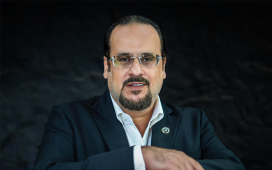
By Sahar Zoghby, CEO, MCN Egypt