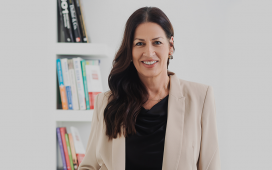
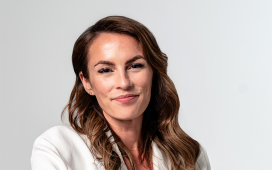
Eleni Kitra, Executive Director, The Advertising Business Group (ABG), Middle East.
Across the Middle East, women in advertising are navigating a dynamic intersection of personal growth and collective transformation.
As individuals, we are more ambitious, self-aware, and skilled than ever before. As an industry, we are increasingly vocal about diversity, equity, and inclusion. Yet the question remains: How do we bridge the gap between the empowered individual and meaningful industry-wide change?
The answer lies in shifting our mindset from aspiration to action. From climbing the ladder alone to redesigning the ladder for others. From self-development to ecosystem transformation.
Leading the shift from empowerment to action
Over the last two decades, I’ve had the privilege of working across global tech, media, and creative industries, often as one of the few women in the room. From launching regional women’s leadership networks at Meta to mentoring the next generation of female marketers in the Gulf and North Africa, I’ve seen firsthand the power of intentional investment in women.
These experiences have taught me that visibility is only the beginning. Empowerment is not a buzzword, it’s a discipline. It demands that we continuously build structures around our personal growth so it can ripple outward into team cultures, industry policies, and ultimately, market-shaping influence.
Progress doesn’t come from inspiration alone. It comes from brave decisions made in “noisy” rooms: to sponsor another woman’s promotion, to call out bias in casting, to redesign a hiring process so it serves equity and not just efficiency.
It’s not always glamorous. But it’s always worth it.
The rise of the individual mindset
Today’s women in advertising are self-invested. We are:
- Attending leadership workshops and mentorship circles
- Advocating for flexible work, boundary-setting, and well-being
- Owning our narratives on media platforms, podcasts, and stages
- Learning, unlearning, and relearning at a rapid pace
This evolution is powerful. But if it ends with individual advancement, we miss a critical opportunity. Growth must be mirrored in how we lead teams, shape narratives, and influence systems.
Empowerment is not a buzzword, it’s a discipline.
Three shifts to spark industry-wide change
- From personal success to structural influence
Mid- and senior-level women must not just seek inclusion in decisions, but drive them. At any chance we have, whether we are leading pitches or sitting on industry councils, or influence policy: around pay equity, parental leave, promotion pathways, and supplier diversity. - From self-branding to culture-building
It’s no longer just about being seen – it’s about what we choose to spotlight. Celebrate not just our wins but the teams behind them. Amplify emerging voices. Make mentorship a default, not an extra. - From silence to systemic advocacy
When we notice gaps – biased casting, token hires, unequal opportunity – we need to speak up. When we sense burnout, gatekeeping, or performative DEI, disrupt it. This isn’t about confrontation; it’s about contribution. Change requires candor.
The Middle East: A region of paradox and possibility
The MENA region is rapidly evolving:
- The UAE is home to one of the world’s most multicultural advertising industries.
- Saudi Arabia has exceeded its Vision 2030 target for female workforce participation.
- Bahrain, Egypt, and Qatar are seeing women lead bold creative agendas.
Yet challenges persist:
- Women still remain underrepresented in senior creative and media buying roles.
- Pay parity and career acceleration lag in many local markets.
- Cultural norms continue to shape how women are portrayed on screen and perceived in the boardroom.
This makes our moment both urgent and unique. We are not inheriting an industry; we are actively shaping it.
How MENA compares to the global scene
Globally, many markets have created rules and programs to promote inclusion and representation – from board quotas in Europe to diversity scorecards in North America. But there’s a growing problem: many of these efforts feel more like ticking boxes than driving real change.
True change doesn’t come from policies alone. It has to be lived, practiced, and led by example. equity
Meanwhile, MENA stands at a different crossroads. Its transformation is younger, yes – but also more open to change. It is not bound by tradition in the same way, and thus has the chance to build something more meaningful: not just progress by imitation, but progress by intention.
Cultural depth, collective identity, and regional pride could become strategic advantages if inclusion is pursued with authenticity and ambition.
In contrast, the Middle East’s transformation is younger but accelerating with bold national visions, fast-growing industries, and a younger population eager for change. In many Western markets, women have plateaued at mid-management; in MENA, the ascent is newer, and the ceiling has not yet been set – meaning there is real opportunity to redefine leadership on our terms.
Moreover, while global markets often wrestle with inclusion fatigue, the MENA region still holds strong momentum. The drive isn’t just about fairness, it’s about unlocking economic potential, creative innovation, and regional relevance.
The opportunity? To ask not ‘how do we catch up?’ but ‘what can we do differently and better?’ To build a model of inclusion that is uniquely Middle Eastern: culturally grounded, community-led, emotionally intelligent, and globally influential. Not a replica, but a reinvention.
Actions for women in advertising who want to lead change
- Design inclusive hiring pipelines: Advocate for balanced shortlists, cross-functional interview panels, and skills-based assessments.
- Influence the creative output: Rewrite outdated narratives. Push for authentic storytelling that reflects the diversity of women in the region.
- Measure what matters: Track inclusion not just by numbers, but by belonging. Ask: who is thriving? Who is speaking up? Who is being heard?
- Create power networks: Join or launch regional communities where women can share insights, mobilize action, and scale visibility.
Can ABG champion the shift for women in advertising?
Industry transformation doesn’t happen in silos. Organisations such as the Advertising Business Group (ABG) have a critical role to play in turning momentum into measurable progress. The onus is lies on us to play a key role in shaping the advertising industry in the Middle East.
Through our commitment to responsible marketing, collaboration and regional advocacy, we aim to influence conversations that matter. In partnership with global and regional allies suchas the Unstereotype Alliance, we are actively working to promote more inclusive and authentic industry practices. Our intention is to further strengthen the voice of inclusion by:
- Encouraging open dialogue and accountability across member organisations.
- Sharing tools and best practices to embed inclusion into day-to-day operations.
- Supporting content standards that reflect the full spectrum of the region’s talent and identities.
We believe that inclusion is not just a goal, but a shared responsibility and a strategic advantage. ABG will continue to evolve its role as a platform that helps the industry listen, learn, and lead with integrity.
What happens when women in advertising define the message
Empowering women within organisations is only one side of the coin. To drive real cultural impact, we must ensure that inclusive leadership also informs inclusive marketing. The narratives we produce, the stories we elevate, and the identities we reflect in our campaigns matter – deeply.
Inclusive marketing in MENA isn’t just about avoiding stereotypes. It’s about embracing the region’s diversity in all its forms: gender, nationality, age, language, and lifestyle. It’s about co-creating with underrepresented voices, not just representing them. It’s about shifting from tokenism to truth.
Women leaders, especially in creative and strategic roles, are uniquely positioned to shape this next frontier. By aligning brand purpose with authentic representation, and by challenging outdated briefs and biased scripts, they can lead a storytelling revolution that’s both commercially smart and socially responsible.
This is the evolution we need: not just more women in the industry, but more women shaping what the industry says to the world.
The truth is, personal development is no longer enough. In MENA’s fast-evolving advertising ecosystem, the women who will make the most impact are those who see themselves not just as achievers, but as architects.
So, let’s keep investing in ourselves and start investing in the systems around us.
Because when women move with both purpose and power, industries don’t just improve. They transform.
By Eleni Kitra, Executive Director, The Advertising Business Group (ABG), Middle East.