The “Reality Check” creative installation, which features two seated figures wearing VR headsets, is a visual reflection on the illusion of connection in a hyper-digital world.
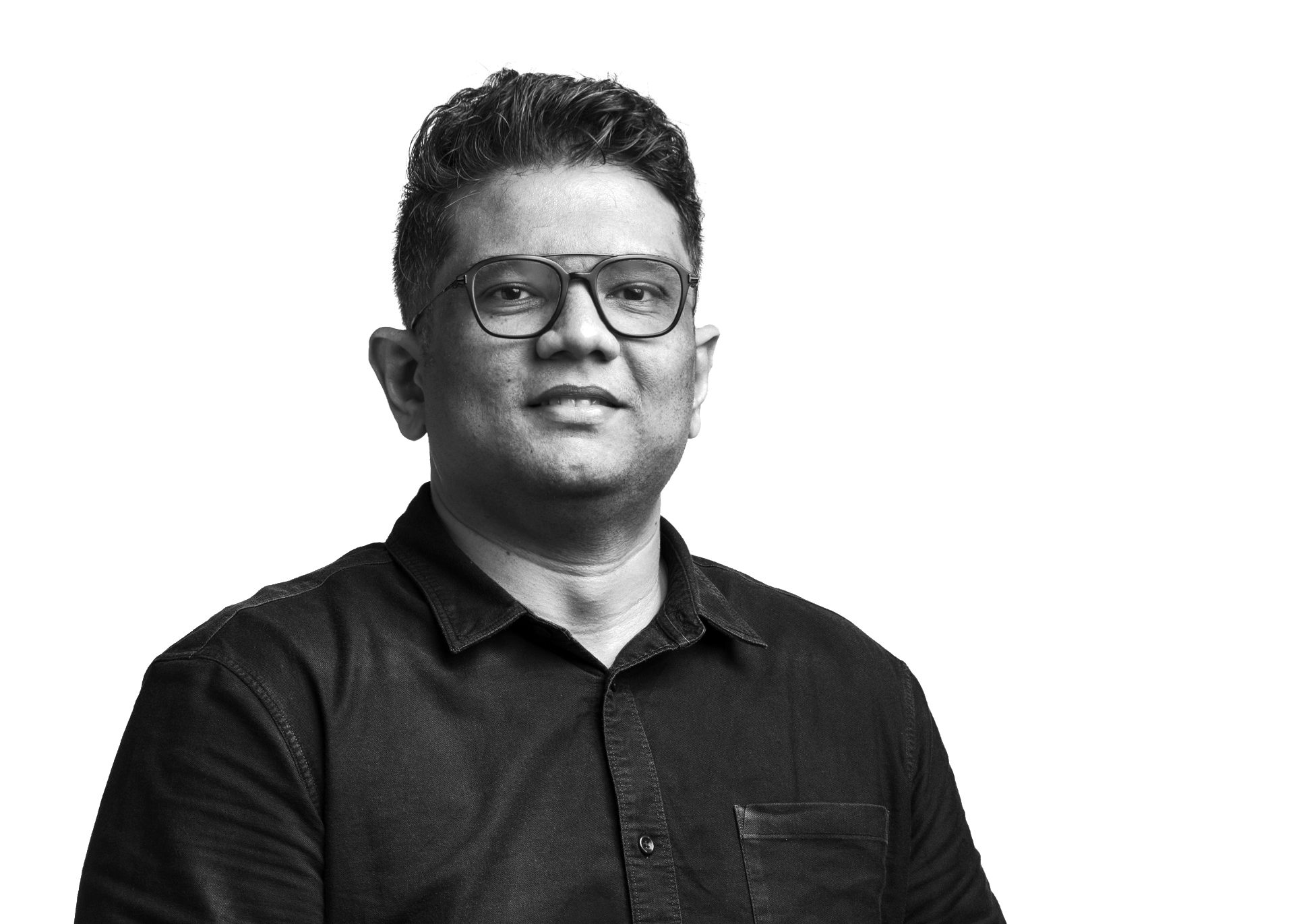
By Kapil Bhimekar, Creative Director, LEO Middle East
The “Reality Check” creative installation, which features two seated figures wearing VR headsets, is a visual reflection on the illusion of connection in a hyper-digital world.
By Kapil Bhimekar, Creative Director, LEO Middle EastIn a time when creativity is increasingly fluid, the most exciting creative work isn’t defined by medium or industry — it’s defined by the strength of the idea. Whether expressed through a mural, an installation, or a brand experience, a powerful idea can move across disciplines and speak to people on a deeper level.
Art and advertising have traditionally lived in different worlds — one rooted in expression, the other in persuasion. But today, those lines are softening. Ideas are flowing freely between galleries and public spaces, brands and cultural platforms. In this evolving landscape, the idea itself becomes the true medium — free from the limits of format.
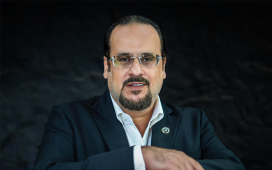
This thinking has shaped recent projects led by Kapil Bhimekar, an award-winning Creative Director at Leo Burnett Dubai and a global artist.
As part of Publicis Groupe, Bhimekar works across the boundaries of art and advertising — not diluting either, but creating space for both to enrich each other. He blends these worlds seamlessly, redefining what it means to be both an artist and storyteller in today’s creative landscape.
One such project was the Re:connect Art Festival, staged at Bluewaters Island, Dubai, which is part of Dubai Holding Asset Management. Conceived as a public art experience, it brought to life a powerful theme of human connections and interactions. While not overtly commercial, the work aligned organically with the values of participating brands — demonstrating how art-led ideas can drive engagement without relying on traditional messaging.
Burcu Guney, Marketing Manager, Bluewaters, was instrumental in bringing the vision to life. As she reflected: “The Re:connect Art Festival was born from a desire to offer our audience something truly unexpected, meaningful, and emotionally resonant. From concept to execution, it was a journey I was proud to lead. Kapil and his team’s creative support brought our shared vision to life in a way that was both powerful and collaborative. The result was an experience that not only reflected the spirit of Bluewaters but also sparked real connection and conversation among our visitors.”
A similar philosophy guided the launch of Ideal Standard’s latest collection, inspired by Rome and Capri. Instead of using standard point-of-sale displays, the store’s display wall was transformed into a hand-illustrated city drawing that wrapped the entire façade.
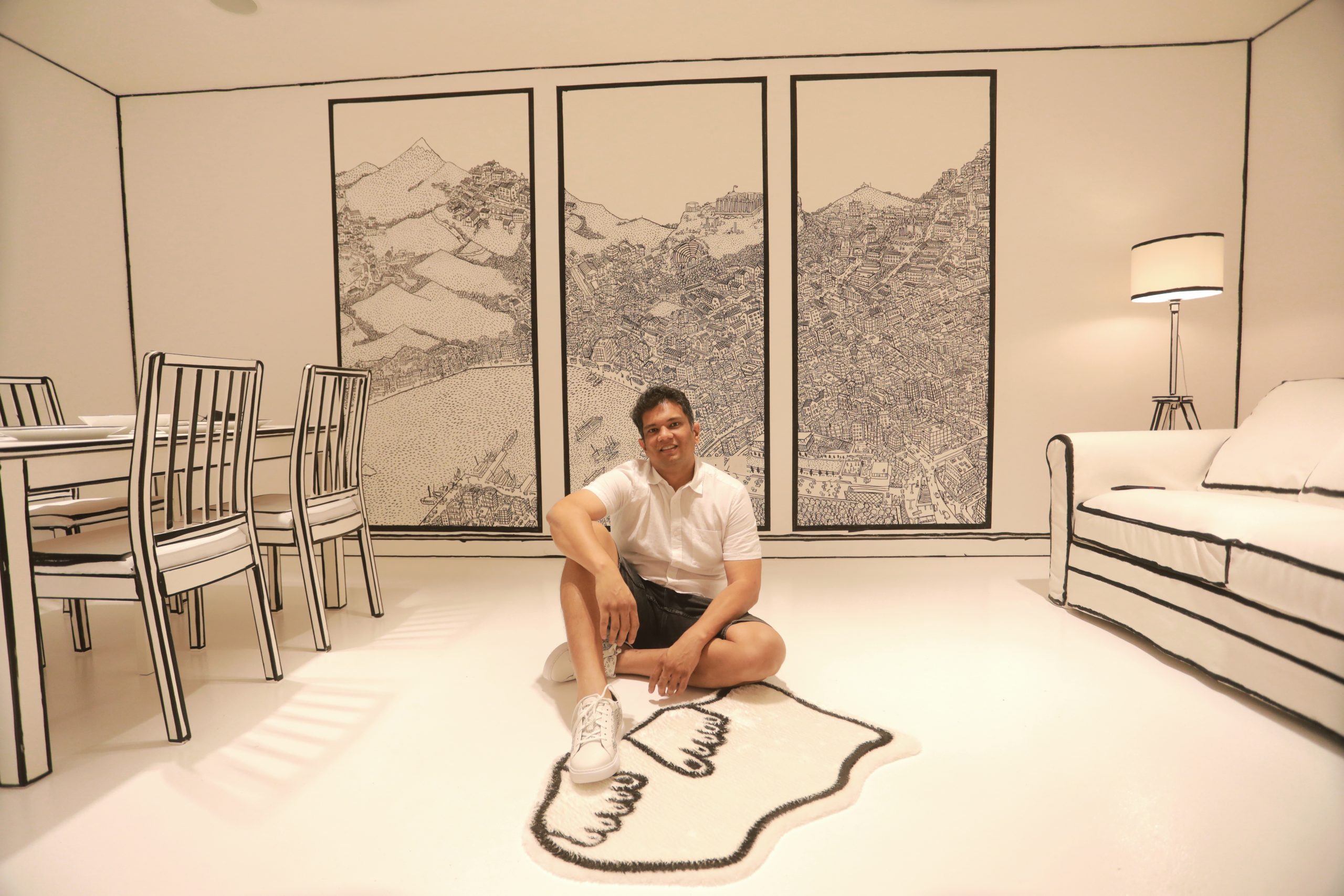
Passersby stopped, took photos, and interacted with it — drawn not just to a product, but to the story behind it. It was an idea that lived not on a screen or in a catalog, but out in the real world — inviting curiosity and connection.
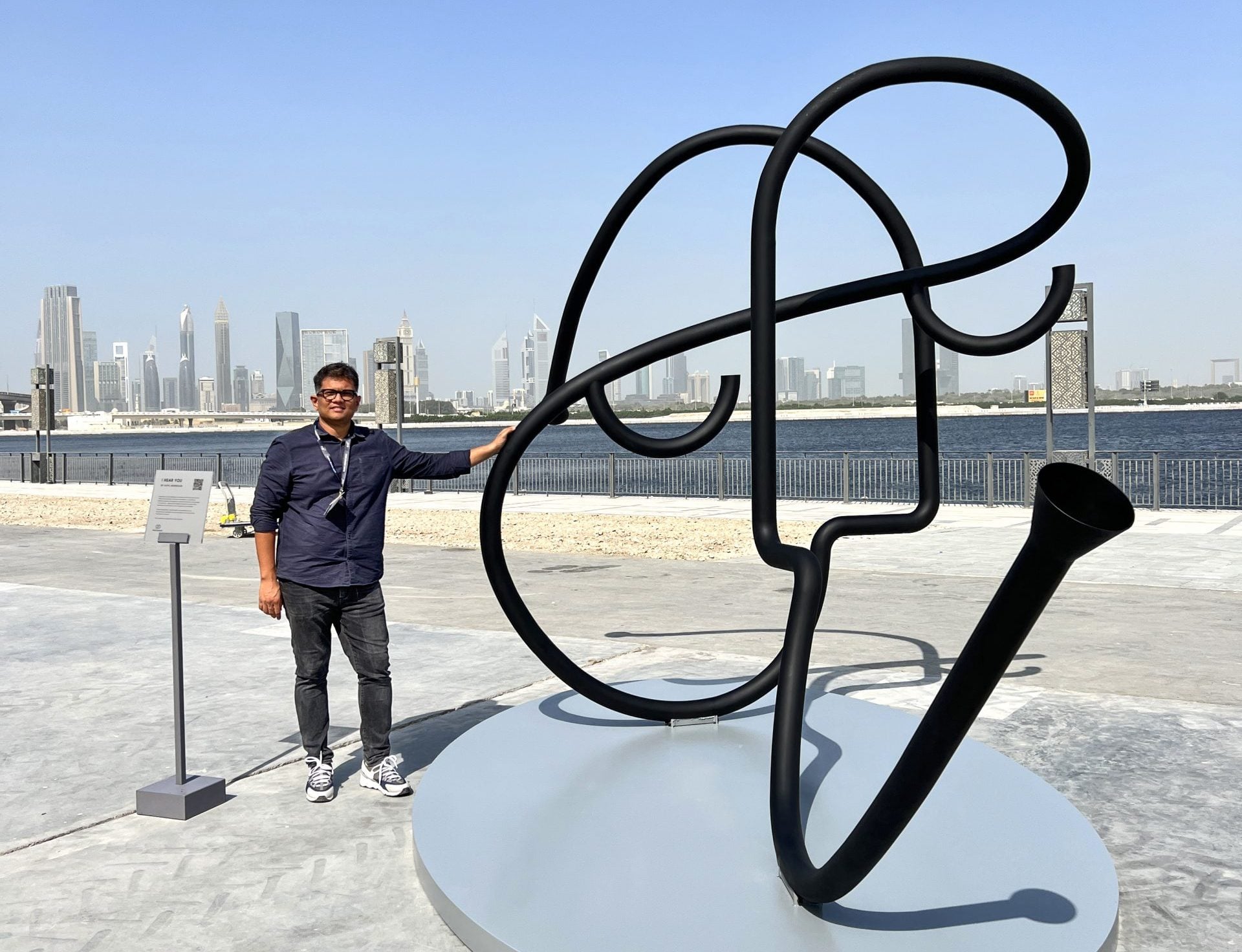
Other works, such as the public installation “I Hear You”, used soundscapes and visual waveforms to give voice to unheard stories in the city.
The “Reality Check” public installation, which featured two seated figures wearing VR headsets, was a visual reflection on the illusion of connection in a hyper-digital world.
These pieces weren’t created as commercial statements, yet they demonstrate how ideas can carry cultural weight and start conversations, even when not tied to a brand or platform.
What links these projects is a quiet refusal to let disciplines dictate the outcome. Instead, the work begins with a question or an observation and evolves into whatever form best suits the idea — be it art, experience, or communication. This kind of thinking doesn’t draw a line between artist and advertiser — it allows both roles to coexist in service of something more compelling.
Because creativity today isn’t about choosing a side. It’s about finding the space where disciplines intersect — where something expressive can also be strategic, and something commercial can also be beautiful. Where the audience isn’t treated as a target, but as a participant.
As the boundaries between culture, commerce, and content continue to shift, projects like these suggest a new direction — one where ideas don’t belong to a category, and the best work lives in between.
Not every concept will fit into a box. And that’s the point. Some of the most memorable ideas aren’t tied to where they come from, but to how far they’re allowed to go.