


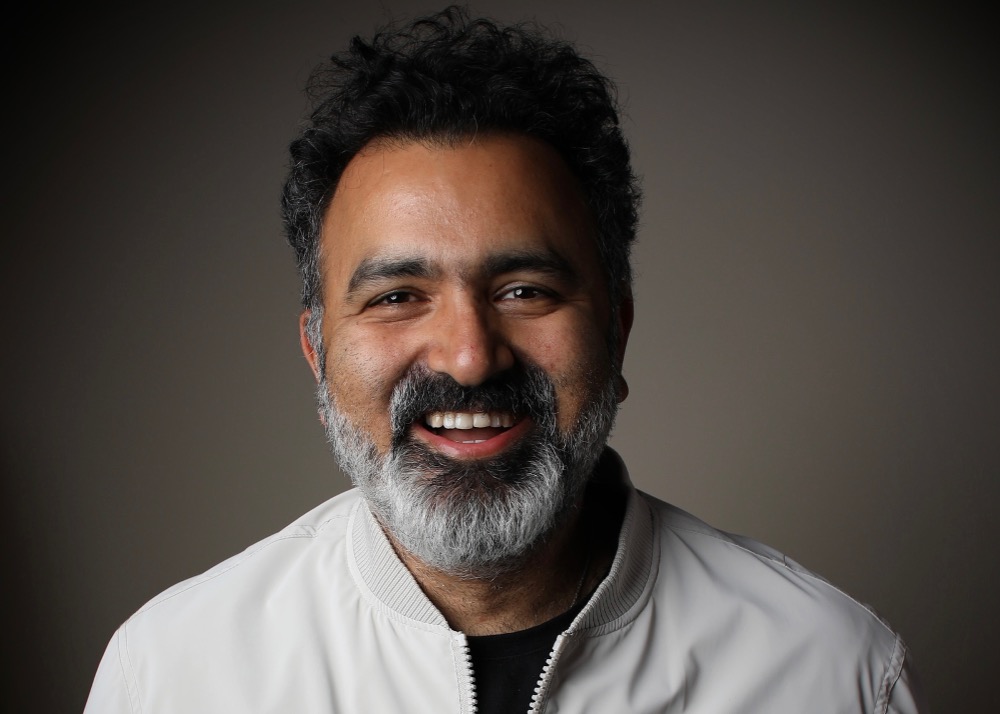
 Sagar Rege, Founder and CEO, Liwa Content.Driven
The first view can be bought. The second must be earned. Advertising has become extraordinarily good at creating a first encounter. We know how to target, retarget and personalise what people see. We can measure how long they watched, where they dropped off and what they did next. But there is a question we ask less often: did they ever want to see us again?
That is where I believe the next conversation around creativity needs to begin. For a long time, the campaign has been the organising principle of our industry. There is a brief, an idea, a launch, a hero film, adaptations and then media. The campaign runs its course and, very often, the creative thinking resets. New brief. New idea. There is nothing inherently wrong with campaigns. Products need launching. Offers need communicating. Brands need moments of concentrated activity. The limitation begins when campaign thinking becomes the only way we know how to think.
A media plan can legitimately determine when an advertising burst ends. It should not determine when an idea does. We may have misdiagnosed the attention problem. Attention span is not the issue. People will watch a two-hour film, listen to a 90-minute podcast, binge an entire series or spend hours gaming.
The truth is that audiences have little tolerance for things they do not find interesting. That is an uncomfortable distinction for advertising. And it should push us to reconsider what we mean by engagement. Beyond a view, like or comment, there is a harder test. Did they seek out the next episode, remember the character or share it without prompting? Did the idea leave them wanting more? Perhaps true engagement begins when the paid encounter ends.
Advertising produces endless assets, most with an expiry date already attached. But occasionally an idea has more in it: a character worth following, a format that can evolve, a cultural tension worth exploring or a world audiences want to return to. That is when an asset has the potential to become a property. And we should use that word carefully. Six branded films are not intellectual property (IP). Calling something “Episode One” does not make anyone want Episode Two.
A genuine property builds recognition, memory, meaning and anticipation. Each new expression gains value from what came before, rather than asking the brand to start from zero every time. A brand can create the conditions for IP. Only an audience can validate it.
Micro-drama is one interesting manifestation of this shift. Its rapid growth demonstrates that people will happily consume episodic stories on a phone, in short vertical formats, provided there is sufficient reason to care about what happens next. But it would be a mistake for media and advertising to turn micro-drama into the next checklist item.
The lesson from micro-dramas isn’t that every brand needs 60 or more 90-second episodes. It is that continuity, character and anticipation have value. When the exchange is worthwhile, audiences will give brands more time, opening creative possibilities far beyond any single format.
As technology makes production easier, technically competent content will become abundant. Things that will become scarce are judgement, taste and an understanding of people: knowing what deserves to be made, what feels culturally true, what people will care about and when a brand should speak or simply step back.
Technology can reduce the cost of making an image. It cannot reduce the difficulty of making people care. In a world of infinite content, craft becomes more important, not less: not craft as decoration, but craft as the choices that give someone a reason to stay.
The traditional process is remarkably linear. Strategy is developed. The concept is approved. The script arrives. The production partner is appointed. The film is made. The assets are delivered. Everyone moves on.
That model works perfectly well for many assignments. But if we want to create ideas capable of living beyond a campaign, some of those boundaries may need to become more porous.
Writers may need to enter earlier. Directors may need to contribute before everything has been decided. Creators may need to be part of development rather than simply distribution. Production thinking may sometimes need to sit alongside strategic and creative thinking rather than only downstream from it. Because creating something people might return to requires different questions from the start.
Who are these characters beyond the script? What are their backstories, relationships and conflicts? What is the world they inhabit? What subplots can emerge? What can evolve? What keeps building towards the next turn or climax? And, importantly, what role can the brand legitimately play in that world without disrupting it?
Perhaps the hardest question of all: why would somebody want more? Perhaps that is the next creative brief.
Advertising will continue producing campaigns. It should. But alongside reach, awareness, consideration and conversion, perhaps there is another ambition we should allow ourselves.
Not simply “how many people can we put this in front of?” but “can we create something they might voluntarily come back to?”
Media can deliver an audience once. Creativity has the possibility of making that audience return. And if an idea earns that privilege, perhaps we should stop killing it simply because the media plan says the campaign is over.
By Sagar Rege, Founder and CEO, Liwa Content.Driven







