Elevision’s Niall Sallam explains how audience data, AI-driven reporting and tech are reshaping OOH in 2025.
How has data and technology changed the way OOH campaigns are planned and measured in the past year?
Over the past year, data and automation have transformed, especially DOOH, planning and scheduling into a real-time, audience-driven discipline. Campaigns are now built around behavioural patterns, attention metrics, and dynamic environmental triggers instead of fixed impressions.
At Elevision, this shift has been accelerated by our integration of Catch across the entire network, providing advertisers with the region’s most precise real-time impression matrix. This enables live visibility of audience flow, dwell time, and exposure frequency, allowing planners to optimise campaigns on our screens while they’re running. Combined with AI-driven reporting, these insights connect reach and recall to measurable outcomes, redefining how OOH effectiveness is quantified.
What are the biggest challenges for OOH in MENA today?
The industry’s main challenge lies in context and attention. Scale is no longer enough; effectiveness depends on how meaningfully content fits its environment. Audiences are selective, and impressions without attention no longer hold value. OOH networks must demonstrate contextual precision – reaching the right audience in the right place, at the right state of mind, while proving measurable engagement through credible dwell-time insights.
How is OOH being integrated with other channels such as social and mobile to create more connected brand experiences?
OOH now acts as the foundation of omnichannel campaigns, triggering sequential storytelling across mobile, social and CTV. Real-time location signals and behavioural data enable brands to re-engage audiences digitally within minutes of physical exposure, bridging awareness, consideration, and conversion in a single, connected journey.
What role will creative play in keeping OOH impactful as the medium becomes more data-driven?
As data guides precision, creative remains the differentiator for attention. Understanding dwell-time patterns enables storytelling that unfolds naturally, capturing interest in the first few seconds and rewarding it through layered, emotionally resonant design. Creativity is what transforms data insight into a memorable human experience.
Do you feel media spend towards OOH is increasing, and what factors are causing this shift?
OOH investment is stable but evolving. In the UAE market, where OOH already commands roughly 35 per cent of total ad spend compared to about 5 per cent globally, the question is less about growth in media spend and more about transformation. Brands are reallocating within the channel, shifting from static placements to high-impact digital formats that offer data, flexibility, and measurable outcomes.
At the same time, advertisers are seeking credible, brand-safe environments after years of overexposure to low-trust digital inventory. OOH provides that balance: physical presence, verified audiences, and longer viewing times all contribute to stronger recall and real-world impact. The shift we’re seeing isn’t just toward more OOH, but toward smarter OOH.
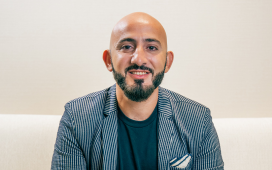
By Niall Sallam, CEO, Elevision.