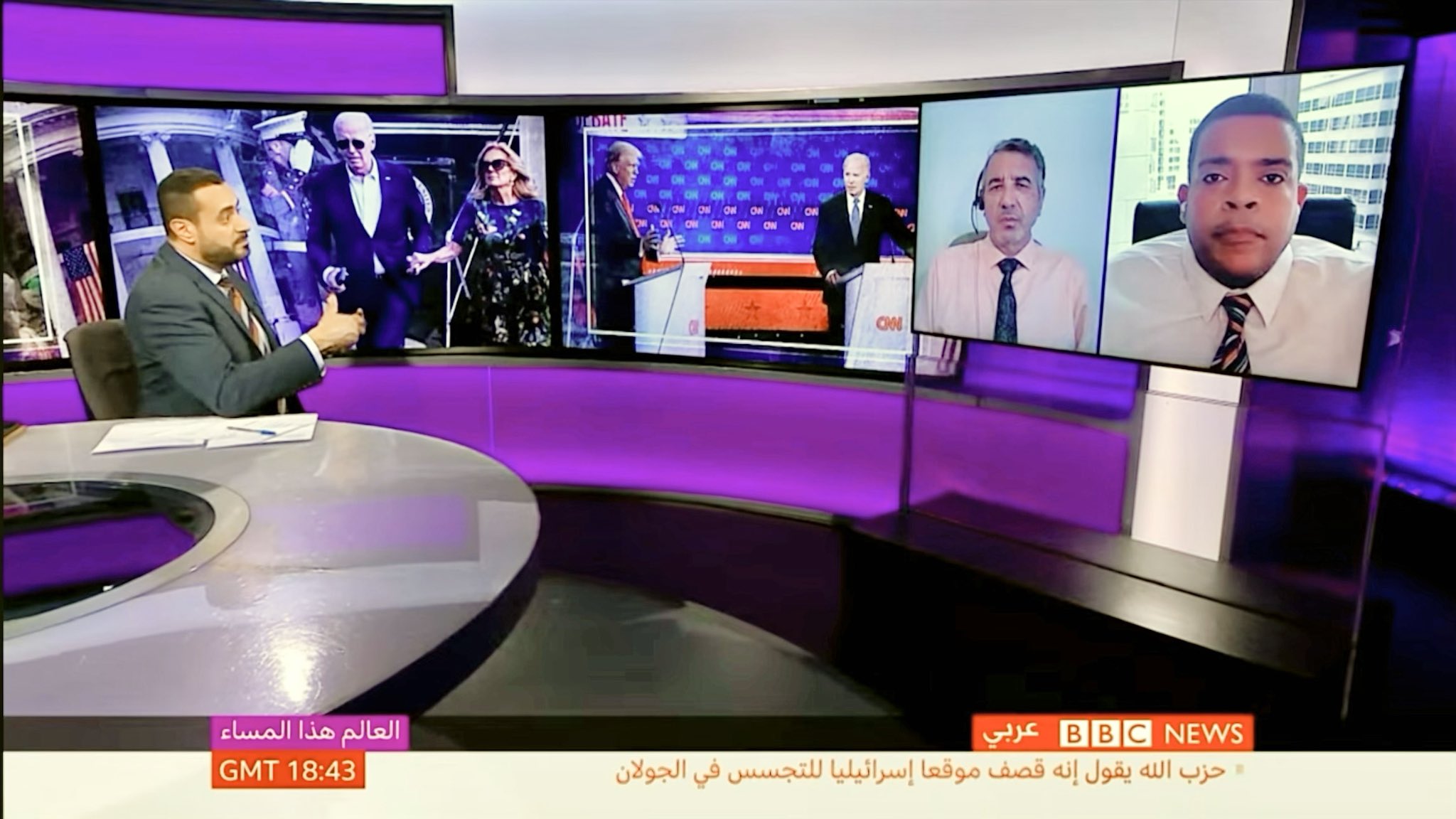
 BBC News Arabic TV has seen its weekly viewership increase by 3 million people compared with 2023-2024
The audience for BBC News Arabic has risen by 13 per cent over the past year, according to data from the BBC’s Global Audience Measurement 2024-2025 published this week.
BBC News Arabic is now the BBC World Service’s largest language service, which aims to provide journalism to a global audience of 39.5 million people a week in the Arabic-speaking world across TV, radio and digital.
In a year of international conflicts, crises and elections, audiences have chosen to turn to BBC News Arabic. The BBC’s largest language service has seen growth across its broadcast offering, BBC News Arabic TV, digital programming and emergency lifeline radio services.
Bucking the wider industry trend of declining audience interest in broadcast news, BBC News Arabic TV has seen its weekly viewership rise by 3 million people compared with 2023-2024.
Tarik Kafala, BBC News Regional Director for the Middle East and North Africa, said, “This has been an extraordinary year for news, and our growth in audience this year is a testament to the dedication of the BBC News Arabic team, and the strength of our offering to audiences. In a world of decreasing media freedom and increasing polarisation, the tenacious work of BBC News Arabic journalists, reporting without fear or favour, is more essential than ever.”
In line with its commitment to providing vital services to audiences in crisis, this year BBC Arabic launched an emergency lifeline service in Syria, keeping listeners up to date with vital information following the fall of former Syrian President Bashar al-Assad. This service follows the successful launch of the Arabic lifeline service in Gaza in 2023, which broadcasts crucial news bulletins twice a day.
An audience of 1.2 million listeners are now tuning in weekly to the BBC Arabic Gaza and Syrian lifeline services across Jordan, Lebanon, Syria and Egypt.
Kafala added, “Audiences have chosen BBC Arabic for news which is independent, impartial and accurate. We can see the tangible impacts of our journalism on our Arabic-speaking audience, and through the wider World Service, and the many other audiences BBC News serves. We remain committed to helping our audiences understand what is happening in the world through our in-depth reporting, and serving those most in need with our emergency lifeline services in Syria and Gaza.”
In line with its commitment to providing vital services to audiences in crisis, BBC Arabic has also provided a vital service to younger audiences through the launch of Dars Arabic. An Arabic-language edition of the BBC World Service educational programme, Dars – which was described by the United Nations as a “learning lifeline” for children in Afghanistan.
At least 30 million children are out of school in the Middle East and North Africa, many have been displaced by conflict and crises in Sudan, Yemen and Gaza, which have severely affected access to education.
Broadcasting across BBC Arabic TV and across BBC Arabic’s digital channels, Dars Arabic aims to connect these children facing immense barriers to an education with learning – utilising the content and expertise of BBC Education to offer children aged 11-16 lessons in Maths, English, Science and Geography at varying skillsets.