After more than two decades working in public relations and communications, I have seen our industry change in ways that would have been difficult to imagine when I first started my career.
Back then, the work was simpler, at least in terms of the tools available to us. We wrote press releases, built relationships with journalists, organised interviews and press conferences, and spent a considerable amount of time convincing editors that our story was worth publishing.
Today, everything moves faster. Organisations have their own media platforms. Social media has given everyone a voice. Influencers have become an important part of the communications ecosystem. News travels in seconds, and artificial intelligence is now capable of producing content that, at first glance, can easily pass for something written by a human being.
We have more tools, more platforms and more data than ever before.Yet sometimes, after all these years in the industry, I find myself asking a rather uncomfortable question: have we really changed the way we think about public relations? Because if you sit in enough client meetings, you will notice that the conversation still often comes back to the same things.
How many articles did we get?
What was the reach?
How many impressions did we generate?
How many influencers participated?
How many press releases went out this month?
There is nothing wrong with asking these questions. Of course, clients want results and agencies need to demonstrate what they have achieved. The problem begins when these numbers become the definition of success. A million impressions may look impressive on a PowerPoint presentation. Fifty pieces of media coverage may look even better. But what do these numbers actually tell us?
Did anyone important change their perception of the organisation?
Did we build trust?
Did we influence a decision?
Did we protect or strengthen the company’s reputation?
Or were we simply busy?
Somewhere along the way, I believe our industry became obsessed with activity. We measure almost everything because technology allows us to measure almost everything. The number of articles, likes, shares, views, impressions and followers can all be presented neatly in monthly reports. But communication is not a mathematical equation.
Visibility does not automatically create influence.
Reach does not automatically create trust.
And making noise does not automatically build a reputation.
I have seen companies receive extensive media coverage and still struggle to explain who they really are. I have seen executives appear everywhere but fail to connect with the audiences that matter most. And I have seen organisations spend significant budgets on campaigns that generated plenty of attention but very little long-term value.
This is why I believe the communications industry needs to have a more honest conversation about what we are actually trying to achieve.
The role of PR has changed, particularly in the GCC. The region we work in today is very different from the one I entered more than two decades ago. The UAE and the wider Gulf have become global centres for business, investment, technology, tourism, culture and innovation. Governments and companies are competing internationally for attention, capital, talent and partnerships.
In such an environment, communication cannot simply be about getting your name mentioned as often as possible. Reputation matters. Credibility matters. Trust matters.
And those things cannot be built through a monthly media coverage report alone. This also means that the role of the PR professional has to evolve. We cannot continue seeing ourselves simply as the people who write the press release, call the journalist or organise the interview.
The best communications professionals I have worked with over the years have always brought something more valuable to the table: judgement.
They understand the environment in which they operate. They know their audiences. They can read a situation. They understand when something is a genuine opportunity and when it is simply noise. More importantly, they are not afraid to tell a client or senior executive something they may not necessarily want to hear.
Sometimes, the best advice a PR professional can give is that there is no story.
Sometimes, the right answer is that the media will not care. Sometimes, an influencer campaign is not going to fix a reputation problem. And sometimes, the organisation does not need more visibility. It needs more credibility. I would even go further. Sometimes, the smartest communications strategy is to say nothing.
That may sound strange coming from someone who has spent his career in communications, but knowing when not to communicate is just as important as knowing when to speak. Unfortunately, in an environment where everyone is competing for attention, silence is often misunderstood as weakness. It is not.
There are moments when speaking too quickly creates more problems than it solves. There are moments when a carefully considered response is more powerful than an immediate reaction. And there are moments when an organisation needs to listen before it starts talking.
These are decisions that no algorithm can make for us.
Artificial intelligence will undoubtedly transform our profession. It already is. It can help us research, analyse information, monitor conversations and produce content faster than ever before. But I do not believe AI is the biggest threat facing the communications industry. The real danger is that we become too dependent on speed and forget the value of thinking. Today, everyone is in a hurry. Clients want immediate responses. Social media never sleeps. News moves around the world in seconds. Our phones make sure we are constantly connected. We have become incredibly efficient at producing communication.
My question is: have we become less efficient at thinking about why we are communicating in the first place?
Artificial intelligence can write a press release in seconds. It can draft a speech, suggest headlines and produce social media content. But it cannot replace experience. It cannot walk into a meeting and understand the personalities around the table. It cannot fully understand the sensitivities of a market, the political environment, the culture of an organisation or the history behind a relationship.
Most importantly, it cannot take responsibility for the consequences of a bad decision.
That remains human.
And this is where I believe the real value of experienced communications professionals will become even greater in the years ahead.
The future of our industry should not be about who can produce the most content in the shortest amount of time. If that becomes the competition, machines will win.
Our value has to come from something else.
From judgement.
From experience.
From relationships.
From understanding people.
From knowing the difference between what an organisation wants to say and what an audience actually needs to hear.
After more than two decades in this business, I am still excited about the future of public relations. In many ways, I believe our profession has never been more important.
The world is more complicated. Information is everywhere. Trust is increasingly difficult to earn and remarkably easy to lose. Organisations are being judged not only by what they sell or the services they provide, but by what they stand for, how they behave and how they respond when things go wrong.
That should be good news for our industry.
But only if we are willing to evolve beyond the traditional definition of PR success.
We need to stop celebrating activity simply because it is easy to measure.
We need to stop confusing attention with influence.
And perhaps most importantly, we need to remember that communication was never really about saying more.
It was about saying the right thing, to the right people, at the right time, in a way that makes them listen.
The future of PR will not belong to the loudest organisations or the agencies producing the most content.
It will belong to those who understand that in a world full of noise, real influence is becoming increasingly difficult to earn.
And perhaps that is the question we should all be asking ourselves.
Not how many people saw what we said.
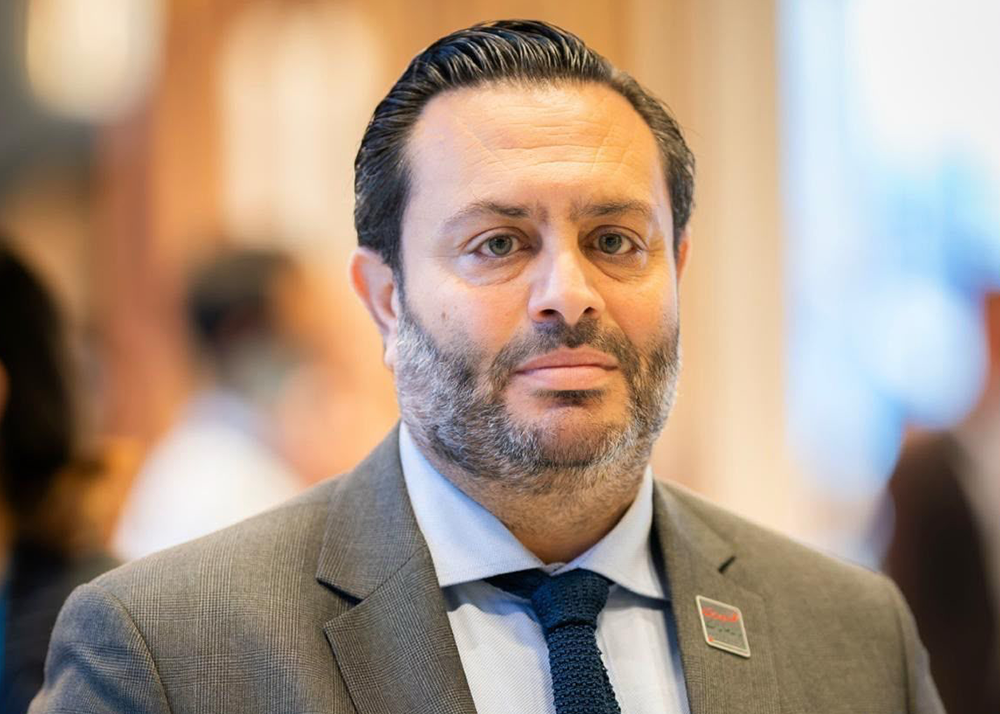
By Dr. Habib Bacha, Founder, Credo Communications