


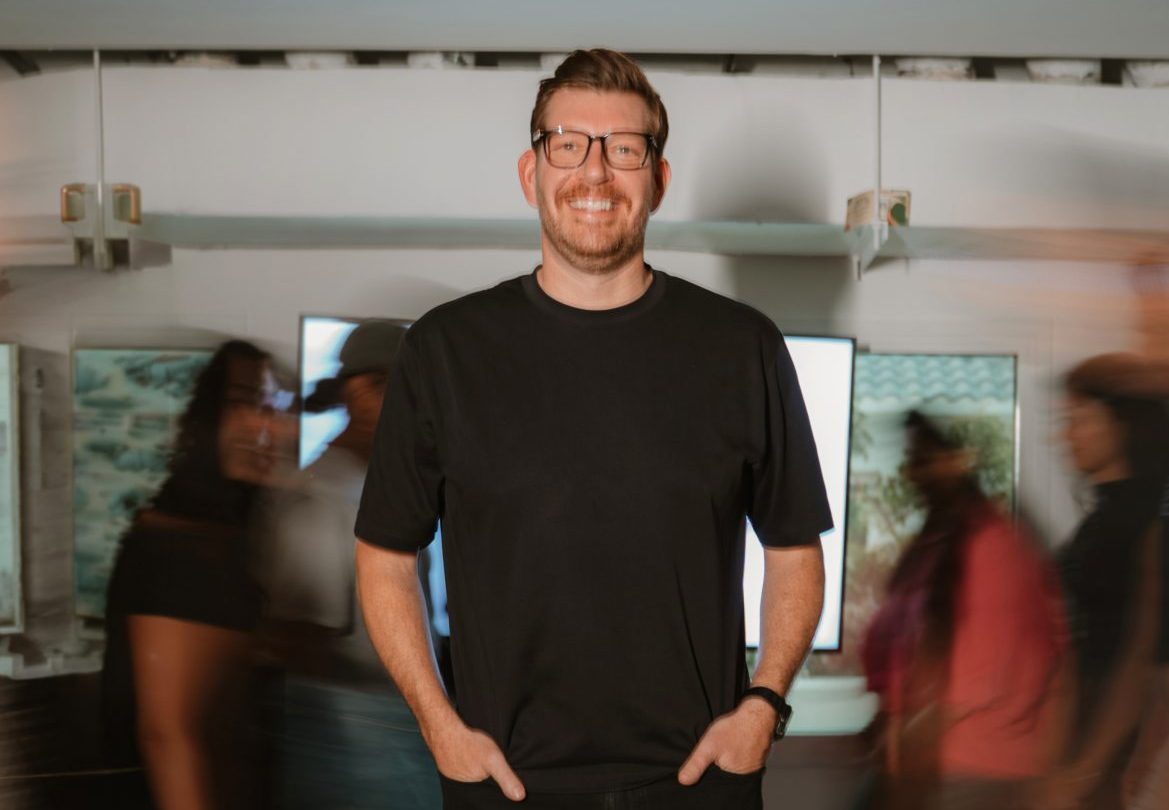
In this Industry Snapshot, Sweetwater‘s CEO & Founder Steven Hetzer shares his insights from the experiential marketing sector including the technology, strategy, speed and human connections required to bring brand experiences to life.
What are the factors fuelling demand for experiential marketing today?
The first half of 2026 tested this region. What happens next matters more. I’m fully expecting people to get back out and live in our cities and our outdoors at full volume, and audiences will notice who shows up and who doesn’t. For brands, showing up is proof of commitment. Nothing else says it as clearly. Brand experiences that pop up where people are engaging with their passions, whether that’s sport, music, food or culture, are how you show you’re invested in the region and not just selling into it. That’s what’s fuelling demand right now, and I expect that to continue well into 2027.
What are clients asking of experiential agencies now that they weren’t 12 months ago?
Speed. Short turnarounds were always part of our industry, but they’ve got even shorter. AI is a big reason why. Clients now come to us with an AI render attached to the brief, and we welcome the intent behind it. We use the same tools ourselves to get a creative vision on screen fast. But a render is a mood, not a space. Getting it into the real world takes thinking time, build feasibility, a proper human journey through it, and a budget that holds up. The vision arrives in seconds. Bringing it to life takes longer.
How should brands measure the success of experiential campaigns?
Reach is the default: press coverage, influencer amplification, impressions. Those matter, and they can justify a bigger budget. But few in this region close the loop back to sales. I understand why. Integrating transaction means aligning sales teams, product availability and e-commerce, which is genuinely a hard problem to solve. But it’s still worth solving. Not because those sales will cover the build, but because someone buying inside an experience is the clearest proof it worked, and it plants the product far deeper than a photo ever will.
What separates memorable brand experiences from forgettable activations?
Strategy. In campaigns it’s embedded from day one. In experiential it can still turn up late, once the format is already chosen. That’s what makes activations forgettable: a trend gets picked because it’s trending, not because it’s right for that brand or that audience. The memorable ones can answer three questions before anything is designed. Why should this exist? Why this brand? Why this audience, in this culture, right now? Ideas arrive faster than ever, which makes those questions more valuable, not less.
What’s one trend the industry is overestimating and one that it is underestimating?
Overestimated: technology. We’re huge fans of experiential tech and use it constantly, but the industry keeps putting it at the center when it belongs in the toolkit. Technology isn’t an experience. It’s how you deliver one.
Underestimated: human connection, for exactly the same reason. For Disney+ we created a Daredevil supper club where Chef Halawa turned each episode into a course. Eight courses, one shared table. That’s what people still remember. That’s the experience. Everything else is delivery.







