Imagine standing at Hegra, Saudi Arabia’s first UNESCO World Heritage Site. Your phone buzzes, delivering an AI-curated audio tour in your native language. As you explore the 2,000-year-old Nabataean tombs, your next stop at Diriyah’s At-Turaif is booked, your transport is routed and a dinner reservation is made – all based on preferences seamlessly captured since your arrival. This is the destination Saudi Arabia is building, not just in steel and sand, but in data and code.
The scale of Saudi Arabia’s ambition for the tourism and experience sector is staggering. The Kingdom, which welcomed 116 million domestic and international tourists in 2024, is targeting 150 million annual visitors by 2030. To achieve this, audacious gigaprojects such as Qiddiya City and Diriyah, and events such as the AFC Asian Cup 2027, Expo 2030 and FIFA World Cup 2034, are transforming the nation into a global tourism powerhouse.
As HRH Crown Prince Mohammed bin Salman framed it, “When you want to diversify your economy, you want to work on all sectors, including tourism. If you want to have tourism, you need to develop your culture, entertainment and sports sectors.”
The invisible layer
Yet, no amount of construction can manufacture the most critical component: the visitor experience. The invisible, digital layer will ultimately define the success of Saudi Arabia’s tourism story. Nation branding is not just what a country builds; it is what a visitor experiences. For the modern traveller, accustomed to the frictionless intelligence of platforms such as Spotify and Uber, the expectation for a personalised, predictive journey is absolute. For brands, this is an opportunity to integrate into the digital infrastructure that will form the soul of the Kingdom’s physical investments.
Minister of Tourism Ahmed Al-Khateeb has articulated this with clarity: “Elevating the visitor experience is at the heart of the tourism sector’s future. Through harnessing digital innovation and streamlining the traveller journey, Saudi Arabia is welcoming more and more visitors from all corners of the globe.”
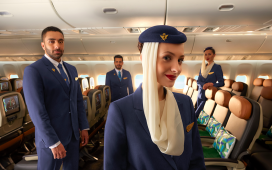
The Ministry’s Digital Tourism Strategy is guided by an elegant principle: “We digitalise the unnecessary, humanise the necessary.” AI is the engine of this transformation, enabling the hyper-personalisation that converts first-time visitors into loyalists. Riyadh Air, the Kingdom’s new digital-native airline, offers a preview of this integrated future, where every touchpoint is an opportunity to deepen the relationship between the visitor and the Kingdom.
An opportunity for telcos
In this ecosystem, the telecommunications operator is no longer a mere utility provider; it is the architect of the visitor experience. For telco brands aiming to outpace competitors, the strategy is clear:
Invest in proactive infrastructure: True market leadership means deploying advanced 5G and future generation networks at every key gigaproject, heritage site and transport hub before they reach peak capacity. The goal is an infrastructure so robust it becomes the undisputed platform for the entire digital tourism ecosystem.
Build the operating system for tourism: The ultimate opportunity is not just to provide data, but to own the platform that manages the experience. Telcos should develop proprietary systems for visitor flow, data analytics and experience management that can be licensed to tourism vendors, positioning themselves as indispensable strategic partners in the Kingdom’s vision.
Forge deep partnerships: Move beyond transactional relationships. Embed teams directly with the developers of NEOM, the Red Sea Project and Diriyah. Co-create the digital roadmaps and become the go-to partner for any brand wanting to integrate into the destination’s digital fabric.
From carrier to curator
Connectivity alone does not create a compelling experience. The brands that will win are those that use the digital layer to express the Kingdom’s unique cultural soul. For a telco, this means transcending the role of a simple carrier to become a content enabler. The strategic imperative is to partner with marketers, cultural institutions and content creators to build a portfolio of exclusive digital experiences. Imagine augmented reality (AR) guides that don’t just label artefacts but tell their stories with emotional resonance. By facilitating these experiences, a telco inextricably links itself to the cultural heart of the nation.
Brands that build feeling will win
The lesson from Saudi Arabia is clear: invest in both the physical infrastructure that gives a destination its form and the digital infrastructure that gives it its feeling. For brands and telcos, the opportunity is to build that feeling. The visitor of 2030 will remember how the Kingdom made them feel known, guided and connected. The brand that provides that connection will not just be a market leader; it will be an author of the new Saudi story. The digital layer is the soul of the experience and the next competitive battleground.
By Fahad Almaghrabi, Vice President – Client Team, KSA at WPP Media