Every marketing campaign in Saudi Arabia wants to sell something. Most of them succeed and that is precisely the problem.
The logic is understandable. Businesses exist to generate revenue. Boards measure quarterly performance. Marketing must justify its budget. In this environment, the pressure to show a return is not irrational; it is structural. The issue is not that Saudi marketers care about sales. The issue is that the obsession with immediate conversion has left no room for what makes long-term selling possible: a brand people actually care about.
Walk through almost any marketing meeting in the Kingdom, and you will hear the same logic. We need awareness but we also need leads. We want to build the brand but we need sales this quarter. The agency presents a ‘brand campaign’ – and somewhere, somehow, the client ends up convincing the agency to bury the offer in the small print of the creative. It could be a discount, a QR code or a ‘limited time only’ offer. The brand is there. But so is the conversion pressure, reliably, without apology.
This is not brand building. It never was. But the room rarely says it out loud.
What has happened is a quiet redefinition. Brand activity has become the category where vague intentions go to retire: any marketing investment that cannot be measured by immediate returns. Marketers know this even if they do not say it. CFOs certainly know it, which is why the brand budget is always the first to be cut and the last to be defended with any real conviction.
We need to stand up and acknowledge, collectively, that brands that skip the upper funnel and live permanently at the point of conversion are building a machine that requires ever more fuel to run. This leaves no room for memory, meaning or for the customer to return except due to a slightly better offer compared with a competitor. The short-term win is real. The long-term cost is catastrophic.
This is not a theory. The academics have documented it. The practitioners have confirmed it. Binet, Field and Sharp have spent decades documenting it, and the numbers do not vary by geography. This principle is not a debate: roughly 60 per cent of marketing investment should build the brand, while 40 per cent should activate sales. It is not a creative preference; it is commercial science. Brands that invest in long-term emotional connection outperform on sales over time, with lower spend, because they are not starting every customer conversation from zero.
Marketers in Saudi Arabia, by and large, are ignoring this. Not because they lack knowledge but because of impatience and a management culture that has not yet built the vocabulary to have this conversation properly. The irony is sharp: Saudi Arabia is one of the fastest in launching new brands, and it’s also a place that would benefit the most from investing in making those brands strong for the long term.
The marketing leader who understands the challenge faces a specific battle, not with campaigns, but with the boardroom. Standing in front of a chief executive officer and a chief financial officer and advocating for investments that will not return a number this quarter requires two things that are rarer than they should be in this industry: deep strategic conviction and the willingness to look wrong in the short term in service of being right over time. That is a hard argument to make, and it’s harder still when colleagues are presenting dashboards full of leads while you ask for patience.
But that argument has to be made with evidence and a plan that separates brand investment from activation investment clearly – not aesthetically, but strategically. One builds the relationship, the other converts it. Both matter. But they are not the same job, and treating them as interchangeable is how a market ends up full of campaigns that are neither emotionally resonant nor commercially efficient.
Hiding behind terminologies does not help either. ‘Always-on’, ‘full-funnel’, ‘integrated’, and now, inevitably, ‘AI-data-driven’ will not compensate for the absence of a genuine brand idea holds consistently over time. You can dress a sales catalogue in the language of purpose, but it will still be a sales catalogue.
What Saudi Arabia’s marketing community needs is rigour, humility and education. Read the research. Understand what has worked in mature markets. Accept that advocacy is not built in a campaign cycle and that some of the most important work a marketing department can do will not appear in this month’s report. Then be willing to walk into a boardroom and explain why, with the confidence of someone who has done the homework.
Brands built on patience outlast brands built on pressure – every time. The question is whether anyone in the room is willing to make that case or whether we will keep signing off on another campaign that ends with a discount code and calling it a brand.
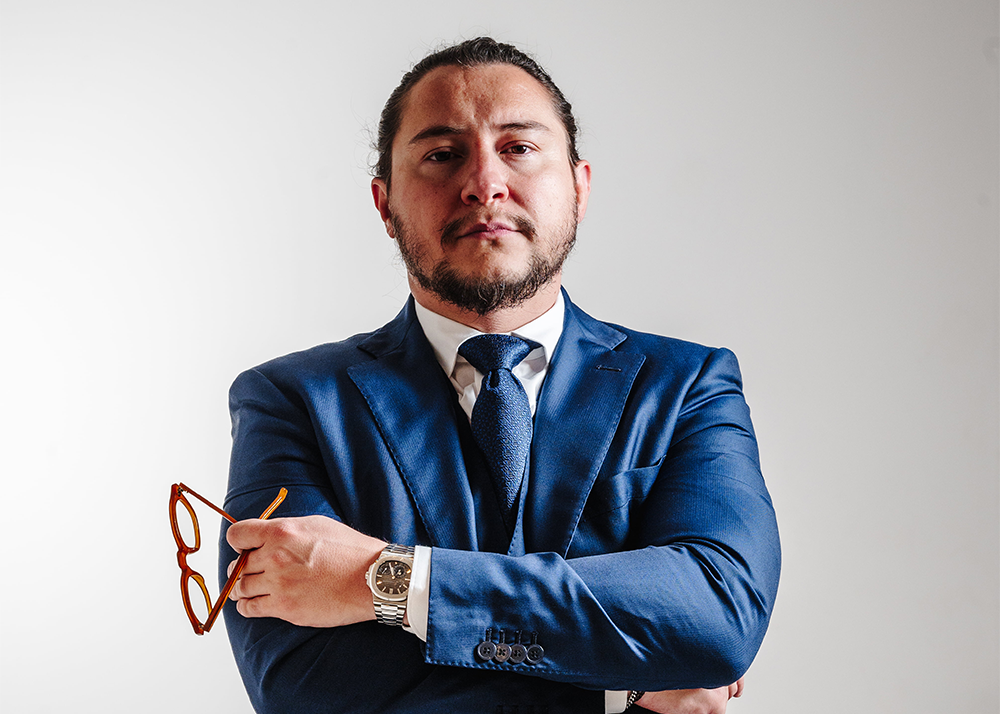
By Bilal Hallab, Executive Director – Marketing and Communications, Mohamed Yousuf Naghi Motors.