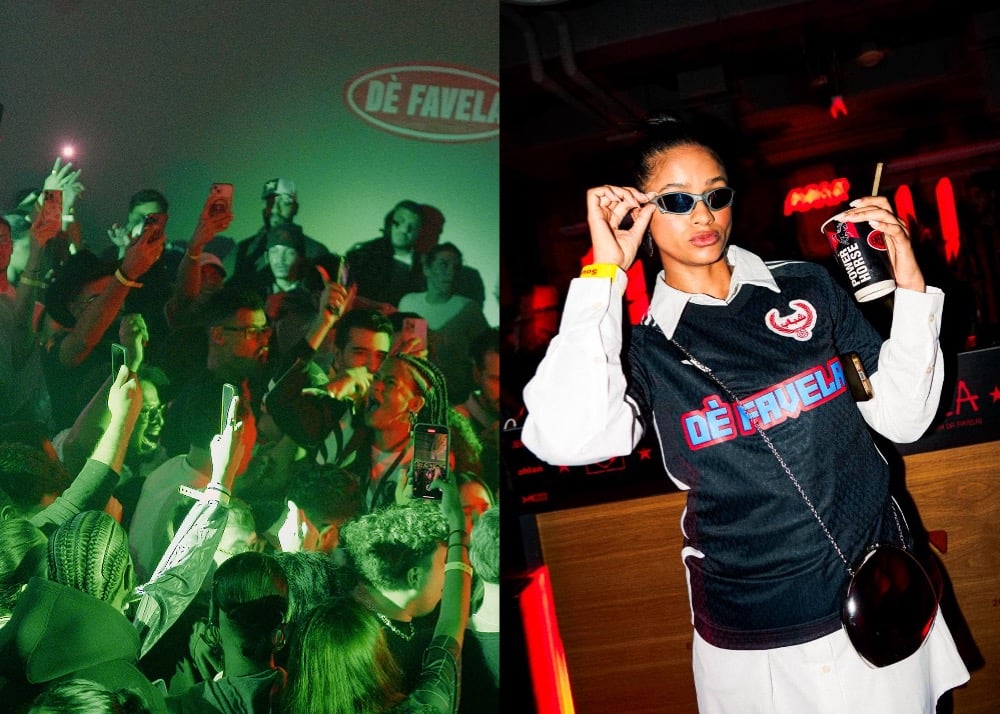
Dè Favela, a community event by PBLK Affairs hosted its latest edition on May 2. The event, powered by Power Horse brought together youth across Dubai for a night of football, fashion, music and more.
The concept reflects a generation shaped by multiple identities, drawing inspiration from the spirit of Brazilian favelas.
Campaign Middle East speaks with Asher AR, Co-Founder of Dè Favela and PBLK Affairs and Khuram Leghari, Global Lifestyle Marketing Manager, Power Horse to unpack what makes the event a natural meeting place for brands and young consumers.
“Dè Favela is where different parts of youth culture naturally collide football culture, nightlife, fashion, creators, and community,” says Asher.
According to him, the event has become a destination for organic brand partnerships that seamlessly integrate with youth subcultures because “it was never built for brands. It was built for people first.”
“Everything at Dè Favela comes from the community. How they dress, what they listen to, how they move. Brands don’t define the space, they step into something that already has energy,” explains Asher.
“We don’t do traditional activations. We reinterpret brands through our world. Whether it’s a stage, a pop-up, or a moment in the night, it has to feel like Dè Favela first. If it doesn’t sit naturally within football, fashion, music and community, we don’t do it,” he says.
To him, staying true to youth culture is the winning formula for authentic brand presence. “When brands show up, it doesn’t feel forced. It feels like they belong,” he says.
From Power Horse’s perspective, partnering with Dè Favela supports its brand positioning of being culturally present. In the energy drink category, Leghari explains this has typically meant chasing athletes, performance, podiums and individual achievement.
“But youth culture today isn’t shaped by athletes alone – it’s shaped by communities,” he says.
Experiences such as football cages, music nights and streetwear drops can allow brands to be present without forcing it, “and that’s where we want Power Horse to live,” says Leghari.
“The people who move culture forward aren’t always on a stage or a track. They are in the room, in the crew, in the group chat,” he says. “Red Bull owns the athlete. We are after the crew they run with.”
View this post on Instagram
Creating authentic brand presence
Leghari goes on to say that authenticity is the tax brands must pay to be a part of today’s youth culture.
He explains that consumers can tell when a brand is advertising versus participating. “They know the difference between a logo on a banner and a can in someone’s hand at a party they were actually at,” says Leghari.
Therefore, tapping into local presence gives brands the extra edge to understand the communities they want to be a part of. They must also support the spaces which youth care about to build longterm credibility.
Leghari explains that a brand can only reach that level of authenticity if it bridges the gap between familiarity and belonging. “Presence builds awareness. Participation builds permission,” he says.
Power Horse’s partnership with Dè Favela supports this approach because the event is designed with community in mind. Asher credits the event’s success to its ability to ‘stay close to the people’.
“It’s as simple as that,” says Asher. “Dè Favela isn’t built top down. It grows from what the community is already doing. The football culture, the fits, the music. It all comes from real people, not a brief.”
“Because of that, the environment is honest. People don’t feel like they’re being sold to. They feel like they’re part of something. And when brands step into that kind of space, the interaction changes. It becomes cultural, not transactional. That’s where the real value is,” he says.
Balancing cultural impact and real results
Over the years, Dè Favela has hosted tens of thousands of attendees. Along with its partnership with Power Horse, the community event has worked with brands such as adidas, JD, Johnny Walker and Suntory Global Spirits.
Each of the events have driven strong dwell time across brand spaces at the event, and Asher explains that in times when Dè Favela has been tied to product drops or exclusives, brands have even seen on-ground sell outs.
“On the content side, we’ve reached up to 1 million impressions across platforms, driven largely by organic community-led content,” says Asher.
The event’s core audience sits mainly between the 18 to 20 range, with a strong female presence making up close to 50 per cent of attendees. Each event also cultivates hundreds of pieces of user-generated-content, which helps to generate a strong share of voice without relying heavily on paid media.
“More importantly, people don’t just attend. They participate, show up, they create, they share. That’s where brands see the real return,” he says.
Power Horse’s participation in events such as Dè Favela is one of many examples of how brands are shaping strategies to authentically connect with youth in the region. To drive success, brands must be willing to connect with audiences in ways that naturally meet them where they are. Organic association is how brands can build modern brand equity.
As Power Horse’s Leghari says: “We don’t chase attention. We earn it by showing up where culture already is.”