Louvre Abu Dhabi faced a visibility challenge in an increasingly crowded tourism landscape. Despite housing one of the region’s most significant artwork collections, the museum often felt distant from visitors moving through the UAE’s busy tourist hubs – both geographically and mentally. The brief was to show people what they were missing and create a clearer, more compelling path to the museum.
The solution was to turn the art itself into direction. Developed in collaboration with Publicis Middle East, Louvre Abu Dhabi transformed selected artwork into street signs, using artworks drawn from a collection of more than 6,000 pieces to make the museum more visible. Placed across high-traffic tourist locations, these signboards also functioned as directional cues, making the museum accessible by guiding the visitors towards it.
“Louvre Abu Dhabi is home to some of the world’s most renowned masterpieces, yet it’s often overlooked due to flashier entertainment alternatives,” said Aunindo Sen, Executive Creative Director, Publicis Middle East. “This campaign turned an out-of-home execution into an out-of-museum one, showing people what they might be missing while giving them the directions,” added Sen.
The campaign had a two-fold effect; apart from additional visibility to the museum itself, it also provided more visibility to the lesser-known artwork at the Louvre Abu Dhabi.
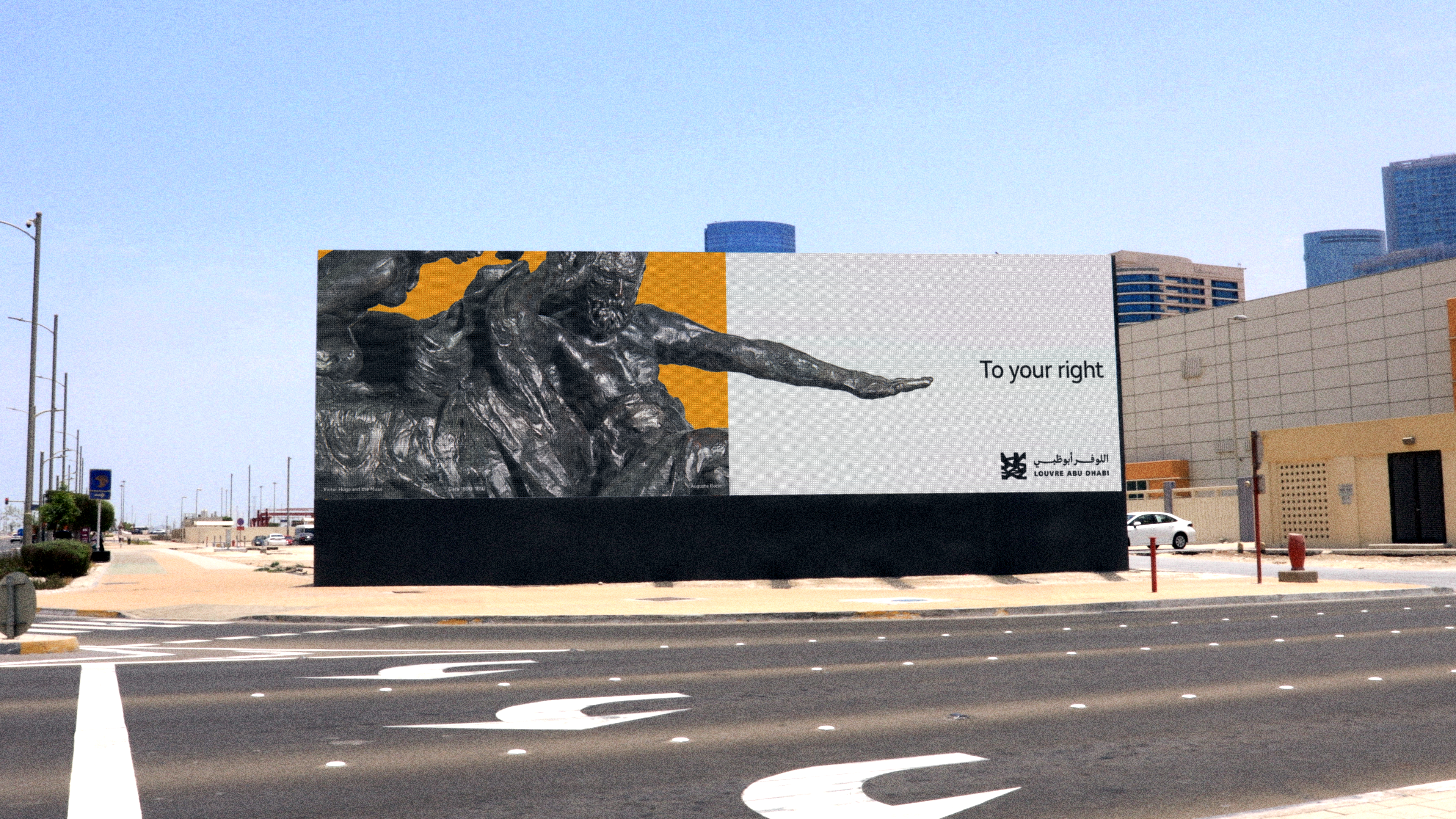
“By transforming lesser-known artworks from our collection into wayfinding, we invited people to follow the art itself towards the museum,” said Anna Ferris, Marketing Manager, Louvre Abu Dhabi.
The art-led street signs were rolled out across key tourist corridors in the UAE, with each placement designed to work as part of a navigational journey.
The concept was then extended inside the museum itself, where the same visual language was used as wayfinding within Louvre Abu Dhabi. By bringing artworks from the galleries – and even from storage – into public spaces in the museum, the campaign turned the journey to the museum into part of the experience.
The outdoor activation was supported by an integrated digital campaign that focused on reinforcing reasons to visit. The digital messaging also highlighted current exhibitions, summer programming and free entry for children.
Rolled out with a data-led media approach, the digital campaign leveraged telecommunication intelligence, digital takeovers and targeted placements to reach high-intent travellers.
Together, the combination of OOH and digital helped convert the campaign from awareness into conversion.
“Supported by targeted digital advertising, the campaign helped drive summer visits and encouraged deeper engagement with culture,” said Ferris.
Within the first week of the campaign, the museum recorded a 37.5 per cent increase in visits compared to the same period in 2024. It also saw an increase in online ticket sales, registering a year-on-year increase of 79.9 per cent.