When I wrote about tokenism and women’s representation in the Middle East region in 2019, we were still waiting for more inclusive stories to break through. At the time, a reductive logic applied to regional audiences in advertising – a headscarf here, a national dress there – flattening entire communities into a single narrative.
But 2025 feels different.
Today, there’s a surge of work – across the Middle East and globally – that centres women from the Middle East not as props, but as protagonists. Ramadan campaigns feel more thoughtful. Brand ambassadors reflect real diversity within the region. Even global platforms, from Nike to Netflix, have begun amplifying their voices in ways that feel less performative, more personal.
That progress deserves celebration. And yet, representation alone is no longer the finish line. The next challenge – and opportunity – is dimensionality.
Women are not a monolith – and neither are their stories
At Braze, where I serve as Executive Sponsor of our Muslims ERG, this principle shapes how we design our programming. We aim to go beyond religious milestones, recognising the blend of faith, creativity, and community that defines identities.
That widened lens invites more participation – not just from men and women, but also from colleagues across the company.
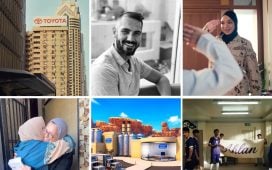
Over the past three years, we’ve hosted panels spotlighting people doing impactful work: women who launched platforms for girls in sports, founders of media outlets telling nuanced women’s stories, authors, and even the creators of ‘Makani Homes’ – a platform connecting homeowners regionally and globally to facilitate cultural exchange and meaningful travel experiences.
We’ve explored the history of tatreez embroidery, invited colleagues to learn about geometric art and dabke dance, commemorated Srebrenica, and raised hundreds of thousands of dollars globally for Palestine and Lebanon through charitable campaigns.
The feedback has been consistent: these events make people feel included, curious and inspired. As one colleague put it, “The events may be tailored to one group, but they allow everyone to participate and engage.” That’s the power of dimensional storytelling – it deepens understanding rather than narrowing it.
Advertising faces the same imperative. Progress has given us better representation, but now we must move beyond being seen to being understood. That means rejecting shortcuts – the hijab as shorthand, the crescent moon as cliché – and embracing narratives that reveal complexity, joy, humour and individuality.
The risk of short-term storytelling
Ironically, the same pressures that once drove tokenism in representation also drive short term thinking in brand building. Performance dashboards and ‘quick wins’ can be powerful, but they create blind spots. When we reduce audiences to segments and conversions, we risk flattening them into stereotypes.
I’ve written before about how tech’s obsession with ROI can erode long term brand value. The same principle applies here: nuanced storytelling builds trust and loyalty over time. Stereotypes might spike engagement for a moment, but dimensional narratives create emotional equity that lasts. In a region as dynamic – and globally visible – as the MENA region, that’s not just good ethics – it’s good business.
Women in the MENA can lead the next chapter
Here’s where women in advertising, especially in the Middle East, have an extraordinary role to play. Many of us navigate overlapping identities – professional and personal, cultural and global – which makes us attuned to complexity in ways brands urgently need.
For example, let’s take a look at Huda Kattan, founder of Huda Beauty. Born to Iraqi parents and raised in the US, she built a global beauty empire that celebrates heritage rather than concealing it.
Her mentorship program, Huda Beauty Angels, invests in women led brands such as KETISH, an Egyptian American startup tackling taboos around women’s bodies. Rather than shying away from stigmatised topics, she funds and elevates them – using beauty not just as business, but as a bridge to deeper cultural conversation. That’s the shift: from representation to investment, from surface to substance.
From progress to possibility
So where does this leave us? In a rare and exciting place. Representation is improving. Awareness is growing. And now, we have the chance to move the conversation forward — to build brands that don’t just include women, but truly reflect them in all their multidimensional humanity.
Imagine campaigns that celebrate culture, tradition and art alongside modern entrepreneurship. Stories that explore joy as well as struggle, humour as well as heritage. Narratives that resonate across audiences because they are specific, not in spite of it.
The opportunity isn’t to chastise the industry for where it’s been, but to inspire it toward where it can go. As women in advertising, we have both the lived experience and the creative platform to lead that charge – proving that the most resonant brands aren’t built on what makes us the same, but on what makes us richly, beautifully different.
By Mariam Asmar, VP Brand Marketing and Strategic Consulting, Braze.