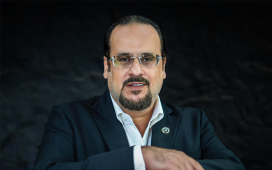
Evelyn Bennett, Founder and Managing Director, Bennett Consultancy & Co
Loyalty has long been a system of smart design: from automated lifecycle programmes to predictive models and offer logic, efficiency is part of the playbook and the baseline. As AI becomes the newest layer in the tech stack, a deeper question emerges: in our quest to optimise through AI, are we at risk of losing the true meaning of loyalty?
We’re seeing experiments, pilots, and platform integrations. But ask anyone shaping loyalty at a strategic level, and you’ll hear a different story; most organisations haven’t yet defined how AI should evolve loyalty, nor what loyalty even needs to be in this new age.
The real question for forward-thinking leaders isn’t just how to automate, but what kind of loyalty we’re trying to build. And that leads us to a deeper choice:
Are we optimising for prediction or for connection?
Too often, transactional engagement is mistaken for loyalty. But, whilst important, transaction is not trust. Nor is it memory. It certainly is not emotional attachment.
Now, with AI promised to accelerate speed and efficiency across every touchpoint, brands must reconsider what they’re building, why they’re building it and whether it can survive anticipated compression of the customer decision making and marketing funnels.
Currently, the Middle East stands at a rare intersection with:
- Fast-rising AI landscape investment; Saudi Arabia has committed $14.9bn to AI infrastructure in 2025 alone, as part of a broader $investment programme since 2022. Meanwhile, UAE’s upcoming Stargate AI campus led by G42 with support from OpenAI and Nvidia, will house 100,000 advanced AI chips powered by up to 500,000 chip imports annually starting in 2025.
- A surging influx of HNWIs; A record‑breaking 142,000 millionaires are projected to relocate internationally in 2025. The United Arab Emirates is the top destination, expecting a net influx of 9,800 millionaires, and Saudi Arabia is in the top five list, with an expected 2,500 millionaires migrating inbound – reinforcing the Middle East’s position as the world’s top destination for high-net‑worth migration.
- A consumer base still deeply responsive to high-touch, emotionally intelligent brand experiences. In the recent LVMH H1 2025 Earnings report the Middle East was called out as outperforming markets in Asia, Japan, and the U.S. Clearly a region where human connection remains commercially powerful.
Poised at the intersection of technological advancement, high-net-worth individuals’ (HNWI) migration and consumer confidence, the Middle East is well-positioned to lead in one more space, loyalty.
A modern loyalty design must move beyond the traditional mechanics of rewards and recognition. Instead, it must deliver recognition, relevance, and relational depth – at scale. “At scale” historically being a big challenge, but now, one AI could help solve.
This doesn’t mean avoiding automation. It means using AI in service of EI. Think:
- Scaled high-touch, AI-assisted teams
- Intelligent moments of human recognition
- Loyalty frameworks designed around customer values, not just value
Programmes that cut investment in the loyalty matrix, people, tools and governance – risk more than churn. They risk being invisible in a world where the funnel is collapsing.
A ‘defining moment’ for loyalty leaders
As AI-driven platforms like Google Shopping and emerging assistant-style tools such as Daydream, an AI fashion agent, become the first, and in some instances, the last touchpoint, the direct-to-consumer (D2C) relationship shows signs of being bypassed entirely.
Our take is that there are two likely paths this follows; either your brand holds a meaningful place in your customer’s mind and so you bypass the algorithm dependency because the human actively seeks you.
Or, you get so good at your GEO game, that you are featured by LLMs or LLM- powered platforms – but in that, the stakes are high and possibly – temporary.
“Brands that rush to automate without emotional strategy may gain efficiency but lose loyalty.”
Take Klarna, which made headlines for replacing much of its customer service team with AI agents. The move was positioned as a leap forward, until the experience fell flat. The company quietly rolled back its approach, returning to human-led service at key points.
The lesson? AI can handle transactions, but the nuance in human interaction remains important and relationships cannot be automated, though they can be enhanced using AI.
This is a defining moment for loyalty leaders, especially in the Middle East. The region has the infrastructure, the investment, and the customer appetite to build something new. Unlike much of the world, the Middle East is least feeling pricing pressures.
According to a recent PwC report, consumers in the Middle East report significantly lower sensitivity to inflationary pressure compared to global peers, with 75 per cent maintaining or increasing discretionary spending.
But that defining moment won’t be achieved through technical efficiency alone. As throughout all of history, the balance, whether the Tao, the yin and the yang or Nūr and Ẓulumāt – it will require combined intelligence:
- AI to scale
- EI to connect
- And strategic design to bridge the two
To my fellow loyalty leaders, we must rethink how we define, measure and operationalise loyalty. Not just tweak the edges of existing programmes. The future of loyalty belongs to those who architect meaning, not just drive penetration and prompt redemption.
Because in the age of AI, loyalty will belong to those who lead with intelligence — artificial and emotional too.
By Evelyn Bennett, Founder and Managing Director, Bennett Consultancy & Co