For years marketers hid behind benchmarks, reports and dashboards. You can call it educated guesswork as to how a campaign will do in delivering a return on investment (ROI), stitched together from different data sources that purely focused on attribution. This exercise was always backward-looking, based on historic comparison figures and not taking into account any current or macroeconomic factors.
We did what we did best: as marketers we were storytelling measurement and convincing ourselves that this represented the truth. We rarely asked what the next dollar will produce across time as an accurate marketing forecast. Yes, we had past return on ad spend (ROAS) and ROI, but it isn’t a golden rule; it was correlation dressed as causality pretending to be strategic confidence because no time machine can take us back to Ctrl+C and Ctrl+V the past success.
That gap is about to close, and not because we suddenly became smarter, but because tools and computational power have finally caught up with the complexity of how growth actually works.
2026 is the year of predictive impact modelling, perhaps not perfect at first, but enough to change your chief financial officer’s (CFO’s) impression that marketing is a growth driver to the business and not a burden on the profit and loss statement (P&L). This year marketing decisions will be evaluated as capital allocation scenarios with financial consequences that can be simulated, debated, and stress tested before a single dollar is spent, and that changes everything about how boardrooms treat brand, performance, and the role of marketing in value creation.
Most ROI debates in the boardroom have been foggy because attribution rewards channels and not growth, ROAS was seen as the truth even when the correlation wasn’t 100 per cent accurate, and past performance was used as the main predictor for the future. Performance marketing won the argument because its numbers looked immediate, while brand lost the argument because its impact was delayed and therefore easier to dismiss.
Predictive impact modelling is going to shift that narrative away from excuses to a simulation that shows outcomes at a scale that we could not five years ago. The models are built on signal ecosystems that will measure incrementality baselines, brand versus performance demand curves and customer value trajectory. Predictive artificial intelligence (AI) won’t do this magically, as it will rely on past data and signals. But with the right inputs on signal flows, modelling capabilities and tech tools, we will be able to simulate the impact of brand and performance decisions before we make them. Marketing will shift from being a storyteller to a strategic forecaster that can project outlook based on investment scenarios.
We’re already starting to see early signals of this shift in practice. Several global brands in sectors such as travel, fintech and retail are experimenting with portfolio-level incrementality models that track how brand exposure affects conversion efficiency over horizons. The early learning isn’t that everything is perfectly predictable, but that decisions are finally being made with foresight rather than nostalgia.
This is the voice that marketers have been yearning for in the boardroom, as it speaks the language of the CFO. Not that they didn’t have the seat before, but all of a sudden, the CFO finally sees them operating on the same plane of accountability. In the old world, marketers were asked to justify spend. In this new world, marketers will be asked to justify capital allocation choices. We’ll finally have an answer for “If we overspend into performance at diminishing returns, what is the marginal destruction of value?” or “If we increase brand presence in a specific market, what is the predicted effect on pricing power and mix?” This is a completely different level of fluency, as we are no longer saying. “This campaign delivered a good ROAS” The language that lands in the boardroom in 2026 will need to shift to “this X investment is predicted to maximise growth by Y, protect margin by Z, and reduce future cost of acquisition with an acceptable risk”. That kind of language changes the tired question of cost centre versus profit centre, because marketing now presents itself the way every capital function should.
Predictive impact modelling will also solve the most debated topic in our industry: “Why do I need to spend in top of the funnel?” Imagine if all of a sudden you can dynamically simulate Les Binet’s and Peter Field’s Long and Short Of It framework, because the model will demonstrate how brand investment compounds conversion efficiency over time and that cutting brand investment does not save money but transfers cost into the future and taxes performance with rising customer acquisition cost (CAC).
The debate will change from a belief to a shared responsibility. To call a spade a spade, predictive impact modelling will be inaccurate at first, and sometimes it will be used to validate decisions after they are made. The value isn’t in the model but in the discipline, and in how, in the next generation of marketers, this will be their go-to for all key marketing decisions. The discipline to connect marketing choices to financial outcomes across time, examine risk honestly instead of hiding behind creative language,
The discipline to connect marketing choices to financial outcomes across time, examine risk honestly instead of hiding behind creative language and to treat brand and performance as interdependent levers in the same measurement system. This is what will separate maturity from dashboard fetishism. While I did say marketers will have a voice in the boardroom, this isn’t a power play but a way for them to earn credibility. Less defensiveness but shifting the narrative to the future growth of the business. I’d like us in 2026 to no longer spend our energy in conversations about defending marketing budgets but instead make predictive impact a co-steward of value creation in marketing.
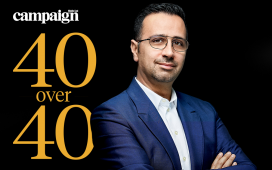
By Ahmed El Gamal, Executive Director of Marketing