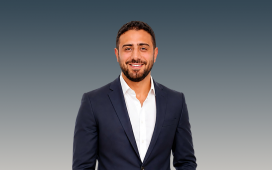
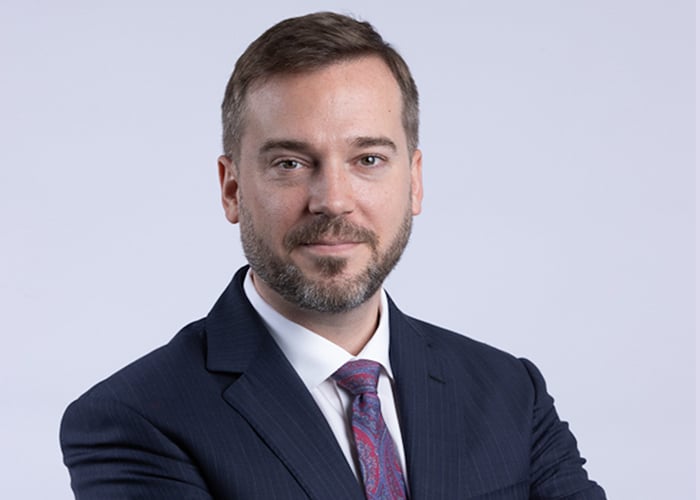
 MacLean Brodie, CEO, MSL Group Middle East
Change is the lifeblood of our PR industry. But in today’s hyper-accelerated environment, change no longer feels episodic. It’s constant. Sociologist Zygmunt Bauman described this state as a ‘liquid landscape’: unpredictable, unstable and impossible to navigate using yesterday’s maps.
For the PR industry, this reality is both a challenge and an opportunity. Influence has been fundamentally reshaped. Where once a handful of media outlets or prominent opinion leaders dictated narratives, today influence is distributed, fragmented and increasingly defined by communities. Platforms have multiplied, power has shifted, and influence has been democratised.
The implications are profound: trust is harder to win, and easier to lose. A brand is no longer what it says it is: it’s what consumers tell each other it is. Yesterday’s reputational wins can quickly become tomorrow’s baggage. To thrive in this landscape, we must embrace adaptive, flexible and decentralised models for building and protecting what we call fluid reputation.
Early bird tickets to the Campaign Saudi Briefing: Media and Marketing are now on sale. Get yours now for access to conversations with key stakeholders across governmental entities, brands and agencies in Saudi Arabia.
From campaigns to communities
The Middle East offers one of the clearest illustrations of this shift. Relationships and word of mouth have always been central to consumer decision-making in the region, but digital has amplified their importance:
- 90 per cent of Saudi consumers rely on friends and family for purchase advice (Snapchat & Publicis Media, 2025).
- 60 per cent of consumers trust user-generated content over brand-created content (WARC, 2024).
- 71 per cent of people say they trust influencers more than brands (YouGov, 2023).
- 72 per cent of MENA consumers now get their news primarily from social platforms (Reuters, 2024).
- YouTube is the number one channel for product discovery in the region (Think With Google, 2024).
These numbers highlight a simple truth: the next era of brand building is earned, not imposed. PR must evolve not only in how we tell stories, but where, to whom, and with what cultural fluency we tell them.
“Trust is harder to win, and easier to lose. A brand is no longer what it says it is: it’s what consumers tell each other it is.”
Three principles for the new PR reality
- Context is key: All communication is culturally conditioned. We must stop speaking in clinical generalities and instead listen deeply to the rhythms, expressions and memetic languages of the communities we hope to engage.
- We are polycultural: The fragmentation of influence isn’t chaos. It’s a cultural mosaic. Whether on an Instagram feed or a TikTok trend, multiple cultures collide and coexist. Effective PR means embracing this polycultural reality rather than forcing a false uniformity.
- Communities, not audiences. Forget broad-brush ‘personalisation’. The future belongs to micro-communities – self-organising groups bound by shared passions, values and contexts. The role of PR is to understand them, enter their worlds credibly and earn the right to be heard.
The creativity imperative in PR
For too long, PR has been underestimated as secondary to ‘big creative’. Yet, the evidence shows otherwise. A recent study revealed that ChatGPT cited earned media in 61 per cent of its responses about the world’s top 100 brands – rising above 70 per cent on topics of trust and value. Earned attention, it turns out, is central to how reputations are formed in the AI age.
Business leaders are also recognising this shift. Also, 87 per cent of people now say creativity is as essential as cost-control. Not only for growth, but for innovation, employee engagement, and resilience (The Business of Creativity White Paper, July 2025).
This places PR at the intersection of creativity and credibility. We can’t be purely strategic, nor purely imaginative. To cut through the noise, we must be both. And to succeed at scale, PR must increasingly collaborate with its creative siblings across the broader marketing spectrum.
Why the Middle East leads
The region isn’t just keeping pace with global change – it’s accelerating it. From cultural production and digital consumption to emerging creators and AI-native platforms, the Middle East is shaping the future of influence.
It is also one of the most diverse regions in the world, demanding a unique blend of niche depth and multicultural breadth in every campaign.
For PR practitioners, this context is both demanding and inspiring. We aren’t just amplifiers anymore. We are architects of trust, curators of relevance, and connectors of brands and communities.
In a liquid landscape, only the credible, the connected and the creative will thrive. For brands in the Middle East, this isn’t just theory – it’s the new competitive advantage. And for MSL, it’s our daily mission.
The MSL framework: From amplification to advocacy
At MSL Middle East, part of Publicis Groupe’s Power of One platform, we have built our approach around a simple but powerful Four-Question Framework:
- Who is the community? Who does the brand need to engage and turn into advocates?
- What’s their context? What are their realities, needs, behaviours, and belief systems?
- What’s your brand’s currency? What emotional, social, or practical value can you credibly offer?
- What’s your role in their world? Can you make a lasting, meaningful, and authentic connection?
This approach moves PR from short-term amplification to long-term advocacy. It reframes the goal from “coverage” to connection.
By MacLean Brodie, CEO, MSL Group Middle East