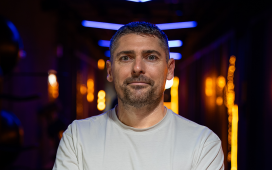
 Pradeep Kumar, Director of PR at Watermelon Communications in Dubai
Public Relations has always been about perception. The core objective of any PR campaign is to continuously shape and sustain a positive public image for clients. While behavioural change, brand building, and storytelling are central to PR, the essence of reputation management lies in what others say about you and how you are perceived.
In the past, achieving this meant ensuring visibility in the media. The outreach platforms have changed over the years. First, it was about being part of the community discourse. Then, it was appearing in newspapers, followed by radio, television, and finally, social media. The goal was always the same: to be seen positively and maintain an appealing public image.
Now, we stand at the dawn of a new PR revolution, ushered in by Large Language Models (LLMs) and generative AI tools such as ChatGPT, Perplexity, and others. These AI-driven systems are not merely processing content but actively shaping public perception. The question PR professionals must now ask is: What do these models think about us? Are our clients being represented positively when queried? More importantly, what does it take to ensure they are positioned favourably in an AI-driven world?
Consider this scenario: A restaurant client wants to be featured in the top recommendations when someone asks an AI assistant about the best dining options in town. How does one ensure their name appears? It is no longer just about traditional media placements or digital ads; it is about structuring content in a way that aligns with how LLMs process and retrieve information.
But this is not just about restaurants. The same logic applies to large-scale businesses, entire industries, communities, and even nations. The perception of a country, a corporation, or a government agency will increasingly be dictated by what LLMs gather about them.
When a journalist, investor, policymaker, or global traveller asks an AI-powered tool for insights, the response will be dictated by the data, narratives, and historical mentions these models have absorbed. This shift necessitates a deeper understanding of how information is indexed, referenced, and ultimately presented by LLMs.
For decades, content generation has been the backbone of public relations. Now, it is no longer enough to create content that appeals to human audiences alone. PR professionals must ensure that content is written and optimised so that LLMs pick up the right keywords, context, and references, ultimately leading to positive brand positioning. This is where AI Optimisation (AIO) comes into play.
AIO is the next big evolution in public relations. It is not just about ranking high on Google searches anymore; it is about ensuring that AI models interpret and present the right narratives. Unlike traditional SEO, which focuses on keyword placements for search engines, AIO requires structuring content to align with how LLMs process and generate information.
PR professionals will need to understand how AI models absorb and distribute information, ensuring that authoritative sources, official releases, and company narratives are accurately referenced. Moving beyond traditional SEO tactics, they will need to grasp how AI interprets context and relationships between words, structuring messaging in a way AI identifies as reliable, trustworthy, and frequently referenced. Continuous monitoring of AI-generated responses will also be crucial to ensuring ongoing adjustments that maintain a favourable presence.
This shift means that the next generation of PR professionals will no longer be just media-savvy communicators. They will need to be part communication experts and part data strategists. The new-age PR specialist must be as comfortable analysing algorithmic behaviour as crafting narratives. Understanding how AI-driven narratives are formed, training AI models with the right data, and engineering digital influence at scale will become fundamental skills.
In many ways, the future PR professional will be a hybrid between a communications leader and a tech strategist, blending storytelling expertise with a deep understanding of digital intelligence.
Public relations is built on the timeless principles of relationship-building, credibility, and storytelling. While these fundamentals remain unchanged, the industry must constantly evolve to stay relevant. Innovation is not optional but necessary, as industries worldwide are reshaping themselves in response to technological advancements.
In PR, where perception is the foundation of success, the ability to navigate and influence AI-driven narratives will be a decisive factor in shaping reputations. Those who anticipate and adapt to this shift will not just stay ahead but redefine the future of communication.
This shift is critical because LLMs are increasingly becoming the backbone of research, briefing materials, and media preparation. Whether a policymaker is preparing for a diplomatic engagement, an investor researching a potential acquisition, or a journalist gathering background information for a feature story, their first interaction with data is likely to be through an AI-powered tool. This makes the role of PR professionals even more critical. If AI is now the first gatekeeper of information, then PR must be the curator of what AI knows.
The PR industry must evolve to include AI training strategies, content engineering for LLMs, and AI-optimised crisis management. Today, PR must not just be seen in the traditional media landscape but also recognised, categorised, and referenced correctly by AI models. Those who master this new dimension of PR will define the next era of communication strategy.
The future of PR belongs to those who understand how to bridge human perception with AI interpretation, crafting narratives that appeal to audiences and shape how intelligent systems perceive, retrieve, and present information. The new PR specialist will not only craft compelling narratives but will also engineer how those narratives are interpreted by AI, ensuring brands are not just seen but strategically positioned in the digital age.
By Pradeep Kumar, Director of PR at Watermelon Communications in Dubai