The year 2025 marked a defining moment for the global communication industry, and the Middle East and North Africa region stood at the centre of this transformation. While global markets grappled with rapid technological shifts, evolving audience behaviours, and increasing pressure for accountability, the GCC and wider MENA region experienced an additional layer of change: the accelerated arrival of global actors and frameworks. This influx has pushed regional communication practices toward more Western-indexed standards, while still operating within a complex, multilingual, and culturally diverse environment. This article reflects on how the communications industry evolved across MENA in 2025, informed by global thinking but grounded firmly in regional realities.
Global trends shaping regional communications
Globally, 2025 will be remembered as the year artificial intelligence moved from experimentation to execution. AI (Artificial Intelligence) reshaped how communication teams plan, produce, measure, and optimize their work. From generative content tools to real-time sentiment analysis, AI became embedded across PR, marketing communications, and reputation management. International industry reports consistently highlighted AI, analytics, and integrated communications as the defining forces of the year, alongside challenges such as declining trust in information ecosystems and the fragmentation of media consumption.
Another defining global shift was the elevation of data-driven decision-making. Communications teams were no longer expected to justify activity alone, but impact. Measurement frameworks evolved beyond traditional media coverage metrics toward reputation indicators, audience behaviour and business outcomes. At the same time, the boundaries between PR, marketing, digital and influencer engagement continued to blur, with agencies and in-house teams operating through integrated models rather than siloed disciplines.
These global dynamics set the context in which the MENA communications industry continued to mature.
The westernisation of communication practices in GCC and MENA
One of the most visible developments in 2025 was the growing influence of Western communication models across the region. The GCC in particular saw a steady influx of global agencies, senior communication leaders, and multinational brands establishing or expanding their regional operations. Dubai, Riyadh and Abu Dhabi increasingly functioned as regional hubs, importing international standards in strategy, governance, reporting, and creative execution.
As a result, communication practices across MENA began to align more closely with Western benchmarks. Strategic planning cycles became more structured, reporting more rigorous, and storytelling more audience-centric. Communications began to be positioned less as a support function and more as a strategic lever tied to reputation, investor confidence, and long-term brand equity.
However, this shift did not occur in a vacuum. Many local brands across the region still approach public relations with limited familiarity or understanding. Historically, PR in several MENA markets has been underutilized or misunderstood, often reduced to media placement rather than reputation management, stakeholder engagement, or crisis preparedness. The relatively limited number of influential local media outlets in some markets has also contributed to this perception, making PR appear narrow in scope or impact.
The arrival of global players has therefore played a dual role. On one hand, it has raised expectations and professional standards. On the other, it has highlighted the gap between international communication frameworks and local market readiness.
Media fragmentation and multicultural audiences
Perhaps the most distinctive challenge facing communications in MENA is its fragmentation. The region is not a single market but a collection of countries, cultures, languages, and media ecosystems. Arabic and English often coexist within the same campaign, while French and other languages play a role in North Africa and parts of the Levant. Audiences are highly diverse, spanning nationals, expatriates, and transient populations with very different media consumption habits.
This fragmentation complicates traditional PR models. A single narrative must often be localized multiple times, not just linguistically but culturally. What resonates in Saudi Arabia may require adjustment in the UAE or Egypt. Sensitivity to religion, national identity and social norms is essential, particularly during key periods such as Ramadan or national celebrations.
At the same time, the dominance of digital platforms has reshaped the media landscape. In many MENA markets, social media platforms are the primary source of news and brand discovery. Traditional media still holds influence, particularly for credibility and policy-related narratives, but social and digital channels increasingly drive visibility and engagement. This shift has required communications teams to think beyond press releases and embrace real-time storytelling, influencer ecosystems, and community engagement.
AI, analytics and the measurement imperative
Artificial intelligence emerged in 2025 as the most transformative force within the communications function. Across MENA, AI-driven tools are now being used to monitor media landscapes, analyse sentiment, optimize content timing, and personalise messaging at scale. What once required large teams and extended timelines can now be executed faster and with greater precision.
This has significantly impacted measurement and analytics. As communications budgets grow and expectations rise, the demand for measurable outcomes has intensified. Clients and stakeholders increasingly expect clear reporting on how communication efforts influence awareness, perception, engagement, and ultimately business performance. AI has played a critical role in enabling this shift by simplifying complex data analysis and turning insights into actionable strategy.
However, the rapid adoption of AI has also exposed capability gaps. While enthusiasm for AI is high, deep understanding remains limited. Many organizations are still navigating how to integrate AI responsibly, balancing efficiency with authenticity and ensuring that automation does not erode trust. The role of the communicator is evolving accordingly, with greater emphasis on interpretation, judgment, and ethical oversight rather than execution alone.
Trust, purpose and reputation
Trust emerged as a central theme in 2025, both globally and regionally. As audiences struggle to distinguish credible information from misinformation, the responsibility placed on communicators has increased. In the GCC, relatively high levels of institutional trust provide a strong foundation, but they also raise expectations for transparency and consistency.
Purpose-driven communication has therefore become more than a trend. Sustainability, social responsibility, and alignment with national visions such as Saudi Vision 2030 and the UAE’s long-term development strategies have become core components of corporate narratives. Brands are increasingly expected to demonstrate contribution, not just performance. In this environment, communications teams play a critical role in ensuring that messaging reflects reality, avoiding superficial storytelling and reinforcing credibility through substance.
Looking ahead
By the end of 2025, the communications industry in MENA stands more confident, more capable, and more globally connected than ever before. The region is no longer simply adopting international practices; it is adapting them to its own complexities and ambitions. AI, analytics, and integrated communication models are now embedded in daily operations, while cultural sensitivity and localization remain essential differentiators.
The year demonstrated that while Western frameworks may shape the structure of communication in the region, success in MENA still depends on deep local understanding. The coming years will reward those who can balance global sophistication with regional intelligence, technology with human insight, and speed with trust.
For communicators operating in the GCC and MENA, 2025 was not just a year of adjustment. It was a year of recalibration, setting the foundation for a more mature, measurable, and strategically influential communication industry.
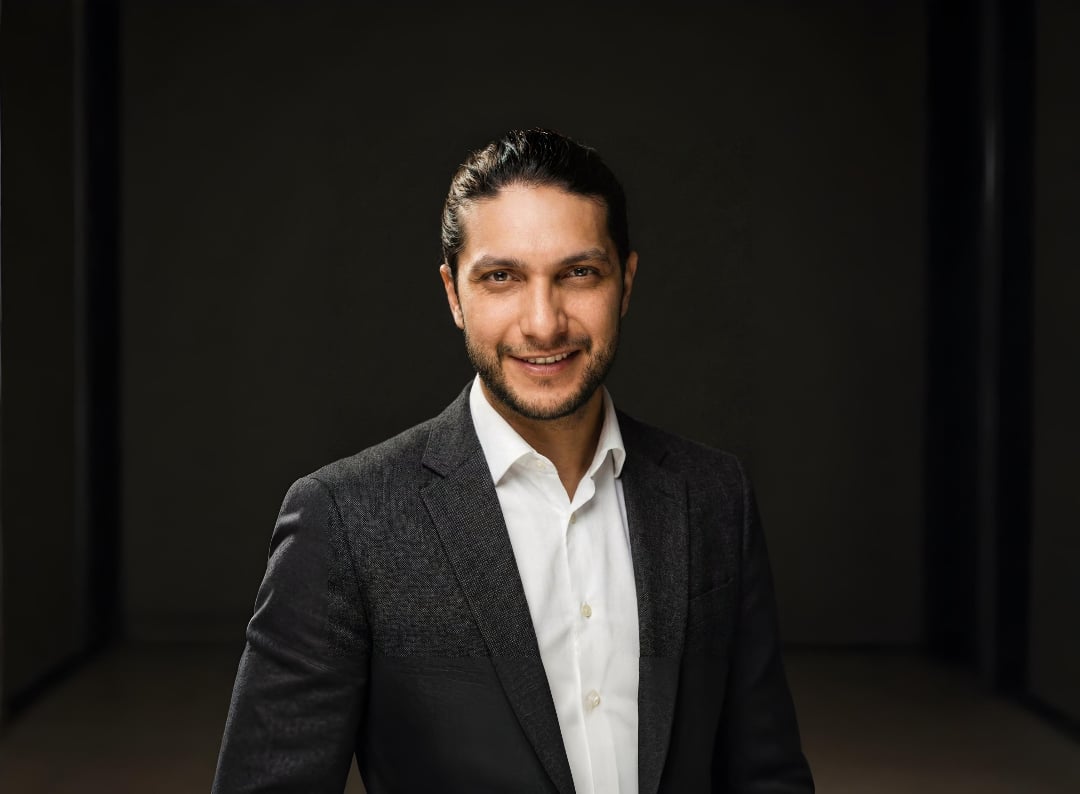
By Samet Özetci, CEO, Walther Kranz