


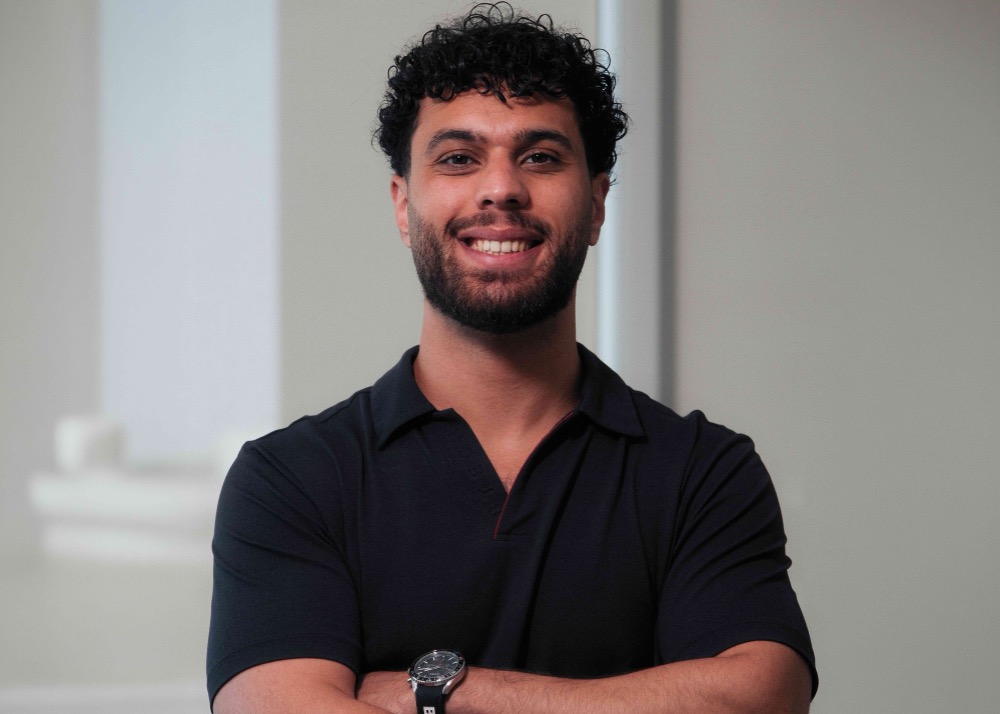
 Yousef Manna, Associate, PR & Communications, Current Global MENAT
Another Q4 has arrived, and those of us in PR and communications know full well what that entails. The ‘busy season’, as many of us call the final three months of the year, has descended, meaning events are on, the social scene’s alive and client requests are surging.
As exciting as that is, it also means stress levels often begin to climb, on top of the enormous amount of pressure everyday life puts us under. Work, relationships, family, finances, social expectations and the pressure to keep moving forward can all take their toll.
So, when I read that a YouGov study found that 74 per cent of UAE workers aged 18 to 24 said their mental health is affecting the way they work, sadly, I wasn’t particularly surprised.
However, what did surprise me, was another figure from the study. Only 6 per cent of respondents said they received counselling or therapy in the past year.
That gap is important because it tells me that we’re becoming much more comfortable talking about mental health, but we still have a long way to go when it comes to actually asking for help.
Talking about mental health at work remains taboo
There remains a stigma around therapy in this region, as highlighted by the 2026 PRCA MENA Mental Health Report, which found 55 per cent believe it’s still attached to mental health.
For many people, particularly those who grew up in more traditional families, seeking professional help can still be interpreted as a sign that something is wrong with you. I grew up with that perception too.
Therapy could easily have been viewed as something you turned to only when you had a serious problem, rather than as a form of support that could benefit anyone.
Younger generations are helping to change that. My own perspective certainly has. Having a fiancé who is training to become a therapist has opened my eyes to how important mental health support can be.
Hearing her perspective and learning more about the way therapy works has made me see it less as a response to something being ‘wrong’ and more as a tool that can help people understand themselves, manage challenges and ultimately function better.
However, the question employers should ask themselves is this: what happens when someone is truly struggling? The 2026 PRCA MENA Mental Health Report also shows that 41 per cent of those surveyed said they face frequent burnout.
Employees need compassion as well as initiatives
Thankfully, I have been fortunate to work for a company that has shown me what genuine support looks like. Earlier this year, my father was battling cancer, and he passed away in April.
During that period, Current Global MENAT supported me with remote working for extended periods, gave me flexibility while I was in Europe during my father’s treatment and working across a different time zone, and provided me with extended compassionate leave.
What I really valued during that time was that it was flexibility when I needed it most. Not an initiative, just compassion. Mental health does not operate according to a company calendar.
A wellness day, a meditation session or a corporate mental health initiative can all be positive, but they are not necessarily going to be there at the exact moment an employee needs support.
Sometimes what someone needs is much simpler. Flexibility, understanding, and the confidence that asking for it will not change how they are perceived at work.
This also puts an important responsibility on managers. Worryingly, also according to the 2026 PRCA MENA Mental Health Report, only 16 per cent of organisations provide managers with mental health training.
While they should not be expected to act as therapists, they should certainly be equipped to recognise when someone may not be doing well and know how to approach that conversation.
Work should be a safe space to speak up
At the same time, employees need to feel comfortable speaking up. You cannot encourage people to be open about their mental health while creating an environment where they are worried about being judged, treated differently, or seen as less capable.
For me, that is where workplace culture becomes more important than any individual initiative. Employees need to know that if something is happening in their lives, they can bring it up. They need to feel that they will be listened to, understood and supported rather than immediately judged.
YouGov’s 74 per cent figure tells us that mental health is already affecting a significant proportion of young workers in the UAE. The 6 per cent figure perhaps tells us that talking about the issue is not enough.
We need to make asking for help feel just as normal as admitting that we have a busy week, need a day off or have too much on our plate.
And for employers, perhaps the most meaningful mental health policy is not another initiative. It’s creating a culture where an employee can say, “I’m not okay” and know that someone will listen and know how to help.
By Yousef Manna, Associate, PR & Communications, Current Global MENAT







