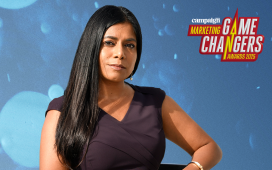
Melis Ertem, CEO, MMA MENA.
The role of search is undergoing a profound evolution, reshaping how audiences discover, access, and engage with content.
From trending TikTok videos to AI-curated news summaries, search behaviour is now central to how people navigate and consume media. It is not only influencing what people see, but also how they interact with brands, publishers and platforms. This shift presents both an opportunity and a challenge, in equal measures, for marketers. As user journeys become more dynamic and discovery happens across multiple surfaces, from Google and Instagram to voice assistants and geo-based prompts, search is emerging as the critical link between content and context.
Search is now driving a new wave of media engagement, shaped by regional contrasts between MENA’s fast-growing, mobile-first environment and Europe’s increasingly consolidated media landscape, demanding that global brands rethink how they remain visible, relevant, and trusted across both.
Fragmented media, connected audiences
In the MENA region, we are seeing two things happen at once: An increasingly fragmented media environment and a rise in mobile-first, hyper-engaged audiences. Mobile video continues to dominate.
Statista projects the number of digital news users in MENA to reach over 167 million by 2029. As people access content across diverse platforms, search is emerging as the connector, and a way to navigate complexity and discover relevance in real time.
In this landscape, brands must ensure that their content is structured, localised, and easily found, especially as geo-awareness and mobile intent play a growing role in consumer decision-making.
The pressure on media in Europe and the U.S
By contrast, media outlets across Europe and the United States are under pressure. Declining advertising revenue and platform consolidation are leading to layoffs and even closures. So far, this year, key media titles like Business Insider, TechCrunch, and The Washington Post have all announced job cuts.
Fragmentation of this size has a direct impact on how and where consumers go to find credible information. As trusted media channels shrink, the burden on search to deliver quality, context, and relevance grows. For marketers, this underscores the need to build trust at every touchpoint, including search.
The rise of social as a search engine
Search is no longer limited to traditional engines. For younger audiences, platforms like TikTok and Instagram are now primary sources of discovery. This is particularly visible in MENA, where mobile-first usage and short-form video dominate. Audiences aren’t just searching; they are swiping, scrolling, and stumbling across content that matches their intent in unexpected ways.
Social search brings new challenges for marketers. It’s not enough to rank well on Google. Brands need to consider visibility across platforms, through voice, video, and social discoverability.
AI is changing the search experience
Artificial intelligence is transforming how we discover content.
Predictive prompts, summarised responses, and generative search tools are creating more intuitive, less linear experiences. For marketers, this requires a different approach.
Content must now be structured for AI readability, geo-relevant, and adaptable across formats, from voice assistants to augmented browsers.
What this means for global brands
Navigating this shift requires flexibility and local understanding. While Europe faces media consolidation, MENA is expanding digitally, demographically, and behaviourally. Global brands must recognise that engagement starts with discovery.
Discovery today means optimising not just for search engines, but for the full spectrum of consumer behaviour, from Google to TikTok to AI. Generic content strategies will no longer perform. It’s time to prioritise local SEO, geo-targeted content, and platforms that reflect how people really search.
Search has become the starting point for everything, from brand awareness to conversion to trust. As media and marketing continue to evolve, brands that treat search as a strategic engagement tool will be best positioned to lead. We’re entering a new phase of media engagement.
As marketers, the challenge is clear: Meet your audience where they are searching, and earn their attention once they find you.
By Melis Ertem, CEO, MMA MENA.