

WPP Media MENA held its inaugural NextM event in Dubai last week, bringing together clients, technologists and strategists for a full-day dive into how AI, data and new modes of media behaviour are reshaping marketing. The programme centred on the forces currently influencing the industry: the rise of generative intelligence, the shift towards predictive environments, the growing role of influence in brand choice, and the need for connected measurement.
AI as a central nervous system
The agenda opened with a technical grounding. Ted Lappas, Head of Data Science at Satalia, outlined how Generative AI (Gen AI) is moving from experimentation to infrastructure – becoming what he described as the “central nervous system” of modern marketing. He urged marketers to start with their own data foundations.

“Respect the science when it comes to AI,” he said. “If you want to dive into the AI landscape, you need true experts working on your team – people who are trained on algorithms, models and data. An expert can collect different elements and combine them to create a unified model of your business that can be used for predictions, recommendations for clustering and different types of services.”
Lappas challenged guests to identify just one internal data source that could strengthen a foundational model and expand contextual intelligence within their organisations.
From reactive to predictive environments
Joseph Bradley, CEO of JMB X, shifted the focus to cognitive cities and the predictive behaviours that will define the next phase of customer engagement. Bradley argued that as information becomes abundant, judgement becomes the differentiator – both for brands and their employees.
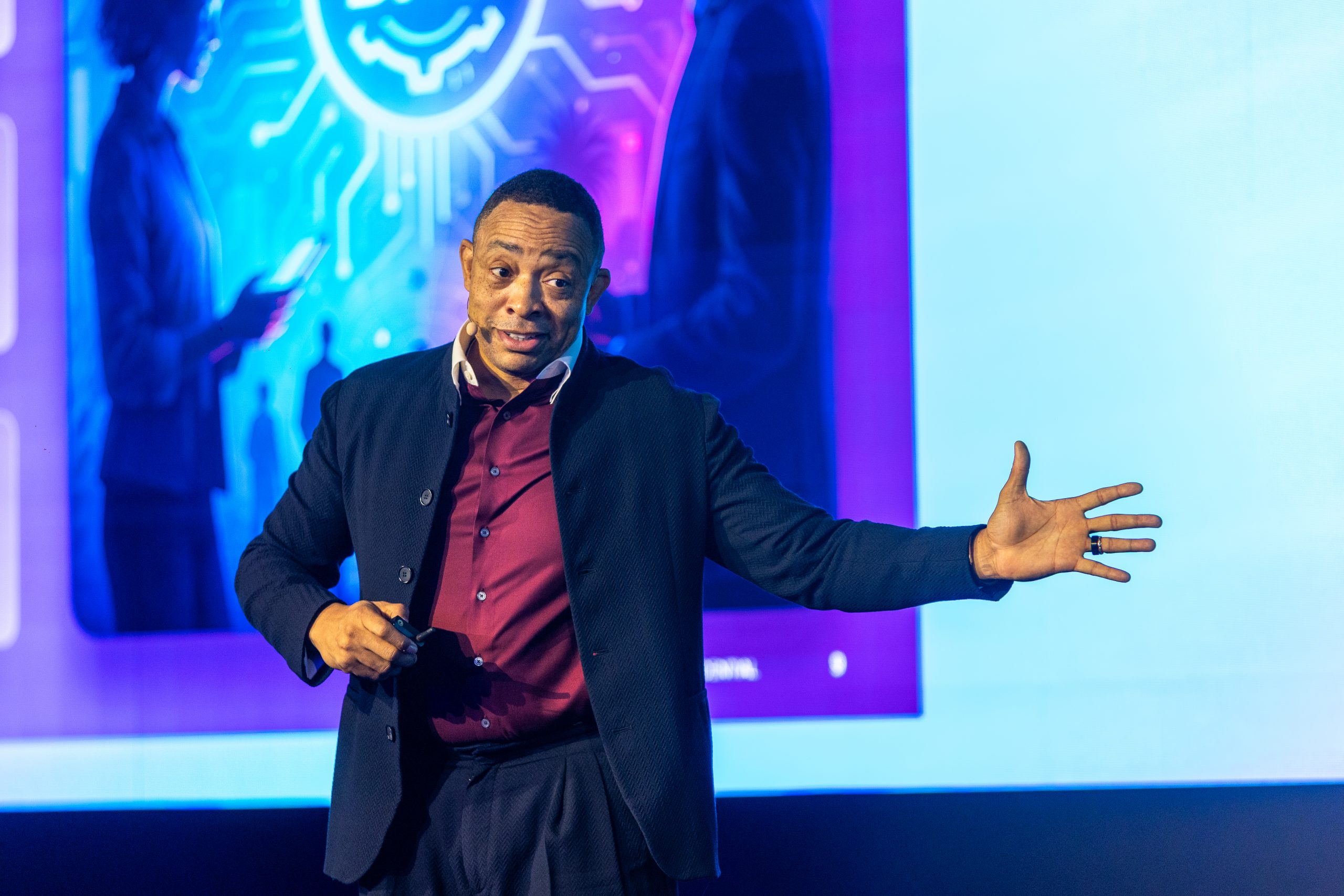
“Knowledge is plentiful, so the way you differentiate is through judgement,” he said. “You have to embrace employees with empowerment to exercise outstanding judgement so you can provide full transparency.”
He encouraged brands to redesign a single moment in their customer journey under a simple prompt: What would this look like if the customer – or their AI assistant – had a genuine say in the decision?
Revisiting influence and brand priming
A joint session by Damian Thompson, Global Head of Insight at Choreograph, and Marie Abiad, Regional Strategy Director MENA at Wavemaker, unpacked new research developed with Oxford University’s Saïd Business School. Their argument: growth depends less on short-term optimisation and more on shaping consumer predisposition long before a purchase is made.
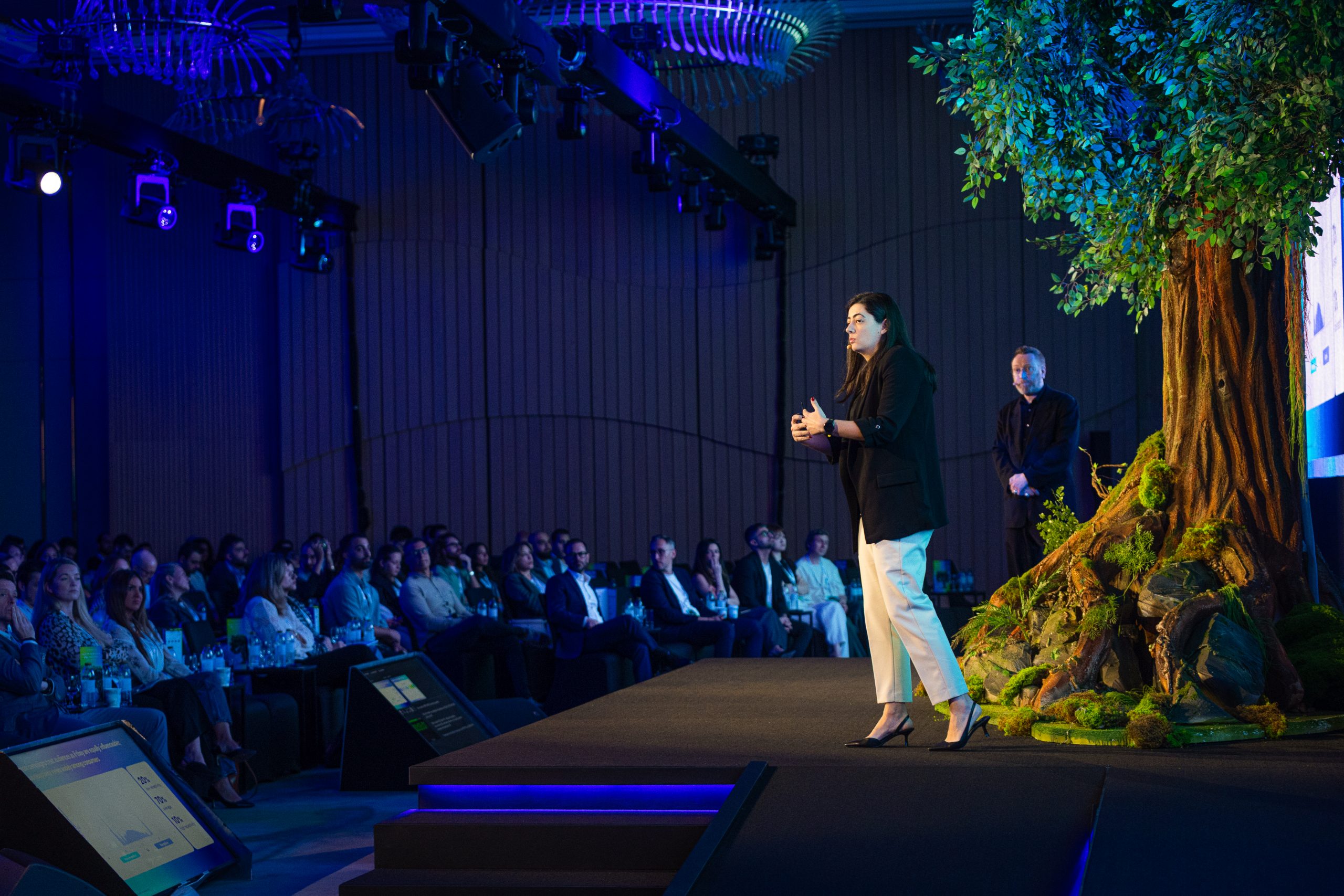
Abiad emphasised the importance of understanding the context of buying decisions.
“Consumer receptivity depends on the type of purchase and the category more than any other factor,” she said. “Reach and attention are not always enough. There’s a third element – influence – and different touchpoints have different levels of influence depending on the category.”
Thompson added that predisposition remains one of the strongest drivers of choice.
“We saw the sheer number of consumers who know exactly which brands they’re going to buy long before they go online or in-store,” he said. “Eighty-four per cent of consumers end up buying a brand they are strongly predisposed towards. It’s vital that brands take responsibility for priming consumers long before any need arises.”
Their call to action: review 2026 budgets and shift a portion of performance spend towards long-term brand priming.
Connecting the media canvas
Morgan Evans, Amazon’s Global Head of Display, Video and Audio, addressed the reality that media consumption is no longer linear. The focus, he said, should be on building connected canvases where formats work together. His practical suggestion was to take the strongest-performing video creative and add a simple interactive layer – such as a poll or overlay – to invite participation rather than passive viewing.
Evolving currencies and data collaboration
A panel moderated by Laura Gleadhill of Keyade explored emerging media currencies and the fragmentation of data across teams. Featuring The Trade Desk MD Terry Kane, Ramy El Kassisi, Regional Business Director at DMS, and Amazon Ads’ Head of Endemic MENA Salmeh Vakilian, the discussion centred on the need to break silos and build shared intelligence.

The collective takeaway mirrored Lappas’ earlier point: identify one meaningful data source that could strengthen the memory and contextual understanding of a foundational model like open intelligence.
Measurement for a connected future
Snapchat’s EMEA Head of Science, Youmna Borghol, addressed the shifting landscape of measurement. With no single methodology able to capture performance holistically, she advocated for blended approaches combining incrementality, advanced attribution and MMM. Her message was to move away from binary evaluation and towards long-term outcome-focused measurement.
AI, robotics and creative compression
The NextM closed with a live demonstration by Perry Nightingale, SVP of Creative AI at WPP, who took the stage with a humanoid robot named Oracle. The session illustrated how AI and robotic engineering can compress the media supply chain and reduce production friction.

Nightingale encouraged marketers to identify the single most time-consuming step in their creative workflow and explore one AI or automation tool capable of reducing that friction by even 10 per cent.