For the past two years, the industry has been obsessed with the wrong question: “Will AI replace creativity?” The real question is far more uncomfortable: what happens when average work becomes almost free to produce? Because that is exactly what AI is and will increasingly do.
By April 2025, an analysis of 900,000 newly published web pages by Ahrefs found that 74% already contained AI-generated content. According to Everypixel Journal, AI image generators have now produced more than 30 billion images globally, with roughly 80 million more being created every single day. Let’s think about that. The 80 million AI-generated images created daily would have taken human designers somewhere between 9,000 and 28,000 years to produce and that’s just today’s output. “Good enough” is no longer exceptional. It is becoming the default. And honestly, that is exposing something our industry needed to confront.
A lot of what agencies called creativity was actually process: endless production cycles, repetitive revisions, and time spent building “safe” work instead of bold work. What used to take weeks can now happen in days, sometimes hours. AI did not kill creativity. It removed the friction around it.
What becomes valuable now is judgment: knowing which idea is worth scaling, when culture matters more than automation, when Arabic nuance genuinely needs a human ear, and how to connect media, social, PR, creative, and experience into one living ecosystem rather than a collection of fragmented outputs.
Ironically, AI is making human creativity more important, not less. When everyone can generate content, originality becomes the differentiator again.
That is why the Gulf is uniquely positioned for this moment. While other markets are still debating AI philosophically, the UAE and GCC countries are already operationalizing it through national strategies, smart government initiatives, and one of the world’s fastest-growing AI adoption rates. The UAE recently became the first country where more than 70% of the working-age population actively uses AI, according to the Microsoft AI Economy Institute’s AI Diffusion Report. The market is not waiting for agencies to catch up, and neither are clients.
Today’s clients expect faster thinking, smarter integration, and more adaptive communication ecosystems. They are no longer measuring agencies purely on outputs or production scale. Now they’re measuring them on relevance, agility, and the ability to connect creativity with business outcomes in real time. That changes the role of the agency entirely.
At Viola Communications, we increasingly see AI less as a production tool and more as a strategic multiplier. The real opportunity is not producing more content. It is unlocking better thinking, faster collaboration, stronger integration, and more ambitious creative ecosystems across media, social, PR, digital experience, and technology.
The agencies that survive this era will not necessarily be the biggest. They will be the ones with the clearest perspective. Because when AI makes execution accessible to everyone, taste, judgment, cultural intelligence, and strategic conviction become the real competitive advantage.
AI did not kill creativity in the Gulf. It exposed bad creativity. And that may be the best thing that ever happened to this industry.
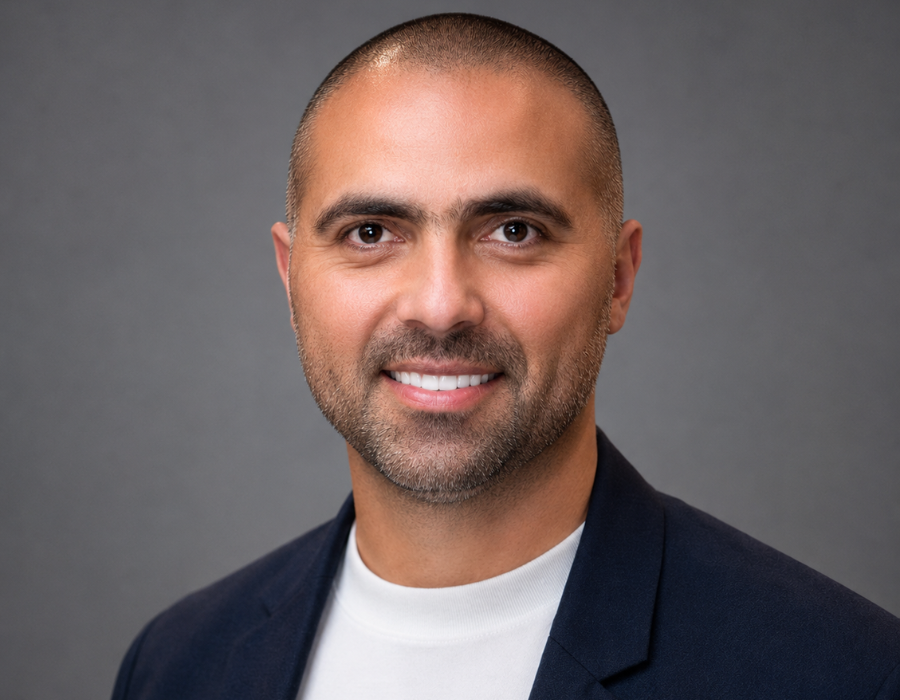
By Mohammed Ajawi, Chief Client Officer, Viola Communications.