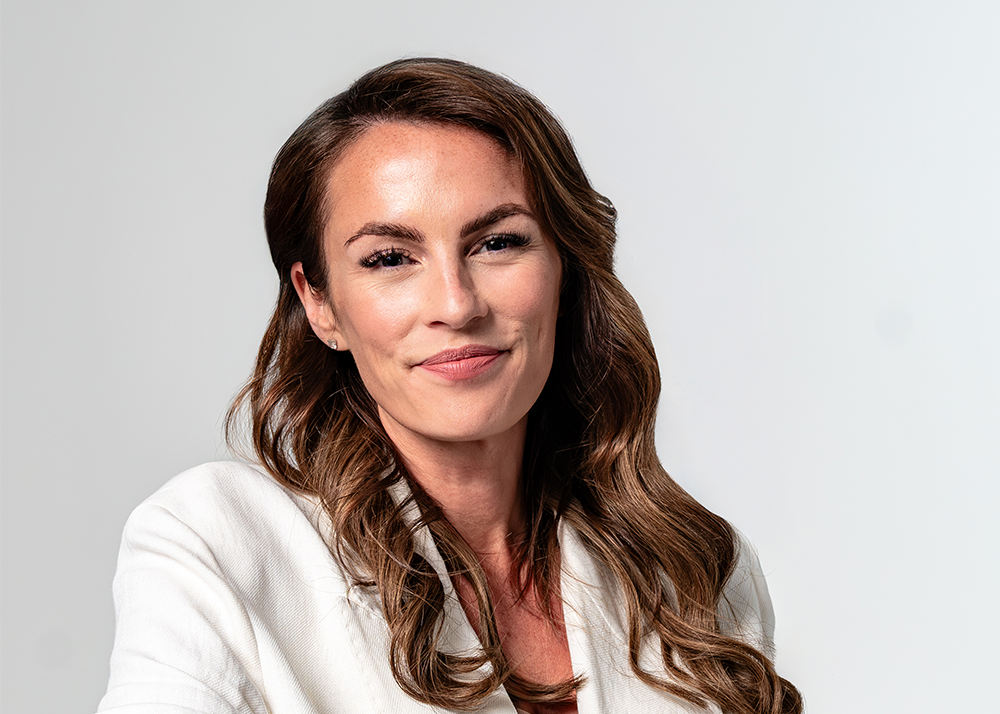
 Amy Brill, Founder, The Brill Collective.
The second half of 2026 in the UAE is about to compress six months of delayed business decisions into three. That is going to test how clearly companies understand their positioning, leadership and commercial relevance.
The signs are already visible. Conversations that disappeared in March are restarting. Q4 calendars are filling quickly. Family-office allocation timelines, regional financial-services expansion plans and large-format real estate commitments that paused earlier this year are moving again.
The Dubai Land Department recorded AED252bn in property transactions in Q1 2026, a 31 per cent increase in value year on year. Capital that sat on the sidelines through much of H1 is starting to re-enter the market.
But what follows is unlikely to feel like a normal recovery cycle.
Most UAE businesses spent the first half of this year operating inside a stall rather than a downturn. Budgets were not dramatically cut. Hiring did not freeze entirely. Projects were delayed more often than cancelled. But decision-making slowed across the board. Leadership teams became reactive. Businesses stayed operational without generating meaningful momentum.
The instinct after a slower period is predictable. Most will immediately assume to increase activity. More campaigns. More outreach. More events. More pressure on teams to recover lost time before year-end. That logic breaks in compressed periods like we are facing now.
When decisions speed up, buyer attention narrows. Evaluation windows shrink. Existing perceptions carry more weight. Businesses get judged on what the market already understands about them: credibility, clarity, visibility and trust. In those conditions, the companies that win are rarely the busiest. They are the clearest.
This is becoming a significant issue across the UAE market because maturity has accelerated faster than differentiation. Most sectors now communicate in almost identical language. Every business claim innovation, transformation, excellence and customer-centricity.
When buyers cannot meaningfully distinguish between companies, they default to simpler comparison points. Usually price. Sometimes familiarity. Rarely originality. That is why positioning is no longer just a marketing exercise. It has become commercial infrastructure. The businesses that protect margin in H2 will be the ones that can explain, quickly and credibly, why they should be chosen. Not after a long sales process, but immediately.
The same principle applies to leadership visibility, which many businesses still underestimate. Before meetings happen, people search. Before partnerships happen, stakeholders review LinkedIn profiles, interviews, commentary and digital presence.
In faster-moving markets, perception forms early. The leaders who invested in visibility six months ago are already compounding the benefit. The ones still waiting for the right moment are discovering that the market formed opinions in their absence.
The UAE itself has demonstrated this dynamic at national scale. While parts of the global private sector slowed into caution this year, the country accelerated. DIFC registered 775 new companies in Q1 2026 alone, a 62 per cent increase year on year, alongside 158 new foundations, more than double the same period in 2025. ADGM closed last year with more than 12,000 licences and a 36 per cent increase in assets under management. Alongside infrastructure investment, AI strategy, licensing reform, free-zone expansion and talent attraction – ultimately, the operating environment has continued moving forward.
The UAE kept moving. Parts of the private sector psychologically paused. That gap matters now because the second half of 2026 still presents a significant opportunity for businesses willing to respond strategically. For some companies, the next six months could outperform last year entirely. But that outcome is unlikely to come from simply increasing activity. It will come from sharper positioning, clearer leadership visibility and stronger commercial relevance in the moments that matter most.
The businesses most likely to struggle in the second half of this year will not necessarily be the weakest operators. They will be the companies still relying on activity to compensate for unclear positioning. Volume can create visibility. It cannot create relevance, and in a compressed market, relevance comes first.
The winners of H2 2026 will not be the loudest companies in the room. They will be the businesses the market already trusts before the first conversation even begins.
By Amy Brill, Founder, The Brill Collective.