For decades, marketers operated on a gentlemen’s agreement with uncertainty. Campaigns were built on focus groups, gut instinct, and hope. Success was measured weeks after the fact, by which time budgets were spent and the only honest feedback was whether sales moved. Marketing borrowed the language of science without ever quite earning its rigour.
That agreement is being torn up by the convergence of two forces: artificial intelligence and neuromarketing. The most dangerous assumption in modern marketing is that consumers know why they make decisions. Most of the time, they don’t.
Creativity was never the problem. Perception was.
Picture a campaign that ticked every box. Sharp creative, solid media plan, a tagline that tested well. It launched across four markets. And then nothing happened. Sales flat. Recall scores flat. The post-mortem concluded the market was not ready. But the market was not the problem. The messaging was triggering a subconscious discomfort that no focus group would ever surface – because no respondent consciously knew they felt it.
This is not a hypothetical. It is how most campaigns fail. Neuromarketing has shown us that purchasing decisions are driven by subconscious signals: colour psychology, auditory priming, the micro-expression on a face in a three-second video. Roughly 95 per cent of consumer decision-making happens below conscious thought. The consumer cannot tell you what put them off. They just did not buy.
Marketers have known this for years. Eye-tracking, EEG, galvanic skin response tests – the evidence base is solid. What was always missing was access. Neurological research required specialist labs and weeks of analysis. It belonged to the largest global brands.
Everyone else guessed.
AI has changed that access equation entirely. Modern AI systems can now analyse video content frame by frame, measuring emotional arousal, attention heat maps, and cognitive load before a single consumer has seen it. NLP models evaluate the emotional register of copy, flagging friction points that precede drop-off.
Computer vision checks whether a viewer’s eye lands where the creative director intended. When Unilever applied AI-powered creative testing across its campaigns, it cut evaluation time from weeks to under 24 hours and saw double-digit performance improvements. The creative teams did not shrink. They got better, faster feedback than any focus group had provided.
The new marketing department is a system, not a team
For businesses without a full marketing department – founders managing their own content, small teams across multiple channels, regional brands in competitive markets – this is genuinely levelling. AI does not replace the instinct that makes great creativity. It catches the subconscious misalignments that even experienced marketers miss.
AI does not replace the human instinct that creates great creative work. It acts as a rigorous editor, catching the subconscious misalignments that even experienced marketers routinely miss.
But AI does not make strategy redundant. It makes weak strategy more expensive. If the brief is wrong, AI executes it with extraordinary efficiency in entirely the wrong direction. The marketers who thrive will not just be those who use these tools, but those who understand what the tools optimise for: behavioural economics, attention science, the psychology of trust.
Brands that embed AI at the strategic layer will build a compounding advantage. Every campaign generates data. Every data point sharpens the model. Every sharper model produces better creativity. It is a flywheel. The brands that start now will be very hard to displace.
Your audience decided before you finished the sentence
The shift does not stop at content. AI has restructured performance marketing by making real-time psychological targeting possible. Traditional segmentation grouped consumers by demographics and past behaviour – useful, but blunt. AI can now model the cognitive and emotional state a person is likely to be in at a given moment, and serve the message most likely to resonate at precisely that point.
Consider a regional F&B brand running Ramadan campaigns across three GCC markets, with a two-person marketing team and a 90-day window to prove ROI. AI systems running across the full creative-to-distribution pipeline can generate variants, test them in real time, and reallocate budget toward what is driving genuine engagement – often within hours. That team can now do in days what once required an agency retainer and a three-month feedback loop. It is exactly this gap – speed of iteration at scale – that a lot of systems are built to close for brands that cannot afford to find out the hard way.
The implications are significant. The historical advantage of large marketing teams – volume, speed, research budgets – is eroding. A strategically sharp individual with the right AI stack can now outpace a bloated department running on legacy workflows.
The brands that do not adapt will keep producing content that looks right, sounds right, and moves no one – because it was built for the conscious mind of a consumer who was always deciding somewhere else entirely.
The future of marketing will belong to brands that understand how people actually decide. AI gives us speed. Neuromarketing gives us depth. Together, they help build campaigns that are not just seen, but felt.
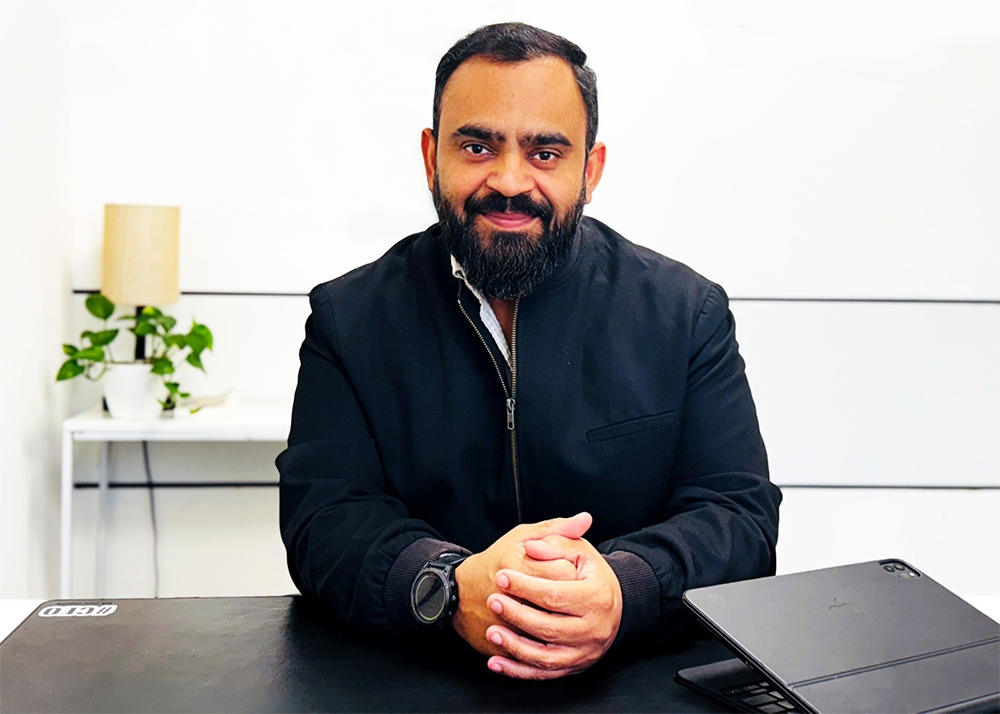
By Agam Chaudhary, Co-Founder, Markgrid.